Example
What you'll build
This example shows how to connect to SAP Business One's Service Layer using the SAP Business One Fixed Assets connector to create a fixed asset capitalization document. The integration binds connection credentials to configurable variables and invokes the connector's primary write operation to capitalize a new asset.
Operations used:
- Create Asset Capitalization : creates a new asset capitalization document (
AssetDocument) in SAP Business One.
Architecture
Prerequisites
- Valid SAP Business One Service Layer credentials (company database, username, and password).
Setting up the SAP Business One Fixed Assets integration
New to WSO2 Integrator? Follow the Create a New Integration guide to set up your integration first, then return here to add the connector.
Adding the SAP Business One Fixed Assets connector
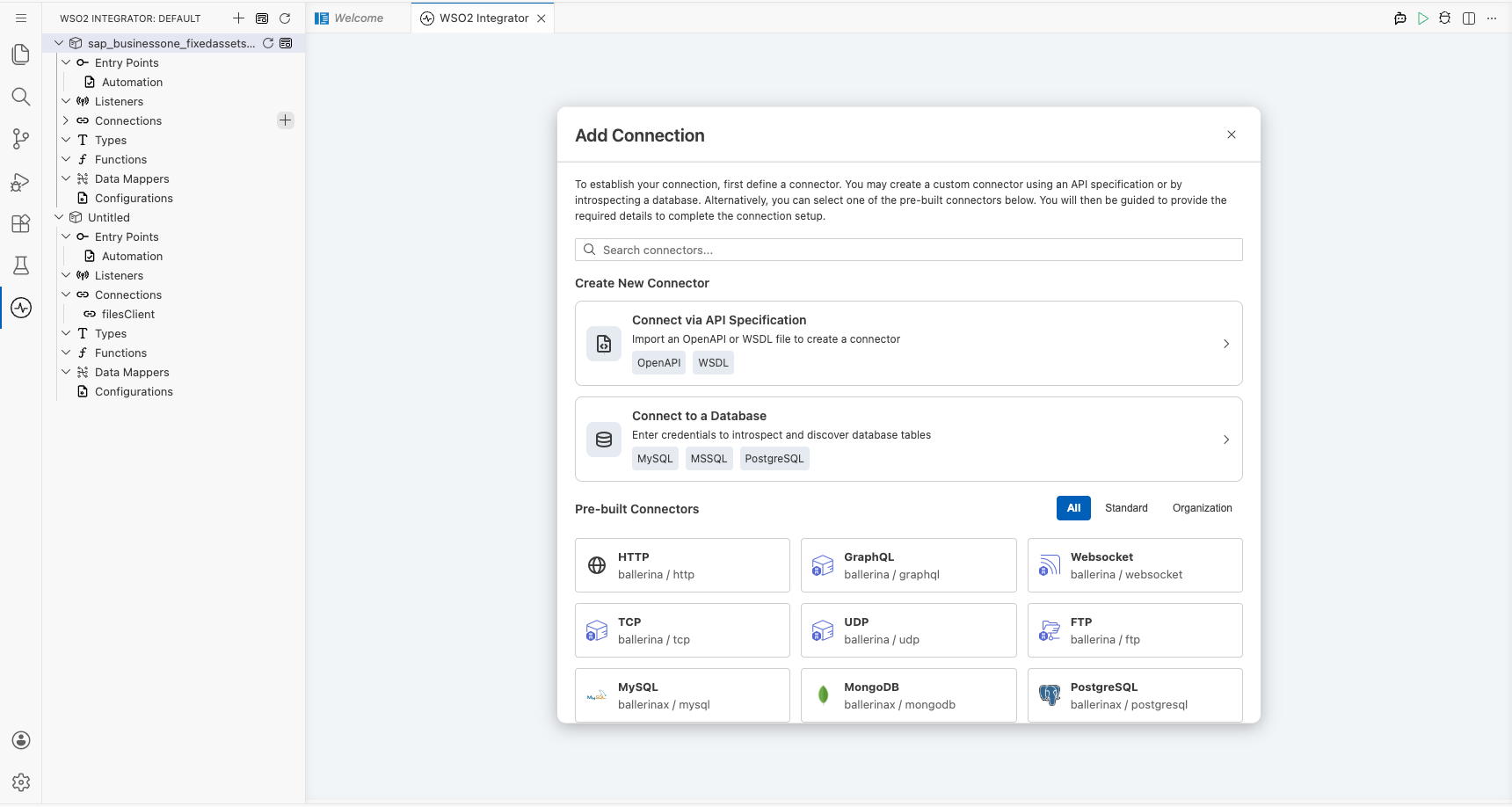
Step 1: Open the connector palette
Select Add Connection in the Connections section of the sidebar to open the connector palette.
Step 2: Search for and select the connector
- Enter
fixedassetsin the search box. - Select the Fixedassets connector card to open its connection form.
Configuring the SAP Business One Fixed Assets connection
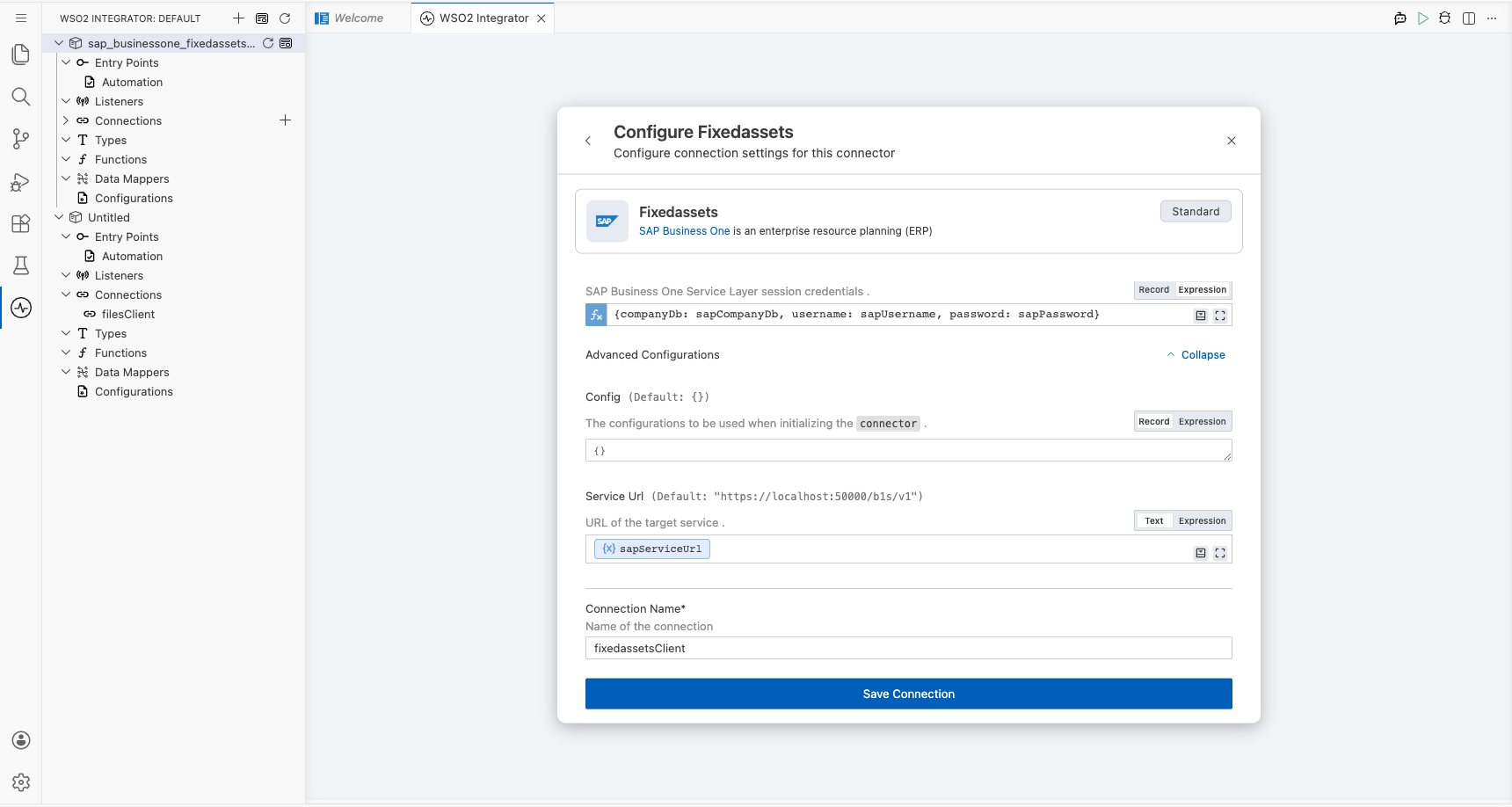
Step 3: Configure connection parameters and bind them to configurable variables
Bind each connection field to a new configurable variable using the helper panel's Configurables option.
- Session : SAP Business One Service Layer session credentials, composed of the company database, username, and password, each bound to its own configurable variable.
- Service Url : URL of the target SAP Business One Service Layer service, bound to a configurable variable.
- Connection Name : identifier used for the connection in the flow.
Step 4: Save the connection
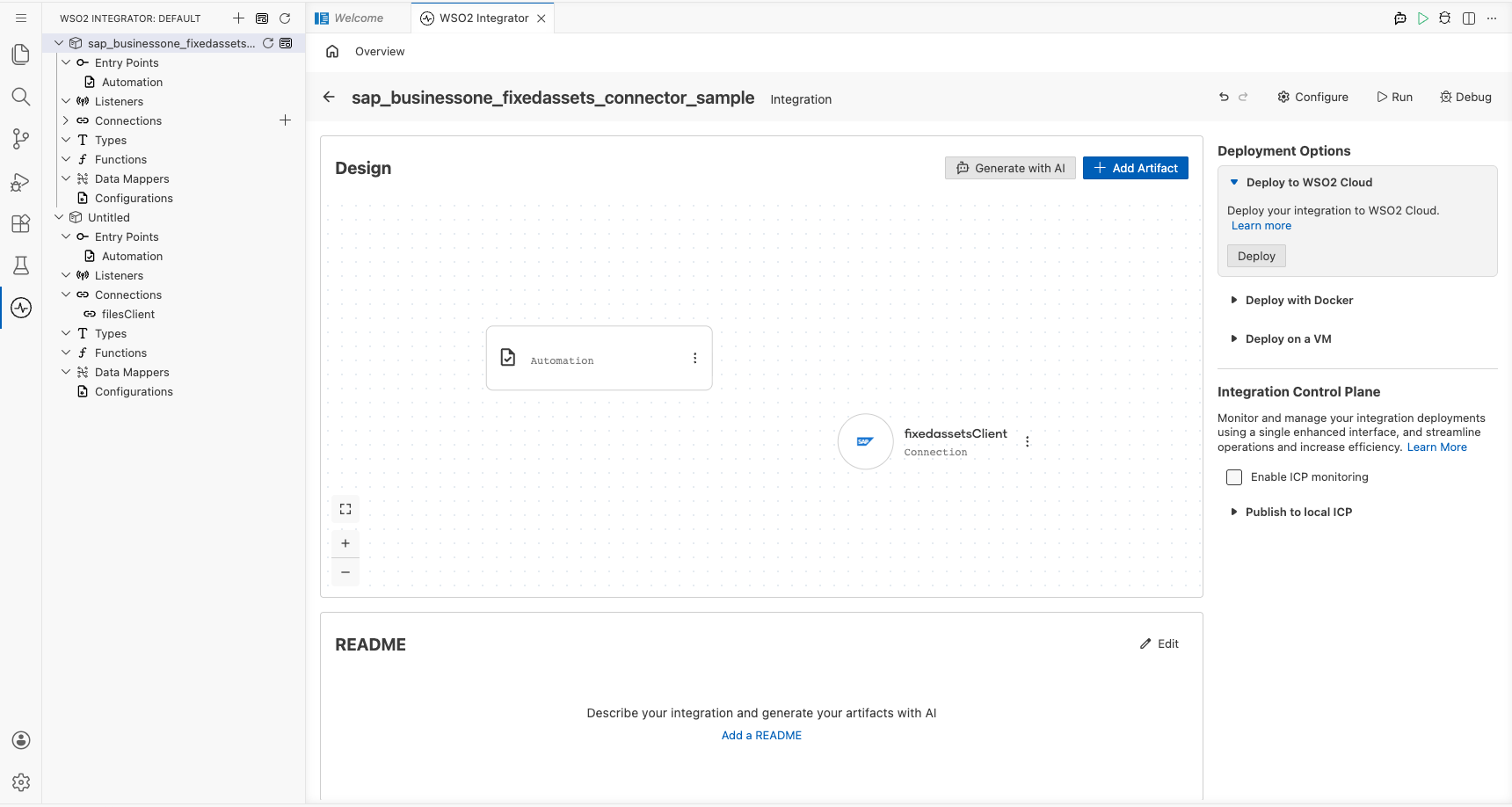
Select Save to persist the connection. The canvas returns to the integration design view, showing the new connection card next to the Automation entry point.
Step 5: Set actual values for your configurables
- Select Configurations in the left panel, at the bottom of the project tree under Data Mappers.
- Set a value for each configurable listed below.
- sapCompanyDb (string) : SAP Business One company database identifier.
- sapUsername (string) : SAP Business One Service Layer login username.
- sapPassword (string) : SAP Business One Service Layer login password.
- sapServiceUrl (string) : URL of the target SAP Business One Service Layer service.
Configuring the SAP Business One Fixed Assets Create Asset Capitalization operation
Step 6: Add an Automation entry point
Add an Automation artifact to create the entry point with its default Start → Error Handler flow.
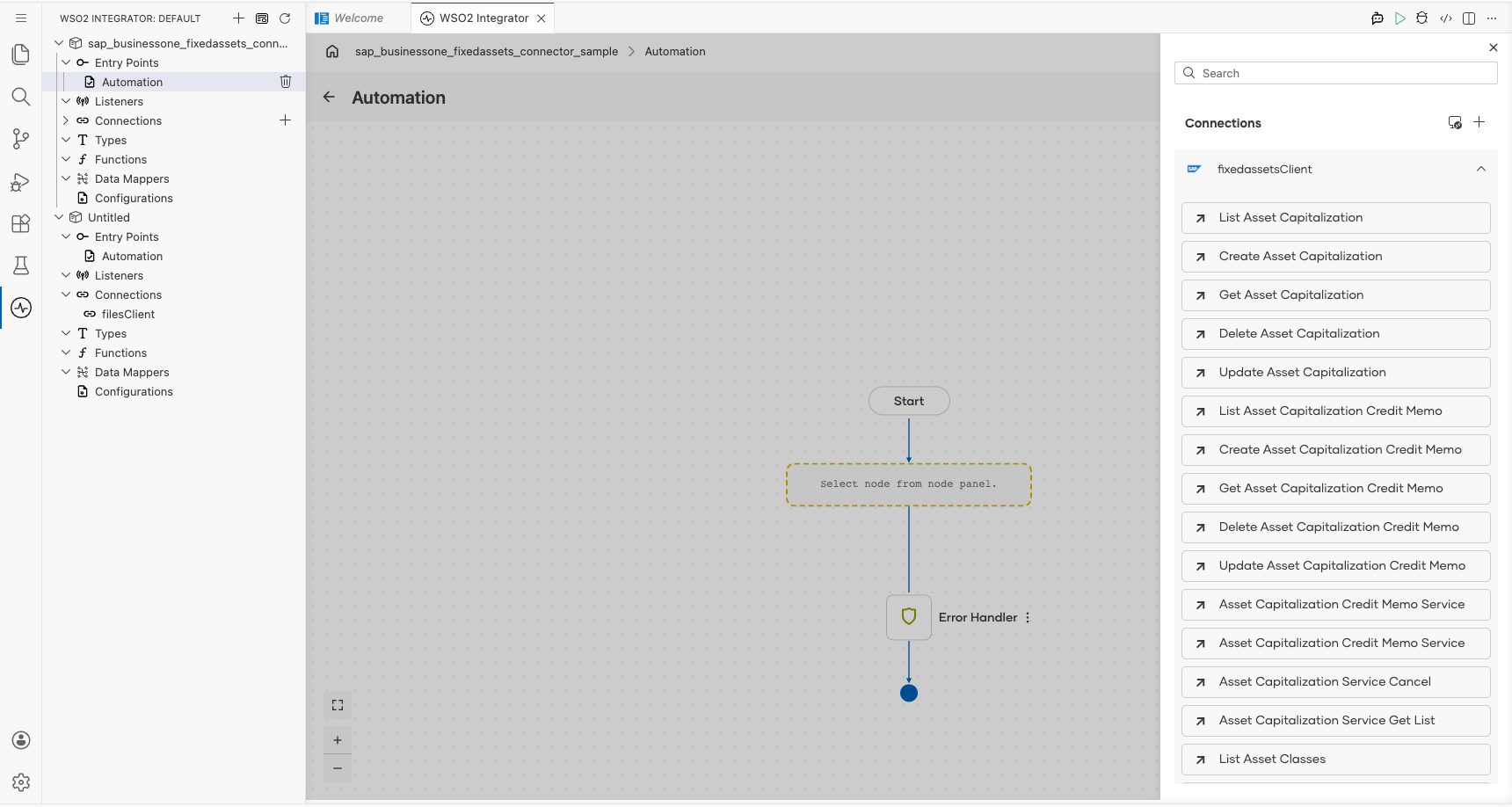
Step 7: Expand the connection's available operations
- Select the + icon between Start and Error Handler.
- Select the fixedassetsClient connection under Connections to expand its list of operations.
Step 8: Select the Create Asset Capitalization operation and configure its input fields
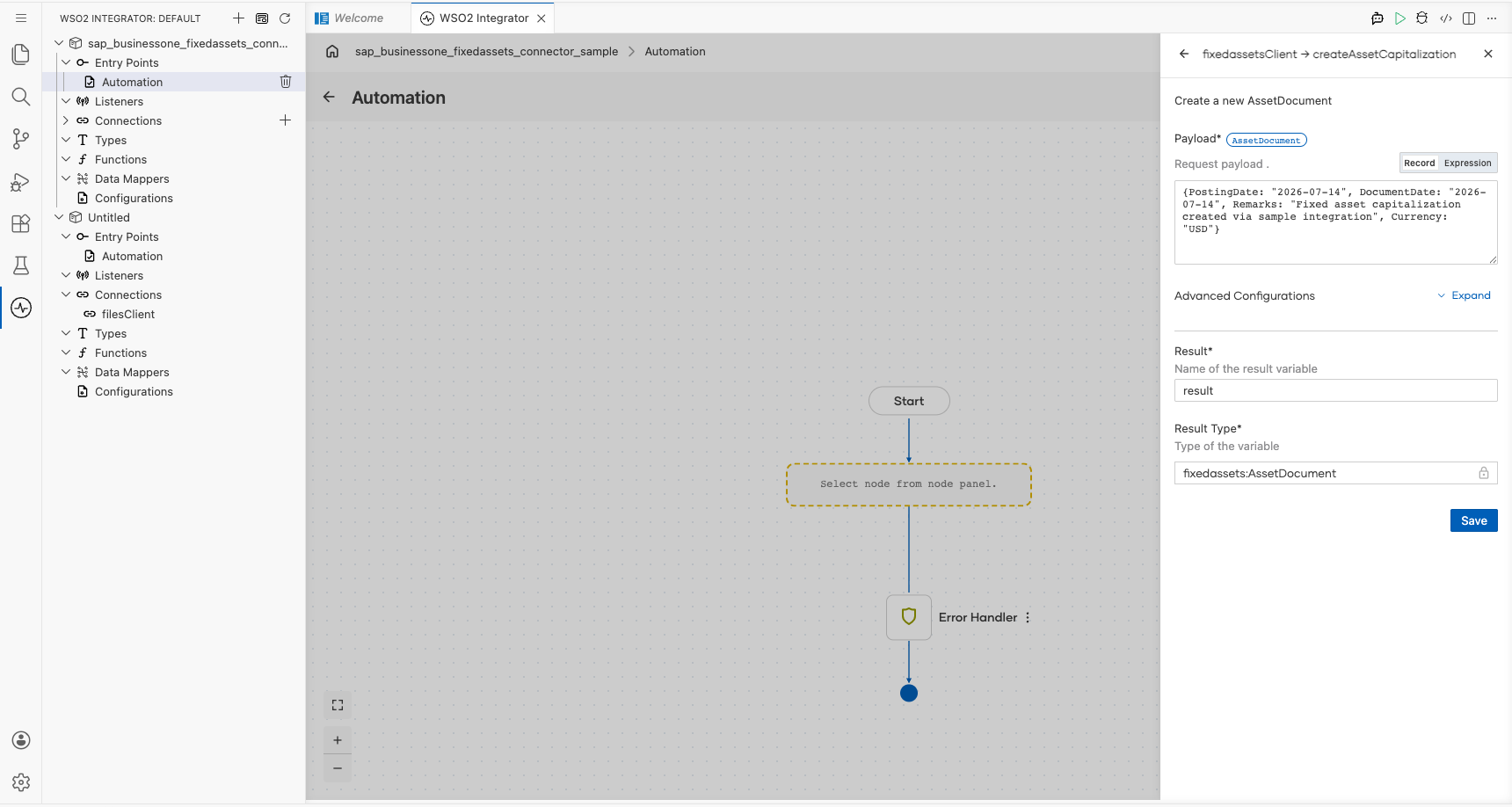
Select Create Asset Capitalization, then configure the payload fields listed below.
- PostingDate : posting date of the asset capitalization document.
- DocumentDate : document date of the asset capitalization document.
- Remarks : free-text remarks stored on the document.
- Currency : currency code used for the document.
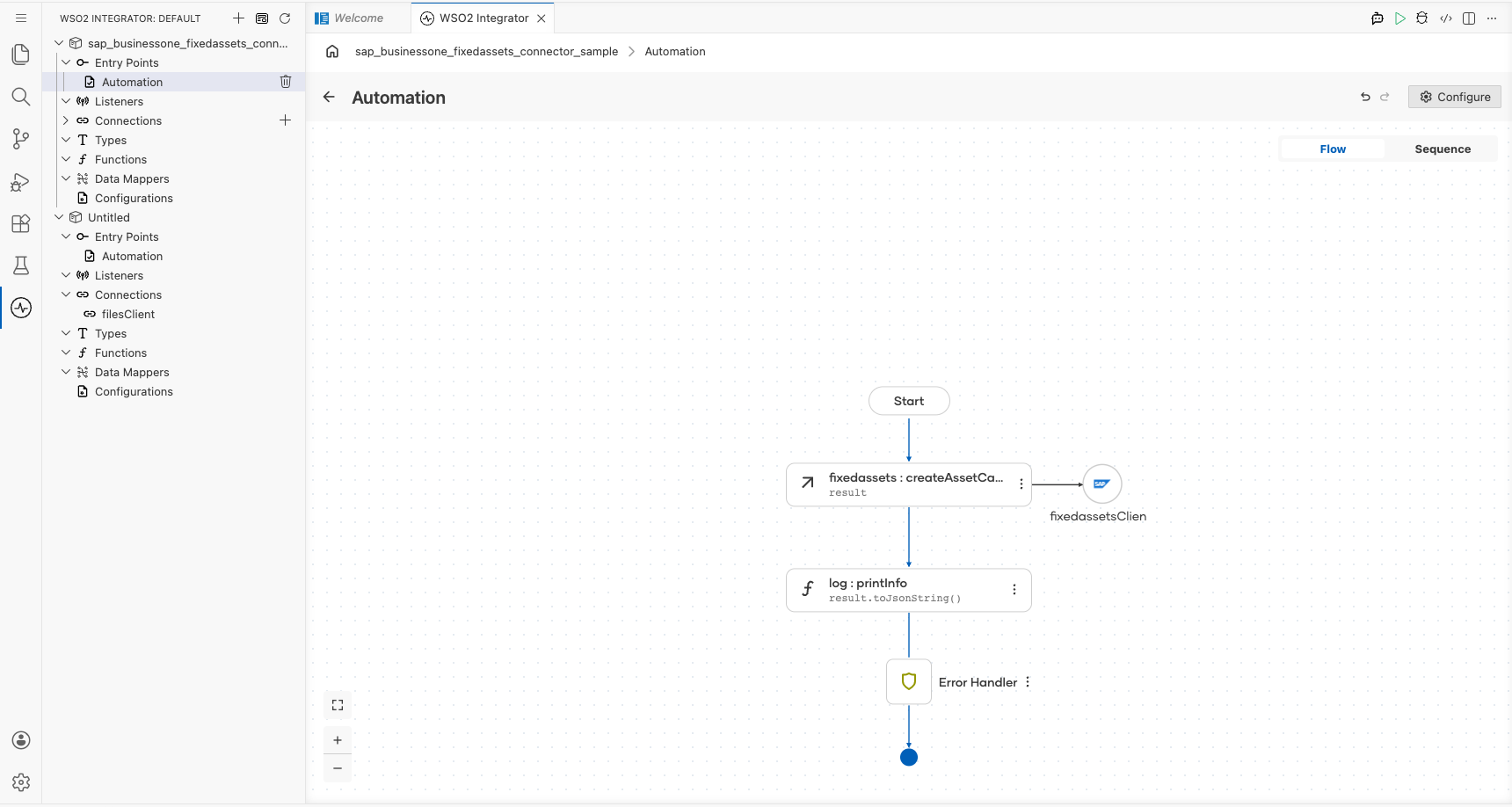
Select Save to add the Create Asset Capitalization operation to the automation flow.
Try it yourself
Try this sample in WSO2 Integration Platform.

More code examples
The SAP Business One connectors provide practical examples illustrating usage in various scenarios. Explore these examples, covering use cases like listing open sales orders, reporting inventory stock, and logging CRM activities.