Example
What you'll build
Build a WSO2 Integrator automation that connects to Elastic Cloud and retrieves a list of all deployments using the listDeployments operation. The integration authenticates with an API key stored as a configurable variable and returns the deployment list response.
Operations used:
- listDeployments : Retrieves all Elastic Cloud deployments associated with the configured API key
Architecture
Prerequisites
- An Elastic Cloud API key (obtainable from the Elastic Cloud console)
Setting up the Elastic cloud integration
New to WSO2 Integrator? Follow the Create a New Integration guide to set up your integration first, then return here to add the connector.
Adding the Elastic cloud connector
Step 1: Open the add connection palette
Select + Add Artifact on the canvas toolbar, then select Connection to open the Add Connection search palette.
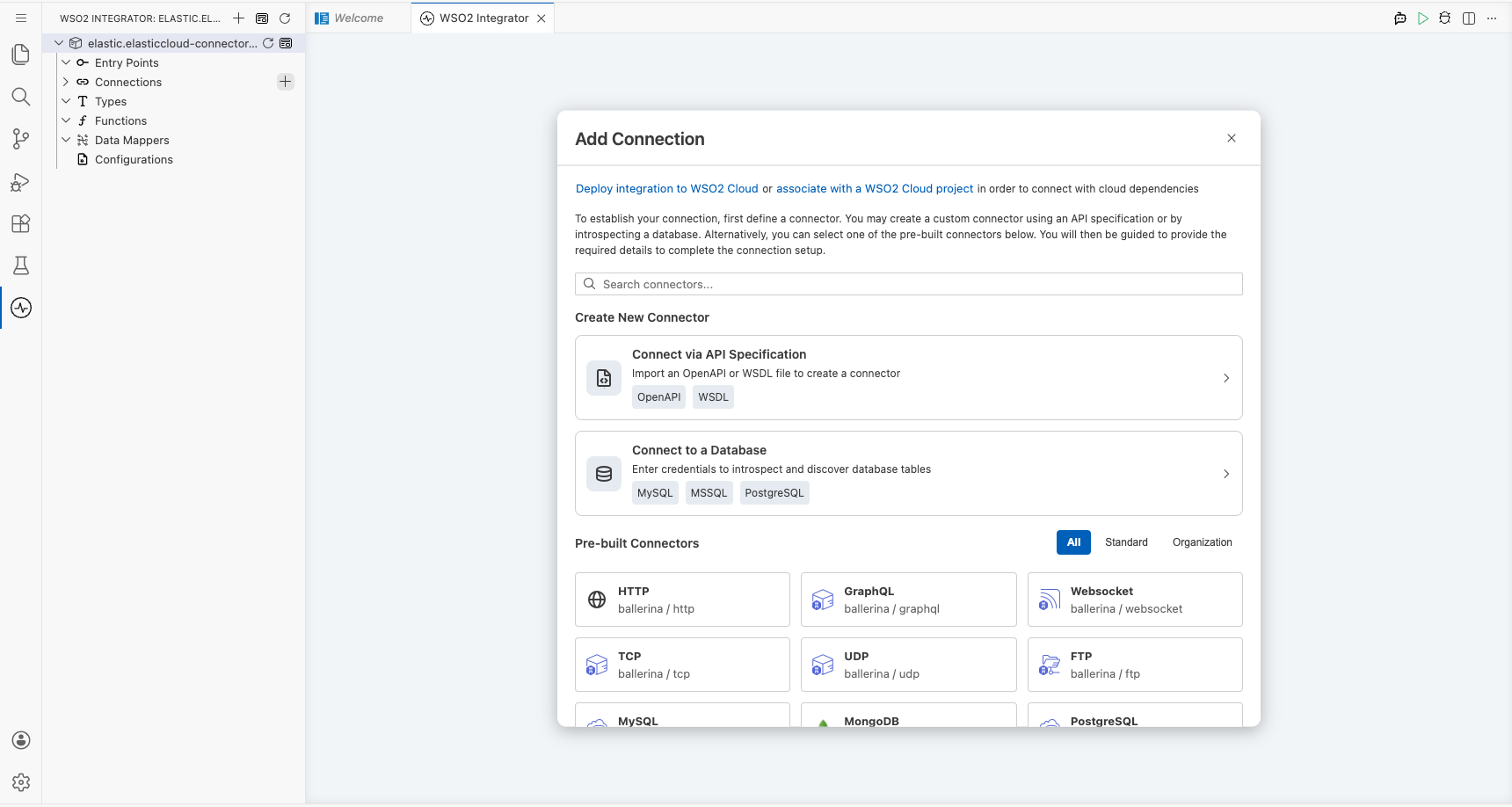
Configuring the Elastic cloud connection
Step 2: Fill in the connection parameters
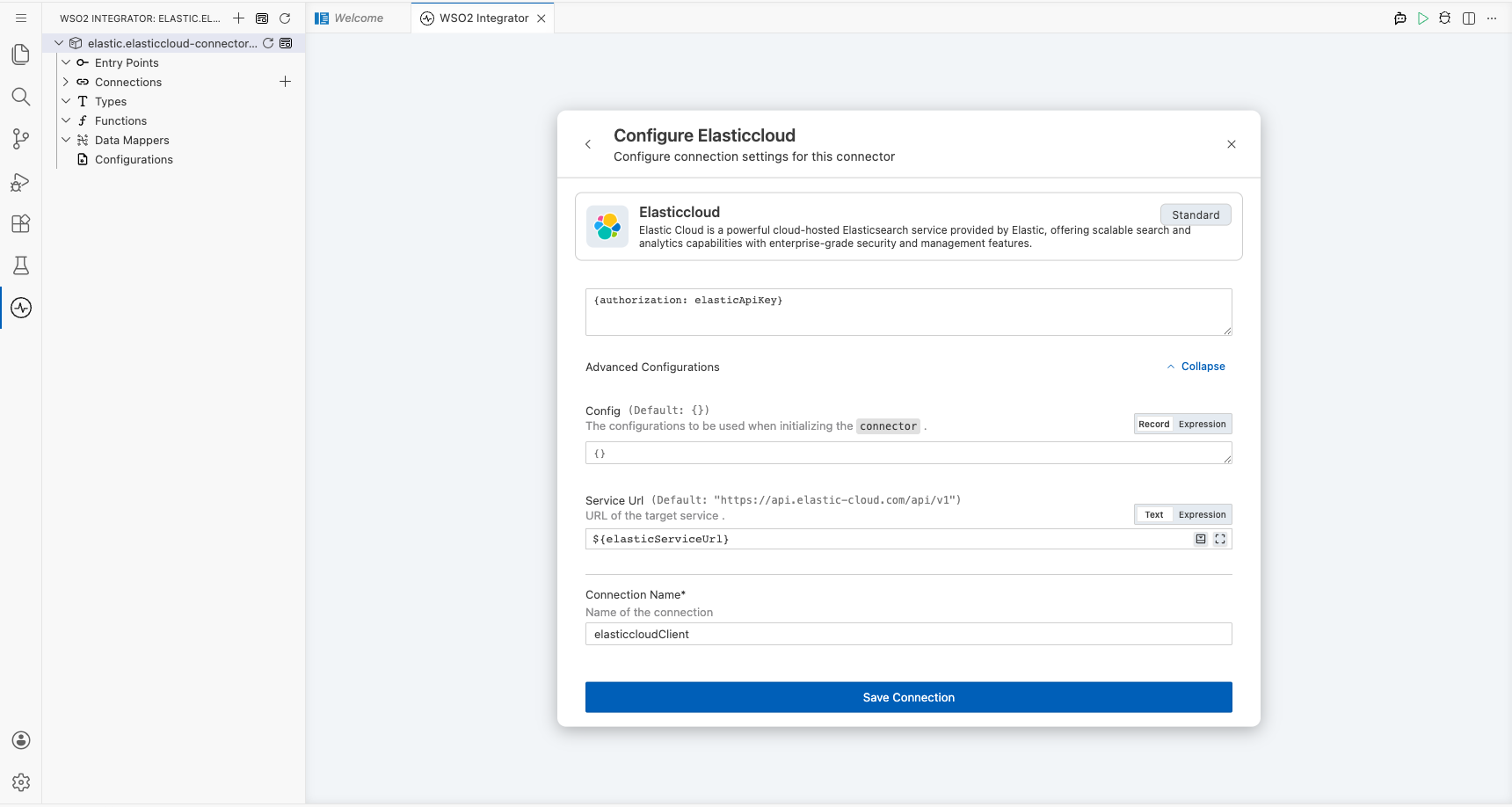
Enter elastic in the search box and select the Elasticcloud connector card to open the configuration form. Bind each field to a configurable variable as described below:
- apiKeyConfig: The
ApiKeysConfigrecord holding the Elastic Cloud API key used for authentication: bind to a new configurable variable of typestring - serviceUrl: The base URL for the Elastic Cloud API: bind to a new configurable variable of type
string
Step 3: Save the connection
Select Save Connection to persist the connection. The elasticcloudClient connection node appears on the canvas and under Connections in the sidebar.
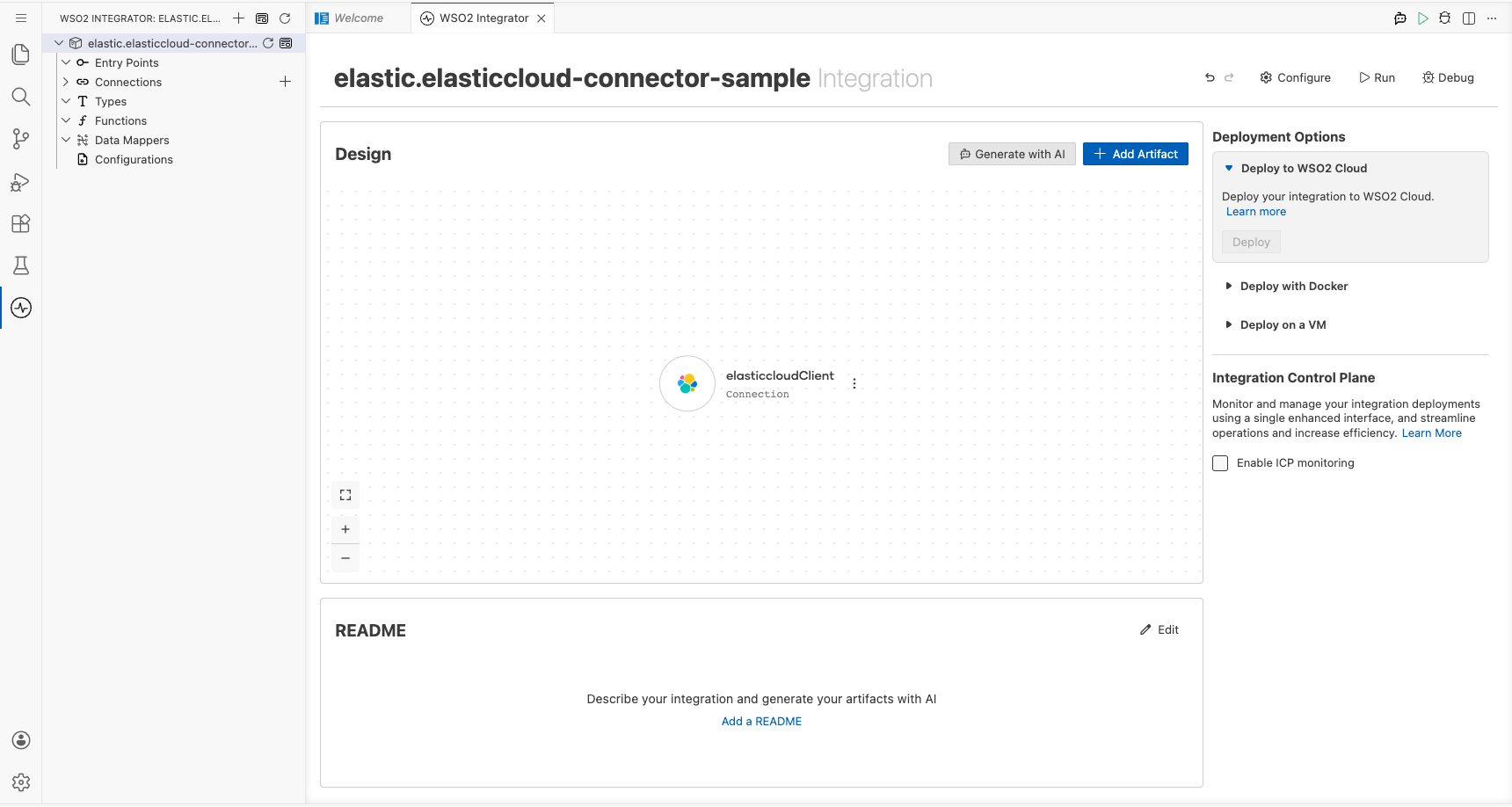
Step 4: Set actual values for your configurables
In the left panel, select Configurations. Set a value for each configurable listed below:
- elasticApiKey (string) : Your Elastic Cloud API key, obtainable from the Elastic Cloud console
- elasticServiceUrl (string) : The base service URL for the Elastic Cloud API, for example
https://api.elastic-cloud.com/api/v1
Configuring the Elastic cloud listDeployments operation
Step 5: Add an automation entry point
Select + Add Artifact on the canvas toolbar, select Automation, then select Create in the form that appears. A new main Automation entry point is added under Entry Points and the Automation flow canvas opens.
Step 6: Select and configure the listDeployments operation
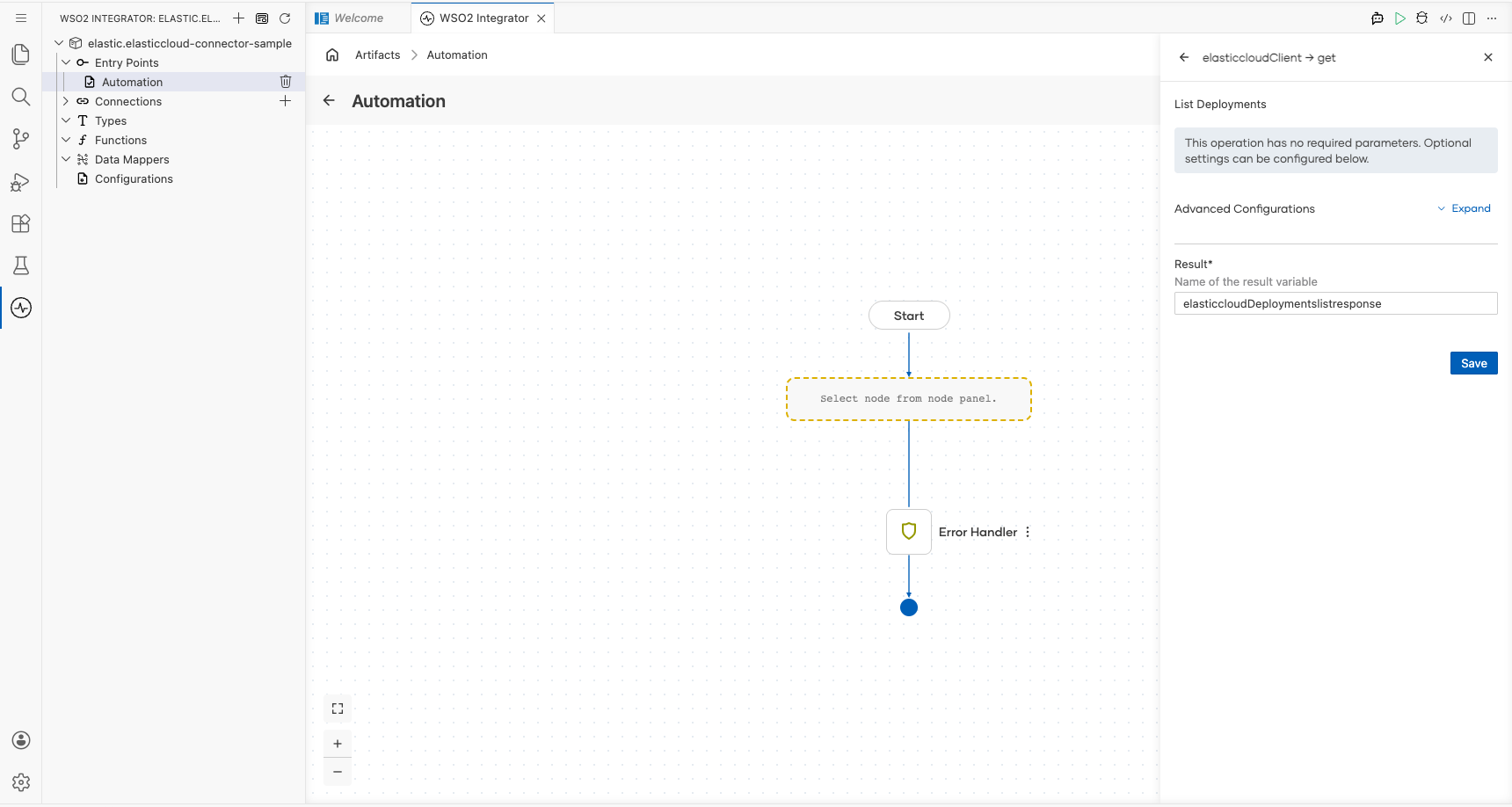
In the Automation flow canvas, select the + (Add Step) button below the Start node to open the step panel. Expand elasticcloudClient under Connections, enter deployment in the search box to filter the list, then select List Deployments.
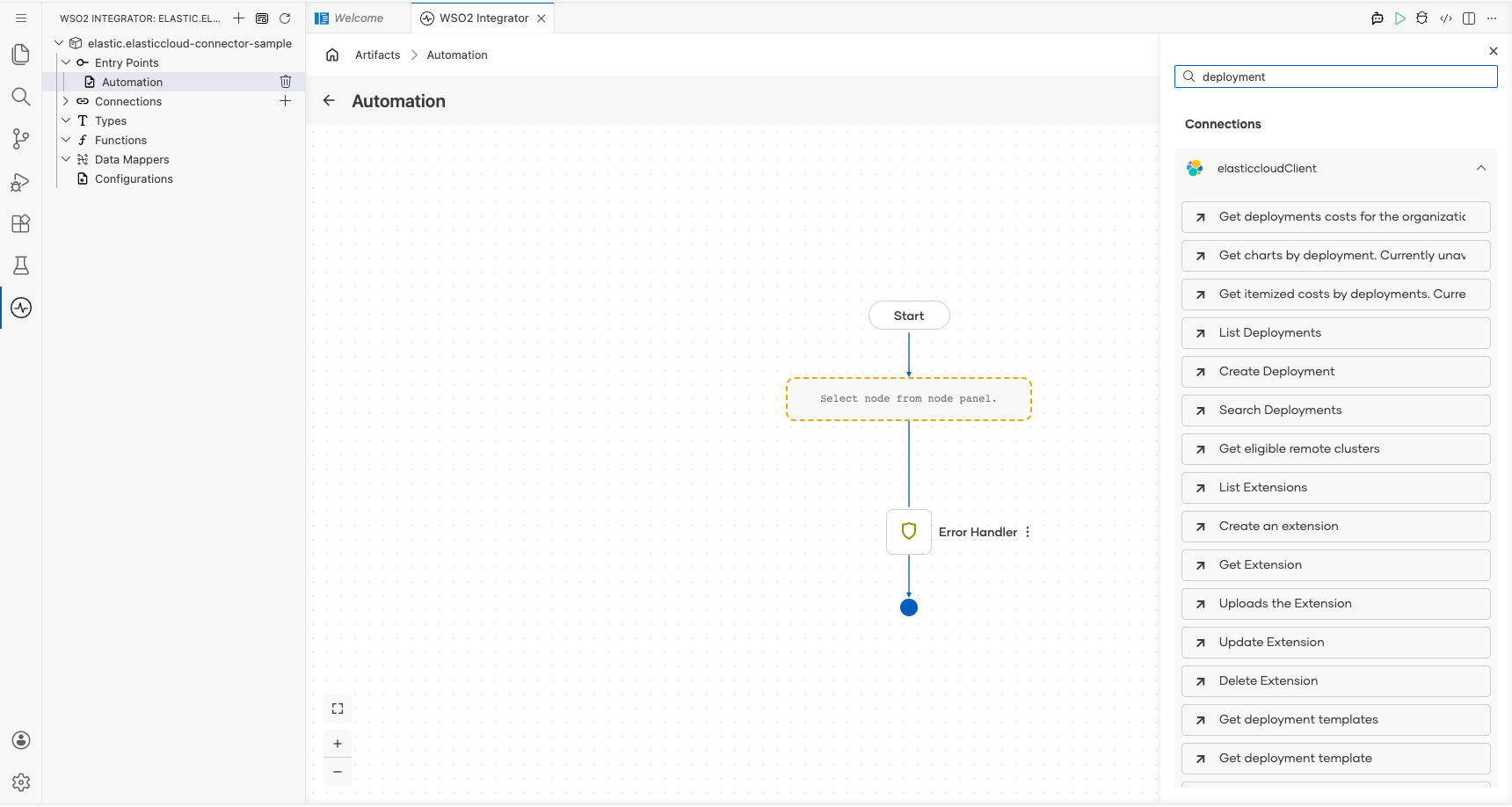
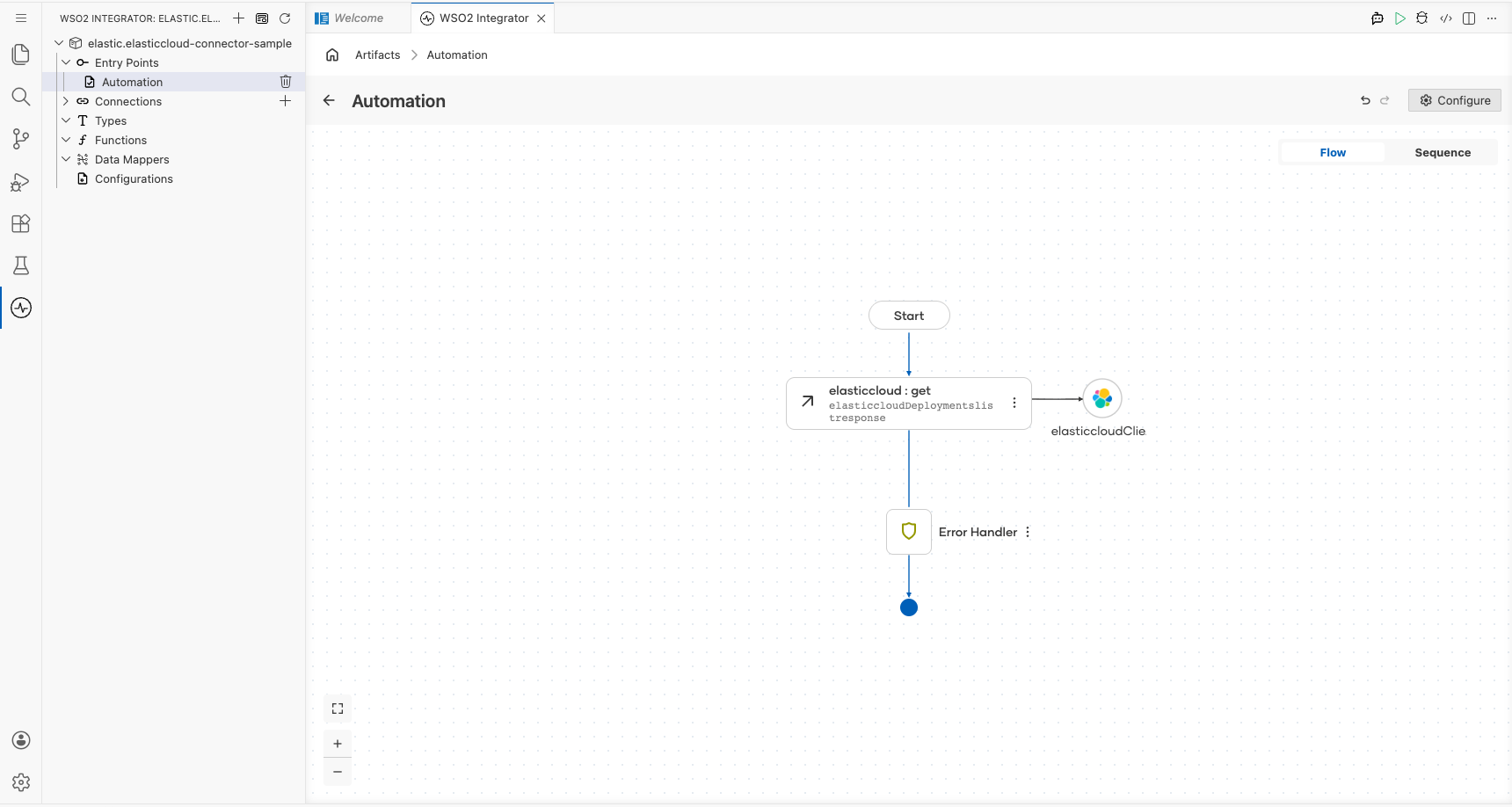
The List Deployments operation form opens. This operation requires no mandatory parameters. The result is stored in the auto-generated variable elasticcloudDeploymentslistresponse. Select Save to add the step to the flow.
Try it yourself
Try this sample in WSO2 Integration Platform.

More code examples
The Elasticcloud connector provides practical examples illustrating usage in various scenarios. Explore these examples, covering the following use cases:
-
Manage Deployment: Create, list, and manage Elasticsearch deployments in your organization.
-
API key Management: Create, list, and delete API keys for secure access to Elastic Cloud resources.