Example
What you'll build
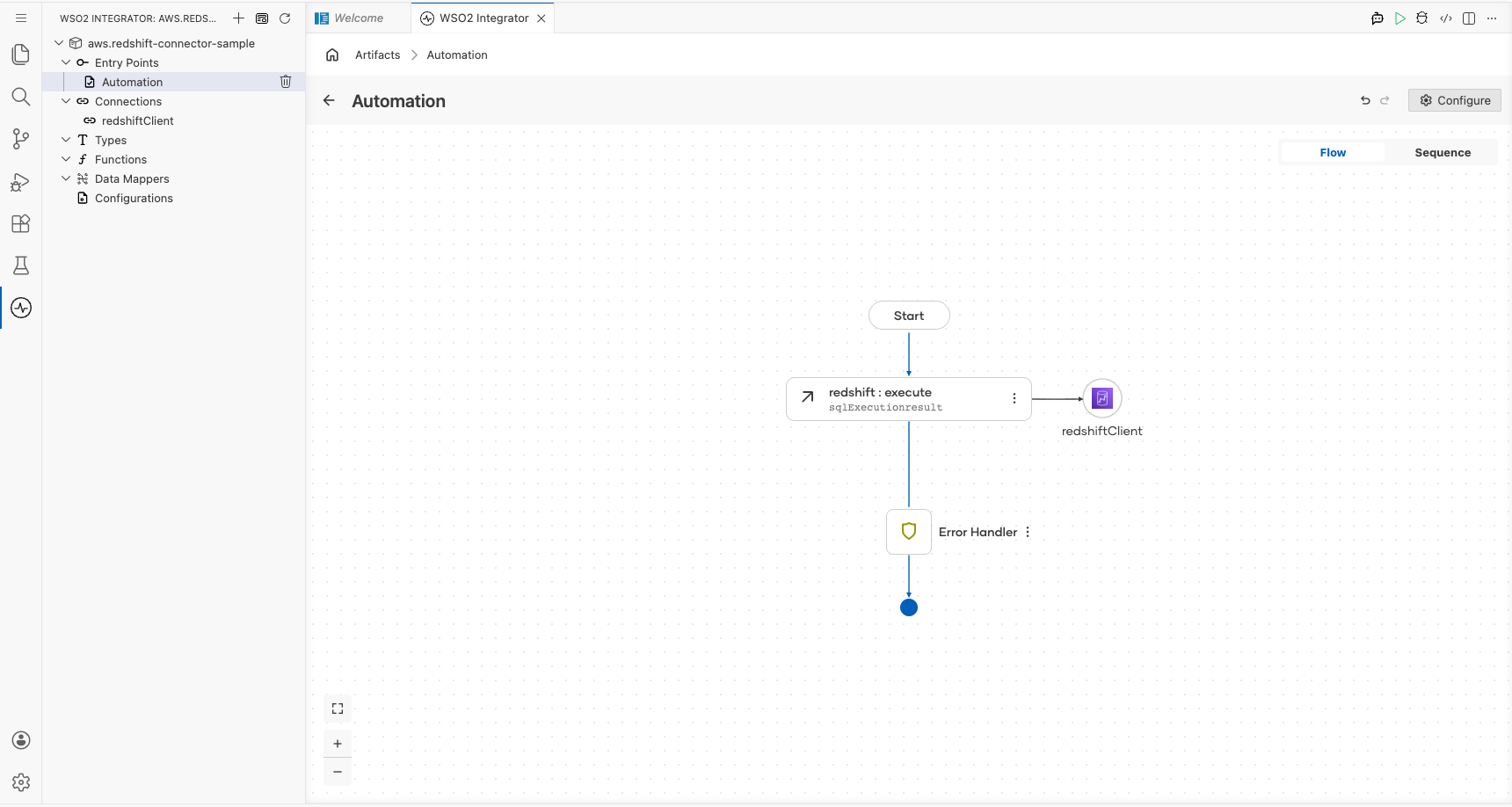
Build a low-code integration using the AWS Redshift connector in WSO2 Integrator that connects to an Amazon Redshift cluster and executes a DDL SQL statement. The workflow creates a Redshift client connection using configurable variables and runs a CREATE TABLE IF NOT EXISTS Employees statement via an automation entry point.
Operations used:
- Execute : Runs a DDL SQL statement against the connected Redshift database
Architecture
Prerequisites
- An Amazon Redshift cluster with a valid JDBC URL, database username, and password
Setting up the AWS Redshift integration
Note: New to WSO2 Integrator? Follow the Create a new integration guide to set up your integration first.
Adding the AWS Redshift connector
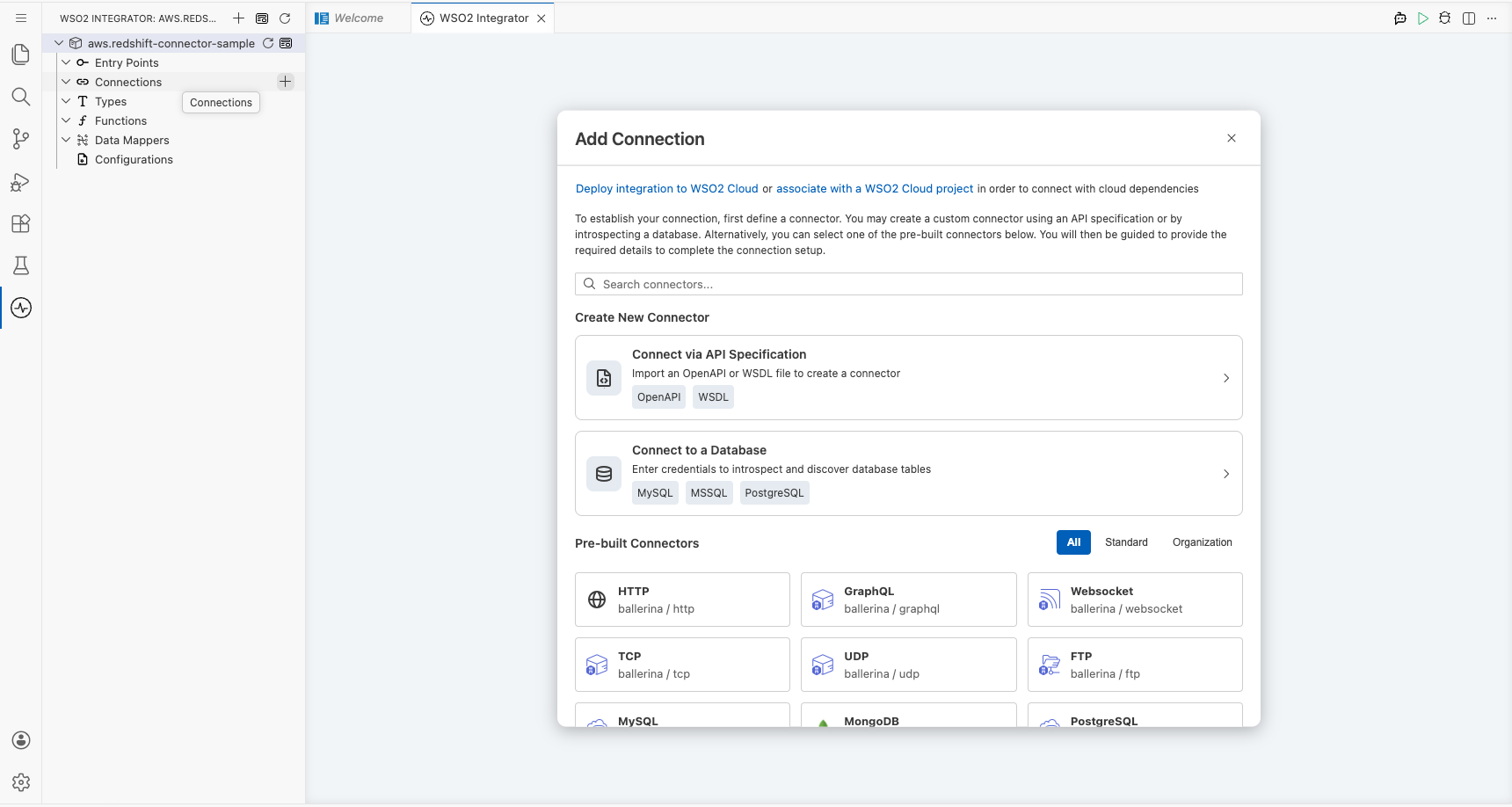
Step 1: Open the add connection panel
In the left sidebar, hover over Connections to reveal the toolbar and select the Add Connection (+) button to open the connector palette.
Step 2: Select the AWS Redshift connector
- Enter
Redshiftin the search field to filter the connectors. - Select the AWS Redshift connector card to open the connection configuration form.
Configuring the AWS Redshift connection
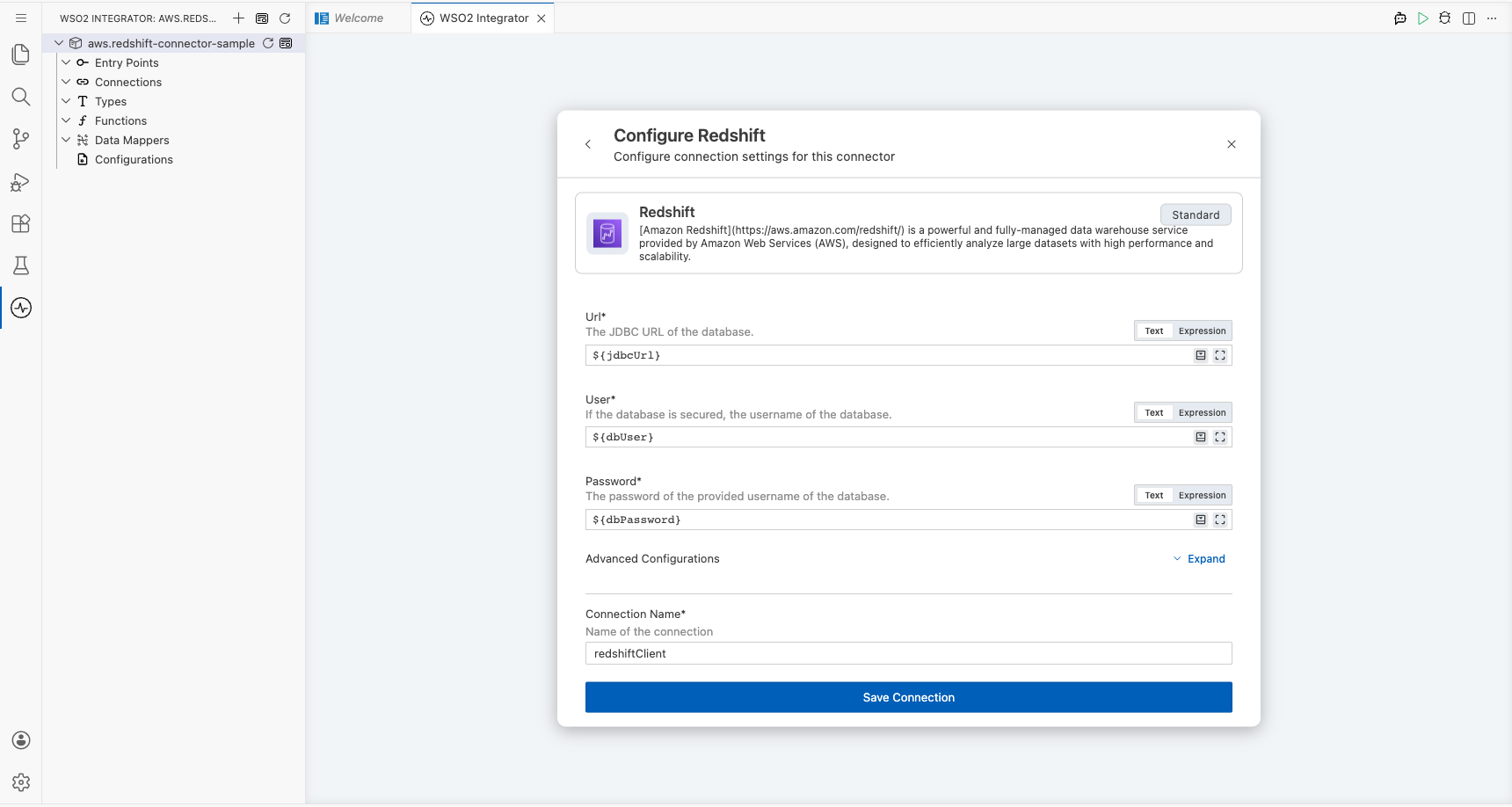
Step 3: Configure the connection parameters
Set the Connection Name to redshiftClient. Bind each field to a configurable variable using the helper panel next to each field, and configure the following parameters:
- Url : JDBC connection URL for the Redshift cluster
- User : Database username
- Password : Database password
Step 4: Save the connection
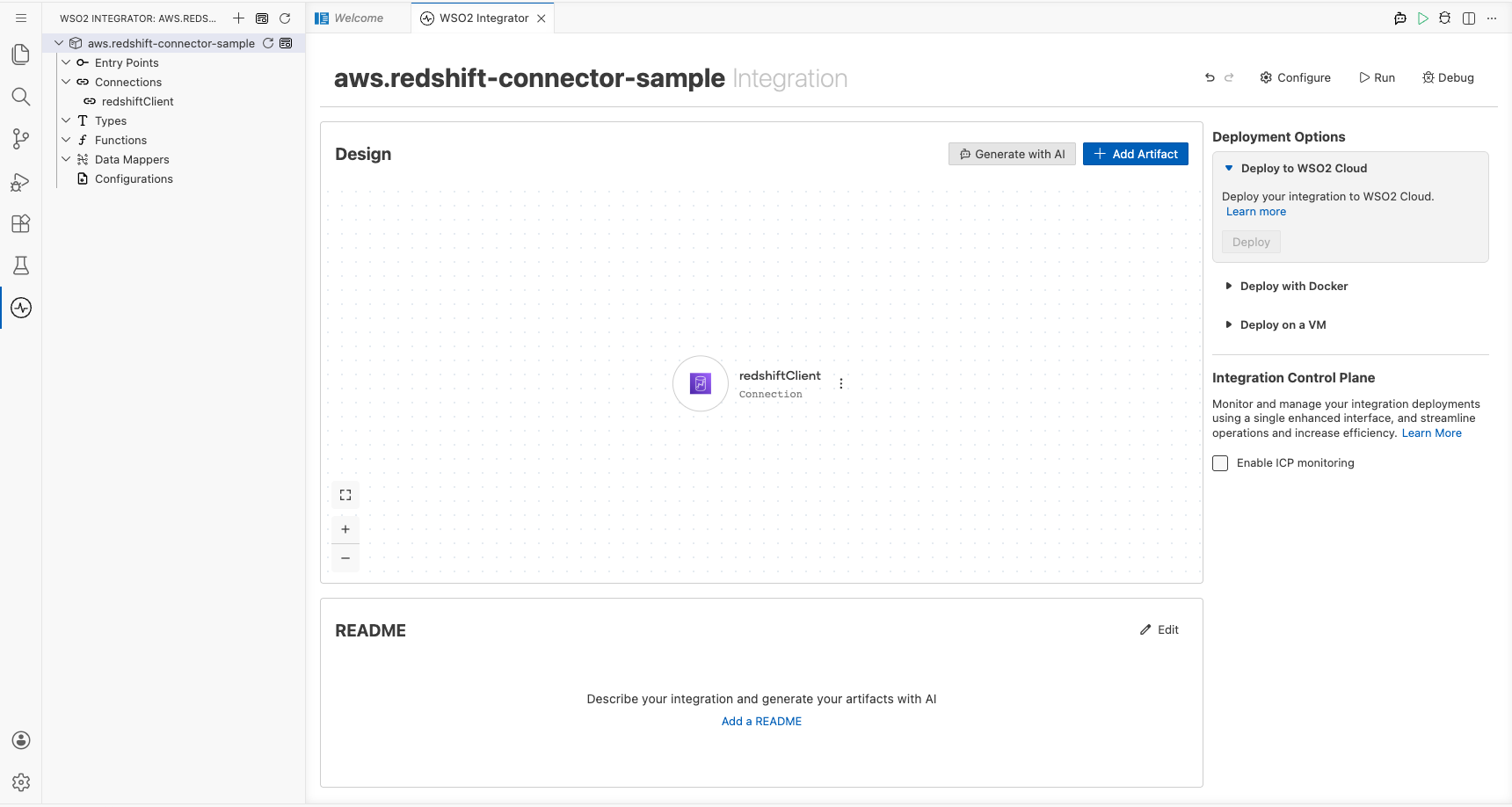
Select Save Connection to persist the connection. The redshiftClient connection node appears on the canvas and is listed under Connections in the left sidebar.
Step 5: Set values for your configurables
- In the left panel, select Configurations (at the bottom of the project tree, under Data Mappers).
- Set a value for each configurable listed below:
- jdbcUrl : string : the JDBC connection URL for your Redshift cluster (for example,
jdbc:redshift://<cluster-endpoint>:5439/<database>) - dbUser : string : the database username
- dbPassword : string : the database password
- jdbcUrl : string : the JDBC connection URL for your Redshift cluster (for example,
Configuring the AWS Redshift execute operation
Step 6: Add an automation entry point
- In the left sidebar, hover over Entry Points and select the Add Entry Point button.
- Select Automation in the artifact selection panel.
- Select Create in the dialog to accept the default settings.
Step 7: Expand the connection and select the execute operation
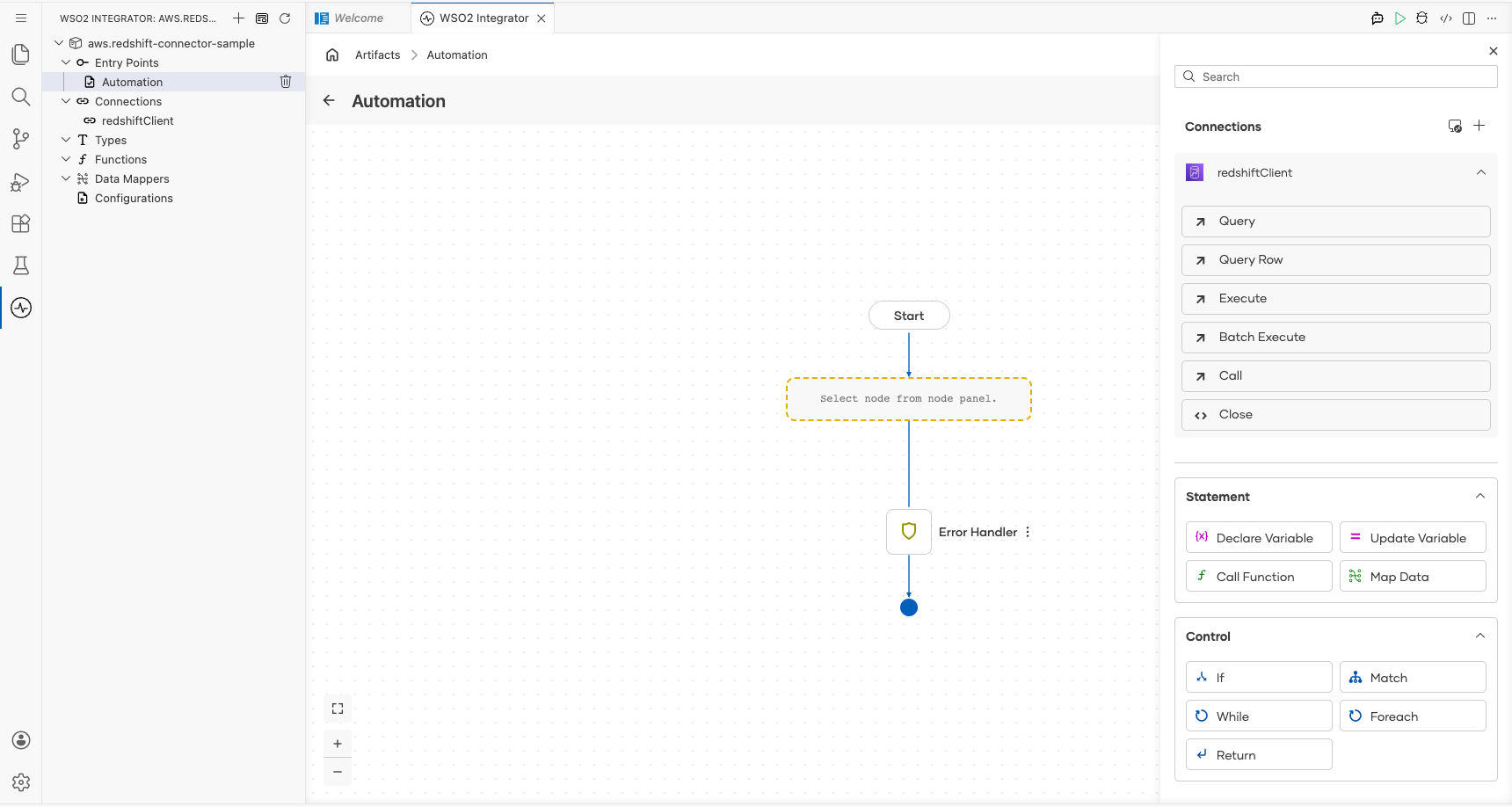
- Select the + (Add Step) button in the automation flow between the Start and Error Handler nodes.
- Under Connections in the node panel, select redshiftClient to expand it and reveal all available operations.
Step 8: Configure the execute operation
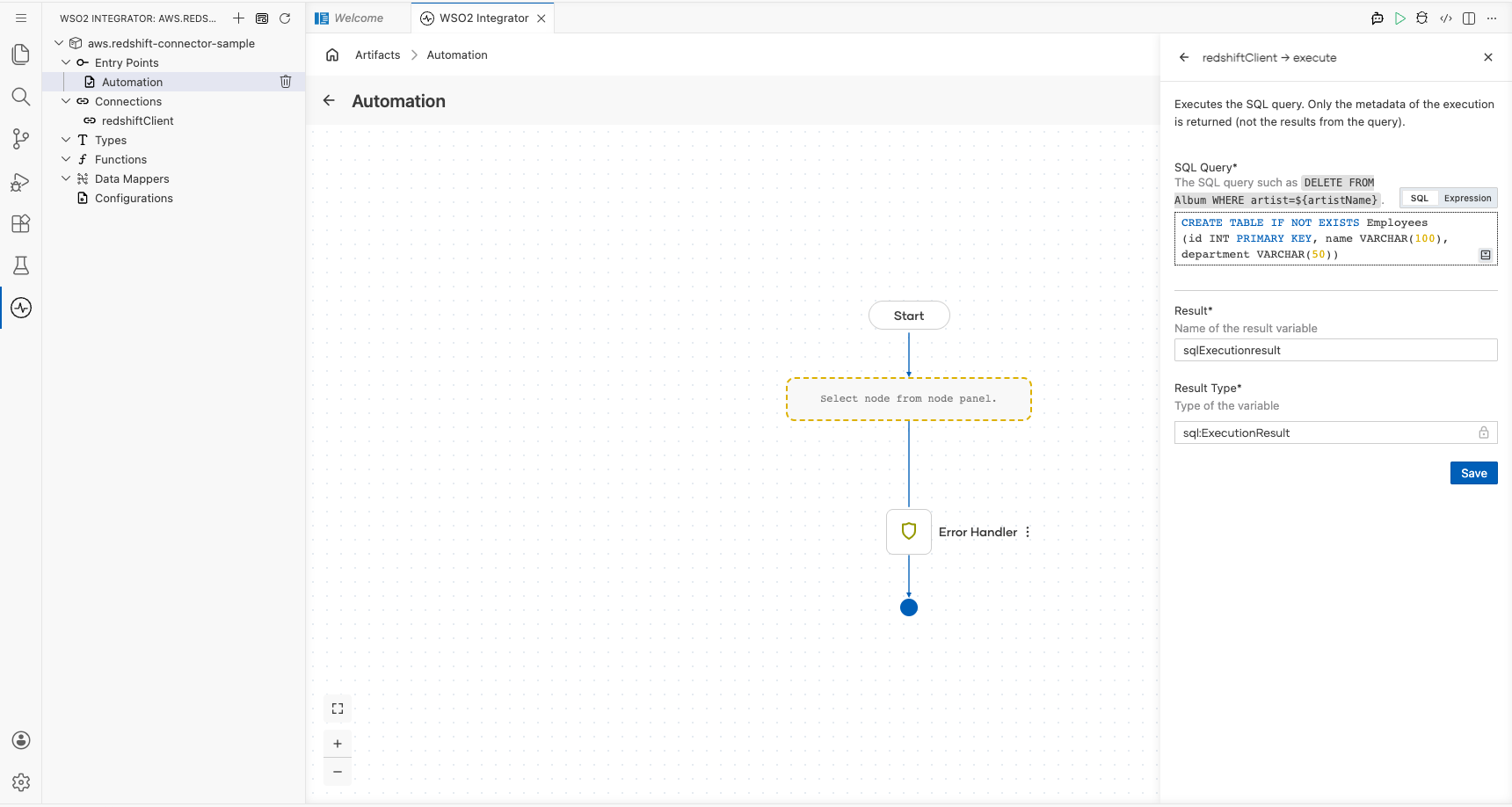
Select Execute from the list of operations under redshiftClient, then fill in the operation fields:
- SQL Query : The DDL statement to run against the Redshift database:
CREATE TABLE IF NOT EXISTS Employees (id INT PRIMARY KEY, name VARCHAR(100), department VARCHAR(50)) - Result : Variable that stores the execution result (
sqlExecutionresult, auto-populated) - Result Type :
sql:ExecutionResult(auto-populated, read-only)
Select Save to add the step to the automation flow.
Try it yourself
Try this sample in WSO2 Integration Platform.

More code examples
The aws.redshift connector provides practical examples illustrating usage in various scenarios. Explore these examples.
-
Read data from the database - Connects to AWS Redshift using the Redshift connector and performs a simple SQL query to select all records from a specified table with a limit of 10.
-
Insert data into the database - Connects to AWS Redshift using the Redshift connector and performs an INSERT operation into a specified table.
-
Music store - Illustrates how to create an HTTP RESTful API with Ballerina to perform basic operations on an AWS Redshift database, including setup, configuration, and running examples.