Run a Durable Agent
A durable agent does nothing until something starts it. A run step starts one instance from an ordinary flow and binds the new instance ID to a variable, so the rest of the flow can send that instance turns and read its result. See Create a Durable Agent for building the agent this step starts.
Start the agent from a trigger
The quickest way to start a durable agent is to give it a trigger. On the agent canvas, select Add Trigger and choose a channel, for example HTTP under API Endpoints. The generated resource already contains a run step for the agent. For a walkthrough, see Build a Durable Agent.
To start the agent from a flow you build yourself, add the run step from the node panel, as the steps below show.
Add the step
The steps below follow one example: a POST /claim resource that hands each incoming claim to the claimAgent agent.
-
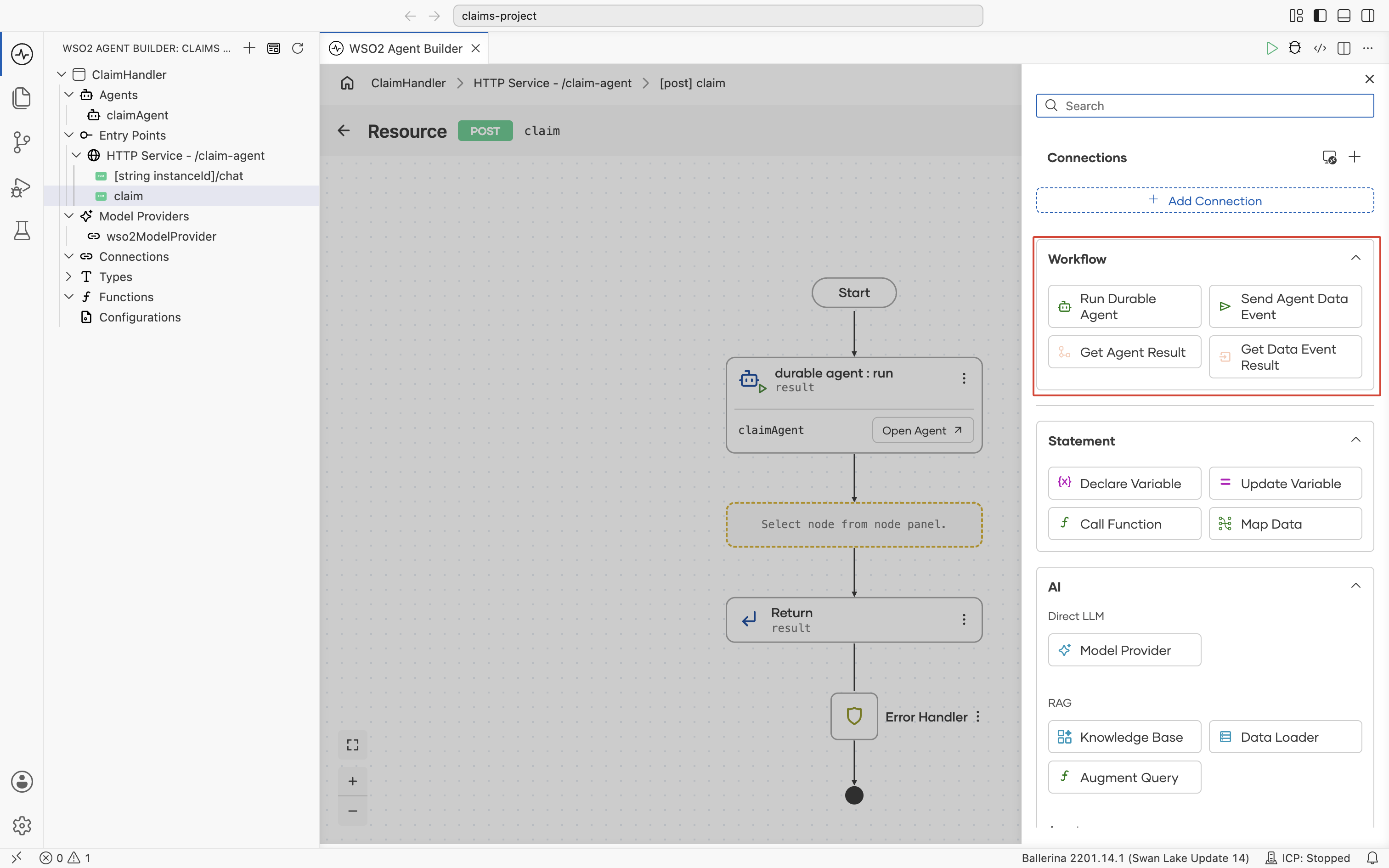
On the flow diagram, select + where the agent should start.
-
In the node panel, under Workflow, select Run Durable Agent. The Run Durable Agent form opens.
-
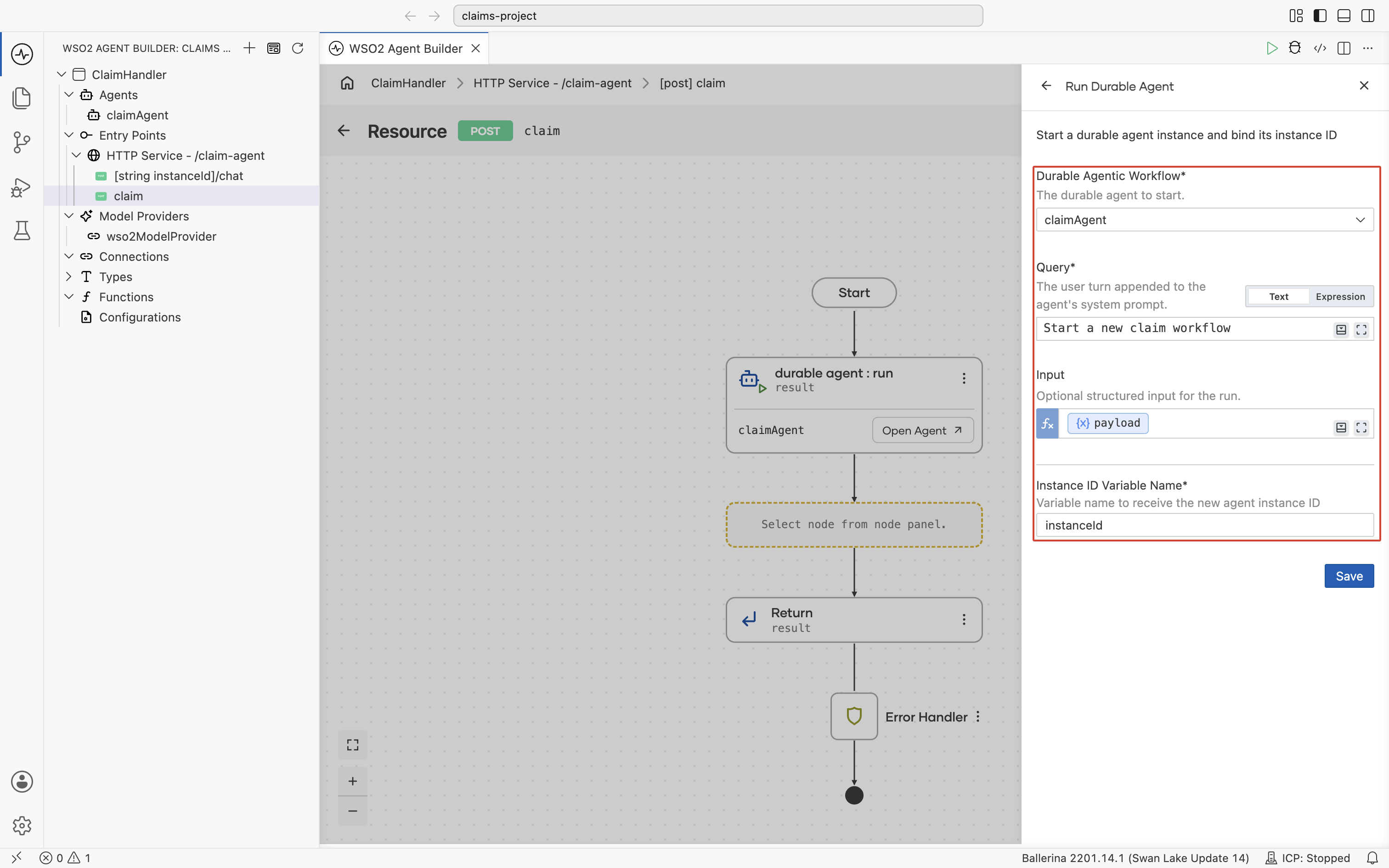
Fill in the form:
Field Required Description Durable Agentic Workflow Yes The durable agent to start. The list shows the durable agents in the agentic integration, claimAgenthere.Query Yes The user turn appended to the agent's system prompt, for example Start a new claim workflow. The model plans from this request, so write it as an instruction rather than a label.Input No Structured input for the run, passed alongside the query. Here it is the resource's payload, which holds the new claim, so the agent starts with the claim itself.Instance ID Variable Name Yes The variable that receives the new agent instance ID. Defaults to instanceId. -
Select Save.
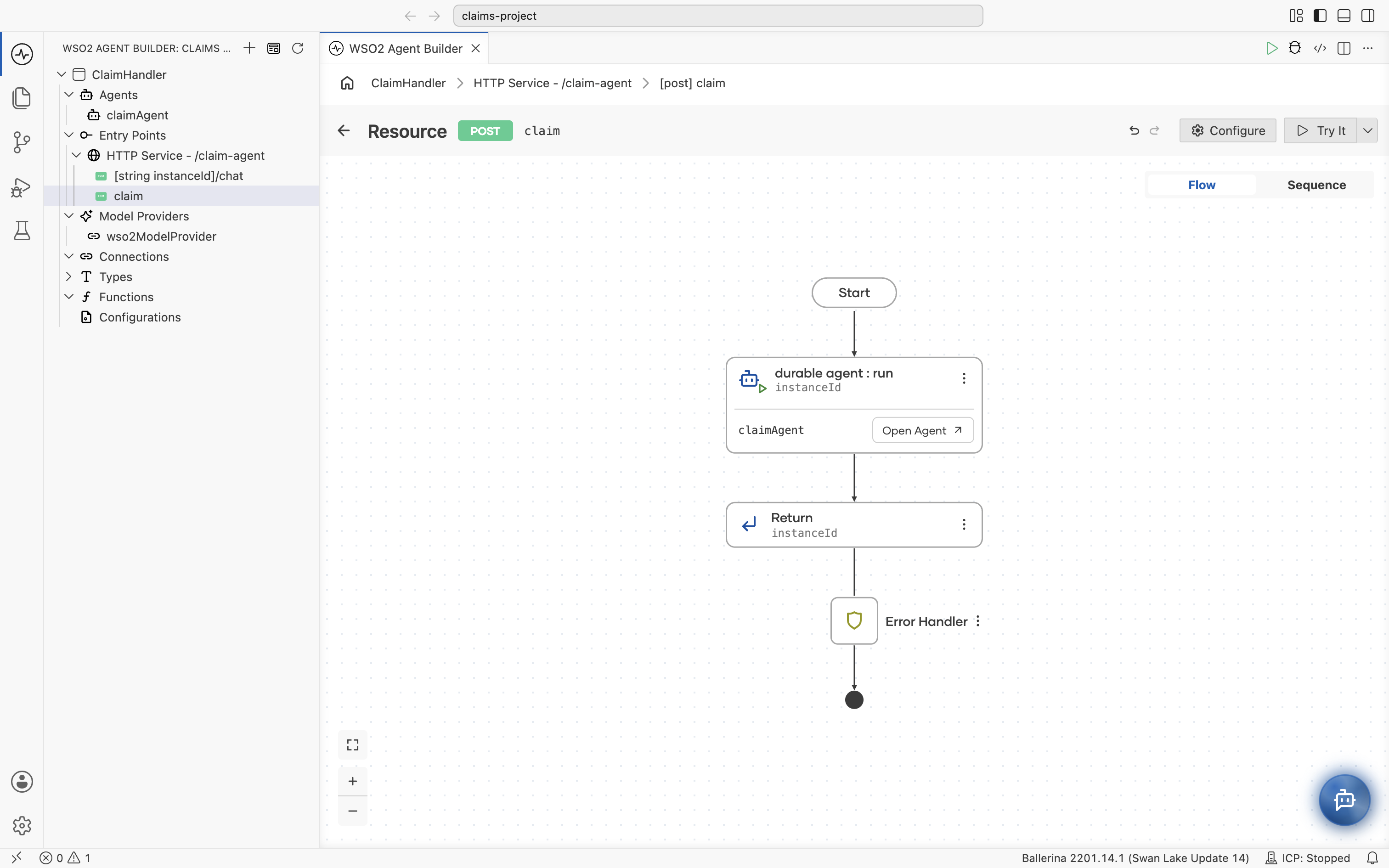
The saved step is drawn as durable agent : run, with the variable it binds and an Open Agent button that opens the agent's canvas. Follow it with a Return step on instanceId, so the caller gets the ID of the run it started.
Query or input?
The two fields carry different things to the same run, and an agent usually wants both.
- Query is language. It becomes the user turn, so it tells the model what to do with this run.
- Input is data. It is the structured value the run works on, and the model reads it through the capabilities and instructions you gave the agent.
In the claim example, the query says to start a new claim workflow, while the input carries the claim. That's why the agent can plan over a payload the query never spells out.
Starting is not waiting
This step creates the instance and binds its ID. It does not wait for the agent to finish, which is what makes the ID worth keeping: every later interaction with that instance is addressed by it. The same Workflow group in the node panel holds the steps that use it: Send Agent Data Event to deliver a turn, and Get Agent Result to read the outcome.
What's next
- Send an Agent Data Event: Deliver a turn to the instance this step started.
- Create a Durable Agent: The agent and the capabilities this step starts.
- Workflow executions: Watch the started instance in the Integration Control Plane.