





Architecting Cloud-Native Applications
As enterprises modernise their technology stacks, designing platform-agnostic, scalable, and well-governed cloud-native architectures is essential for long-term success. This lab session will explore how to apply the platformless concept to build cloud-native applications that offer flexibility, portability, and resilience across diverse cloud environments.
Speakers

Chintana's role is helping customers to figure out how to architect modern cloud based applications and move their existing workloads to cloud. Rethink and integrate all aspects of application architecture from domain driven design, data architecture, authentication/authorization, and API/integration services. He has over 17 years of experience working large scale enterprises in different industry verticals such as aerospace and finance.
Chathura Kulasinghe is currently leading the Solutions Architecture (SA) team in the UK at WSO2. Since 2012, he has been supporting WSO2 customers, prospects, and partners while working closely with Sales and Customer Success teams. Chathura brings a background in full-stack software development within the banking industry, with expertise in IBM, Oracle, and Microsoft technologies, as well as experience as a solutions engineer during his tenure at Twilio. In addition to his regular Solutions Architecture activities, he enjoys simplifying complex solutions to connect diverse audiences together through diagrams and storytelling. One of his key goals is to study the unique requirements of various business domains and serve as a trusted advisor, guiding individuals in identifying effective designs and patterns for building solutions while continuously expanding his expertise in those specific domains.
Building AI Applications in the Enterprise - Part 2
Building AI applications for the enterprise requires understanding key architectural patterns that enable powerful, scalable, and intelligent solutions. This session explores the core approaches to building AI-driven applications, including Generative AI, Retrieval-Augmented Generation (RAG), and AI Agents.
Speakers
Shafreen, with over a decade of experience in core Java, software architecture, and agile project management, has excelled in leading the standard library team for Ballerina, a language for cloud native applications. As the lead developer of Ballerina's HTTP transport, he created a robust, scalable library supporting key internet protocols. At WSO2, he contributed to the renowned ESB product, the fastest open source ESB in the world. Shafreen also led a team of 70 engineers as an engineering manager, fostering a culture of excellence. His commitment extends to the open source community as an Apache committer and PMC member, demonstrating his leadership and expertise in technology.
Rosen is a Technical Lead at WSO2 with over 7 years of experience building and leading large-scale enterprise software. Rosen currently leads WSO2 Micro Integrator. Previously, Rosen managed product areas in WSO2 API Manager and Enterprise Integrator, where he drove customer-centric feature development and resolved critical technical challenges. He is passionate about software architecture, enterprise integration, and API management.
Modularity With DDD Using Cell-Based Architecture on Choreo
In the era of digital transformation, enterprises are increasingly adopting microservices and domain-driven design (DDD) to build scalable, maintainable, and agile systems. However, the granularity of microservices often leads to complexity in governance, deployment, and scalability. Enter cell-based architecture, a paradigm that bridges the gap between monolithic systems and fine-grained microservices by organizing components into self-contained, independently deployable units called cells.
Speakers
Chintana's role is helping customers to figure out how to architect modern cloud based applications and move their existing workloads to cloud. Rethink and integrate all aspects of application architecture from domain driven design, data architecture, authentication/authorization, and API/integration services. He has over 17 years of experience working large scale enterprises in different industry verticals such as aerospace and finance.
Modernization Unpacked: Perspectives
Modernization is complex, balancing innovation with real-world constraints. This fireside chat cuts through the noise, focusing on what works, what doesn’t, and how organizations adapt. Practitioners will share hard lessons, common pitfalls, and key decisions that drive real progress.
Speakers
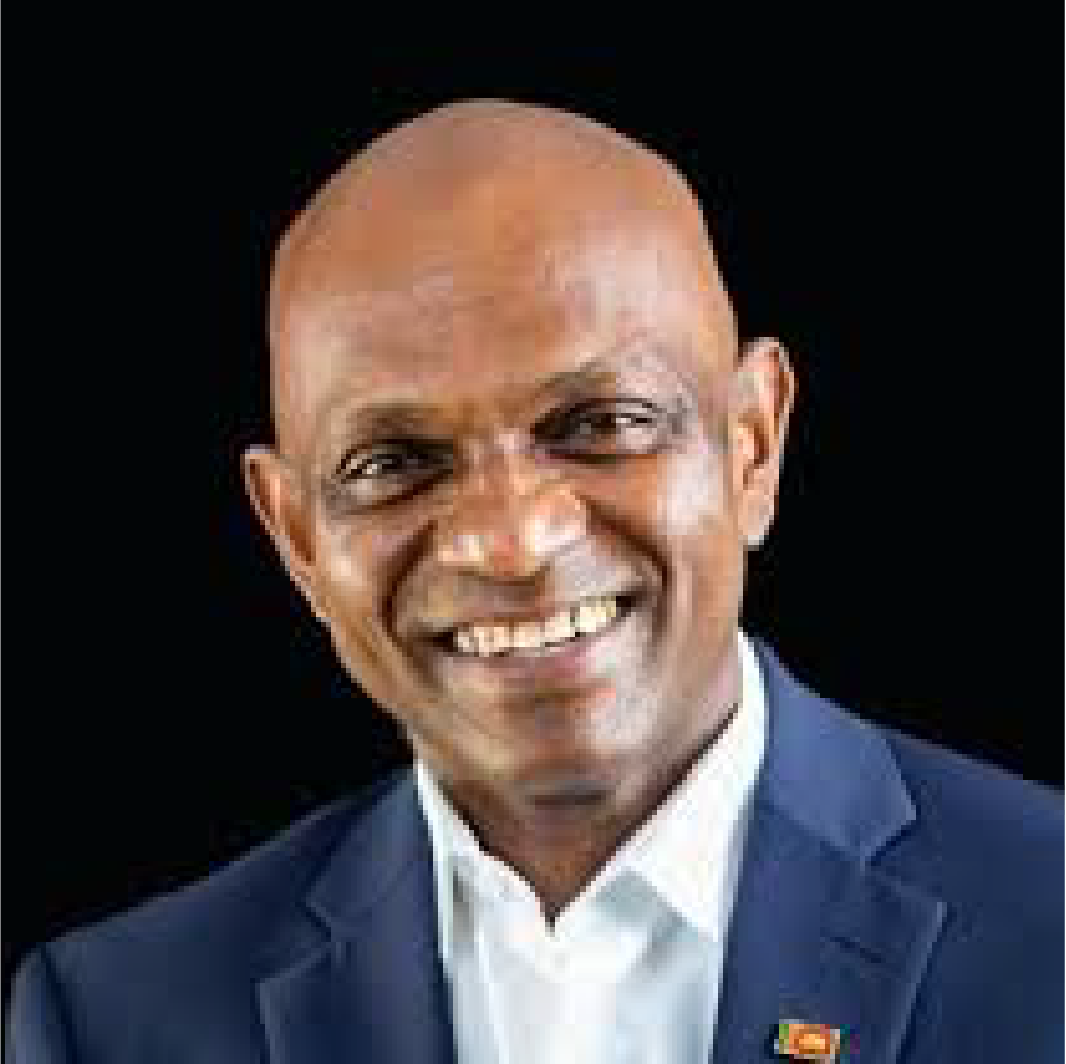
Sanjiva Weerawarana is the founder and CEO of WSO2. With a background in IBM Research, he co-authored key Web services standards. Sanjiva's commitment to open source led him to establish the Lanka Software Foundation and contribute to Apache projects. He's also an educator and an influential advocate for open source participation from developing nations. His journey is one of innovation and leadership in reshaping the software industry.


Jeremy is a Senior Partner at McKinsey and leads the Firm's Global Software Practice. He has worked with more than 70 software companies on their strategy, growth, and product development. He also co-founded the Firm’s Cross-Sector Software Initiative, which works with industrials, consumer companies, banks and others across industries to build software capabilities, offerings and businesses. Before McKinsey, Jeremy founded multiple technology companies, worked as a software developer, and authored a JavaScript programming textbook. He holds a BA from Yale University summa cum laude and an MBA with High Distinction from Harvard Business School.
Asanka's goal is to connect humans and technology by educating the community and helping organizations become digitally driven. Despite having high-level technical objectives, he truly enjoys writing code. He shares his knowledge on various technical topics by creating content like articles, blogs, and podcasts to educate the community. Additionally, he engages with the community through speaking engagements and conducting workshops. He strives to be a trusted advocate for digital strategists, helping enterprises transform into digital-driven organizations. With over 20 years of industry experience, he has gained valuable insights into designing and implementing highly scalable distributed systems, microservice architectures, and business integration solutions. His areas of specialization include application architecture and development using modern programming technologies.
Every Company is a Software Company
Software has become fundamental to business success, with nearly 70% of top economic performers using their own software to differentiate themselves from competitors. This transformation is driven by three key shifts: accelerated adoption of digital products, increasing software-derived value across industries, and democratization of development tools through cloud computing and AI. However, the journey to becoming a software company requires overcoming significant challenges, as evidenced by the fact that less than 7% of global software revenue accrues to non-tech companies.
Speakers
Jeremy is a Senior Partner at McKinsey and leads the Firm's Global Software Practice. He has worked with more than 70 software companies on their strategy, growth, and product development. He also co-founded the Firm’s Cross-Sector Software Initiative, which works with industrials, consumer companies, banks and others across industries to build software capabilities, offerings and businesses. Before McKinsey, Jeremy founded multiple technology companies, worked as a software developer, and authored a JavaScript programming textbook. He holds a BA from Yale University summa cum laude and an MBA with High Distinction from Harvard Business School.


Designing Event-Driven Enterprises: Stories of Transformation
The views and content presented in this video are solely those of the speaker and do not reflect the opinions or positions of WSO2.
In the ever-changing world of enterprise architecture, event-driven systems have emerged as a transformative force. They reshape how organizations perceive, process, and respond to data. In this session, we will explore the role of event-driven architectures in fostering innovation and achieving digital agility. Through relatable stories and practical examples, we will show you how events can unlock insights, foster collaboration, and open up new possibilities for your organization. Join us on a journey where simplicity meets transformative technology, and learn how events can fuel a culture of innovation within your enterprise.
Key takeaways include:
- Understand the fundamentals of event-driven architecture and its significance in modern enterprise ecosystems
- Gain actionable insights for implementing event-driven systems, including design principles and organizational adaptation
- Harness the power of events to architect an enterprise that is responsive and valuable for continuous innovation
Speaker
Vivekanandalingam Mohanadarshan
Associate Director/Architect,
WSO2
Mohan is a member of the solution architecture team at WSO2 and has been with the company for over 11 years. He played a key role as a contributor to the Siddhi stream processing engine and has also made significant contributions to WSO2's Ballerina and streaming integration products. Mohan has effectively managed various fast-paced teams, providing technical leadership and creating strategies, roadmaps, and designs. Additionally, Mohan has provided technical consultancy services to numerous global companies on integration, API management, stream processing, and analytics, thereby contributing to their digital transformation initiatives. Mohan has earned certifications such as CKAD, CKA, and CKS, and also holds a Master's degree in computer science from the University of Moratuwa. Furthermore, he has served as a visiting lecturer at multiple universities and institutes in Sri Lanka.
Not Just Microservices: Rightsize Your Services!
The views and content presented in this video are solely those of the speaker and do not reflect the opinions or positions of WSO2.
Microservice architecture has gained popularity due to its promise of agility, scalability, and granularity. Many organizations adopt this style when modernizing their application architectures. However, blindly adopting microservices can lead to chaos, overly complex architecture, and management overhead. As a result, some organizations are consolidating services into larger modules.
This talk goes beyond the microservices hype and promotes a "right-sizing" approach. We explore the pitfalls of both microservices and monoliths and introduce key factors to consider when making architectural decisions. By evaluating domain boundaries, complexity, team size, business capabilities, and communication overhead, you'll learn how to strike a balance between the benefits of microservices and the practicalities of managing them. Through rightsizing services, this talk explores harnessing the advantages of microservices architecture while mitigating the challenges associated with excessive service fragmentation.
Speaker
Vidura Gamini Abhaya
Senior Director - Head, Integration Solution Architecture and Field CTO, WSO2
Vidura is the head of solution architecture for Integration at WSO2. In his role, Vidura works closely with many of key customers to define their strategic roadmaps, providing them with technical guidance and architecture strategy on how to maximize the use of WSO2 platform. At the same time, he works closely with the product teams to give technical direction on features and requirements from a customer perspective. He brings his expertise with over 25 years of global experience covering many domains such as finance, logistics, aviation and energy, in various roles ranging from Research Engineer, Technical Lead, Software Architect and Software Engineering Manager. Vidura holds a Ph.D in Computer Science from RMIT University Australia.
Platformless Horizons for Digital Adaptability
The views and content presented in this video are solely those of the speaker and do not reflect the opinions or positions of WSO2.
In this keynote, we will explore the shift towards platformless technology ecosystems and their importance in driving digital adaptability and innovation. We will discuss strategies for leveraging decentralized architectures and integrating diverse technologies, with a focus on building resilient, flexible, and future-ready IT infrastructures. We will also highlight WSO2's roadmap, emphasizing our commitment to supporting this transformative journey with our evolving product suite.
Speaker
Asanka Abeysinghe
CTO, WSO2
Asanka's goal is to connect humans and technology by educating the community and helping organizations become digitally driven. Despite having high-level technical objectives, he truly enjoys writing code. He shares his knowledge on various technical topics by creating content like articles, blogs, and podcasts to educate the community. Additionally, he engages with the community through speaking engagements and conducting workshops. He strives to be a trusted advocate for digital strategists, helping enterprises transform into digital-driven organizations. With over 20 years of industry experience, he has gained valuable insights into designing and implementing highly scalable distributed systems, microservice architectures, and business integration solutions. His areas of specialization include application architecture and development using modern programming technologies.
Unlocking Value with AI
The views and content presented in this video are solely those of the speaker and do not reflect the opinions or positions of WSO2.
Digital experiences are playing an increasingly important role in company strategy. Companies like Netflix, Amazon, Airbnb, Uber, and Peloton have leveraged digital experiences and AI in their solutions. LLMs have taken AI to the next level by enabling AI to work with less data and model training, reducing barriers. As a result, there are still many transformative use cases waiting to be discovered.
This session will explore common AI use cases within enterprises, including AI-based interactive support, automated customer service, predictive analytics, personalized marketing, intelligent process automation, and advanced security measures. It will also address common challenges such as privacy, result verification, AI skills gaps, data quality and availability, integration with existing systems, costs and ROI concerns, ethical considerations, privacy concerns, bias concerns, scalability, and maintenance. Potential solutions for these challenges will be discussed.
Speaker
Srinath Perera
Senior Vice President and Chief Architect,
WSO2
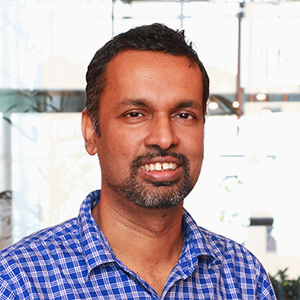
Srinath is the chief architect at WSO2, a co-founder of the Apache Axis2 project, and a member of the Apache Software Foundation. He has co-architected a dozen real-world distributed systems, including Apache Axis2, Apache Airvatha, and Siddhi Complex Event Processing Engine. He is the author of the book “Software Architecture and Decision-Making” and 40+ peer reviewed research papers. He received his Ph.D. from Indiana University, USA, in 2009
WSO2's Digital Transformation Journey with Choreo: A Platformless Approach
The views and content presented in this video are solely those of the speaker and do not reflect the opinions or positions of WSO2.
Digital transformation is the essential rewiring of how an organization operates to enhance customer experience and reduce costs. It necessitates a clear strategy, a talented team, a scalable operating model, distributed technology, data access, and effective change management. However, developing and managing the platforms for digital transformation comes with challenges like complexity, cost, and skill gap.
This talk will cover the challenges faced with on-premises products and how leveraging Choreo helps to streamline the development process, enabling a focus on building valuable apps. It will demonstrate how Choreo aligns with the theme of platformless by hiding platform complexity and empowering developers to code, build, and deploy easily.
Speaker

Chanuka Dissanayake
Senior Technical Lead,
WSO2
With over 10 years of experience, Chanuka has been at the forefront of driving digital transformation. As an expert in internal app implementation and automation, Chanuka bridges the gap between vision and execution. His insights into the intricacies of internal architecture empower businesses to evolve, adapt, and thrive in the digital age.