

The Role of Identity in the Agentic Enterprise

- Ayesha Dissanayaka
- Associate Director/Architect , WSO2
The enterprise is no longer run solely by humans and the software they operate. A new class of actors has entered the picture: autonomous AI agents that perceive context, make decisions, invoke tools, and act across systems with minimal human intervention. This shift is not incremental. It is architectural.
The challenge is both familiar and disorienting. The fundamental disciplines of IAM, namely Administration, Authentication, Authorization, and Audit, remain the correct framework. What has changed, dramatically, is the surface they must cover, the assumptions they can no longer make, and the new behaviors they must account for.
The problem with treating agents like any other identity
Traditional IAM was built around a foundational assumption: identities are stable, discrete, and human-anchored. A human user is a subject. They authenticate, act, and bear accountability. A service account acts on behalf of a system or process. An API or a microservice exposes capabilities and calls others. You authenticate once, get a token, and operate within a defined scope.
AI agents break almost every one of those assumptions simultaneously. Two agents built on the same underlying model are not equivalent identities if they carry different system prompts, different tool grants, different context information, or different fine-tuning histories. An agent whose system prompt has been altered, whether by legitimate reconfiguration or by attack, is a meaningfully different entity.
A single agent can simultaneously be a subject making decisions with delegated authority, a resource that must be protected and accessed only by authorized parties, and a client calling downstream APIs and services on behalf of the entities it serves. No prior identity type carries all three facets at once. The OpenID Foundation's Identity Management for Agentic AI whitepaper emphasizes that this multifaceted nature significantly complicates identity management, making the case that existing frameworks need significant evolution.
The four pillars of AI agent identity: Why IAM must evolve for the agentic enterprise
Administration: governed existence from the inception
The SaaS era brought shadow IT. The agentic era brings shadow AI: agents deployed without managed identities, without lifecycle governance, and without visibility into what they access or on whose authority they act. Shadow AI is not a future risk. It is already happening.
“State of Shadow AI report found that over 80% of employees and nearly 90% of security leaders are already using unapproved AI tools at work. This behavior expands proportionally as these individuals begin to implement autonomous agents, a shift recently highlighted in Inc. coverage as well.”
Every AI agent operating in your enterprise must be treated as a managed identity from the moment it is provisioned. That means an identity assigned at creation and tied to a declared owner, lifecycle states with corresponding access changes at each transition, and ownership as a first-class attribute that makes downstream authorization and audit meaningful.
“This incentive is echoed in Gartner's Top Cybersecurity Trends for 2026, which identifies agentic AI oversight and the adaptation of IAM to AI agents as two of the defining enterprise security priorities for the year.”
Administration varies by facet. As a subject, it covers provisioning, lifecycle management, tool grants, and role assignments. As a resource, it governs who can invoke the agent and what context isolation policies apply. As a client, it means enrolling the agent as a first-class OAuth or OIDC client with explicit, bounded scopes rather than borrowing access from whoever instantiates it.
Authentication: proving what you are, not just who you are
For human identity, authentication answers a single question: Who are you? For AI agents, this is insufficient. The more important question is: What are you?
Agent authentication therefore requires attestation: a cryptographically verifiable proof of what the agent is at the time it acts. When an agent acts as a subject, it must prove what it is to the systems it accesses. When it is a resource, authentication flips direction. Callers must prove they are authorized to invoke it, and the agent must hold the boundary between concurrent sessions. When it acts as a client, it should be able to authenticate users it acts on behalf of, over desired assurance levels.
“This is the direction NIST is taking in its Software and AI Agent Identity and Authorization concept paper: agents must be treated as identifiable entities in enterprise identity systems, not as anonymous automation running under shared credentials.”
Authorization: one agent, multiple access models
Least privilege is one of the oldest and most sound principles in access control. For AI agents, this principle does not disappear, but it cannot be applied the same way. Traditional least privilege assumes you can enumerate the action space at policy-write time. Agents are dynamic. A rigid, pre-defined permission set either over-constrains agents to the point of uselessness, or over-grants access to cover every possible path.
The answer is to make authorization dynamic, purpose-bound, and time-scoped: just-in-time access requested at the moment a specific tool call is required; just-enough access bounded by the declared task; and automatic expiration when the task completes.
“Both the OWASP GenAI Security Project's Top 10 for Agentic Applications 2026 (specifically ASI03: Identity and Privilege Abuse) and Gartner's Predicts 2026: Secure AI Agents to Avoid Ungoverned Sprawl and Abuses have aligned on this strategy. They advocate for a shift away from broad, permanent grants toward policy-enforced authorization for every action, characterized by identity delegation, constrained scopes, and assertions that are short-lived.”
As a subject, authorization governs which tools an agent can invoke and which data it can access, calibrated to its current task. As a resource, authorization must enforce context isolation as a policy requirement, not a courtesy. As a client, an agent can never acquire more authority than the human-in-the loop or system that delegated to it. The agent's effective permission set is bounded by the authorizing principal's own permissions.
In multi-agent architectures, where orchestrating agents spawn sub-agents that invoke further agents, the authorization question becomes recursive. Each delegation step must be verifiable, and the depth of delegation must be bounded by policy, and at no point in the chain should a sub-agent act with authority never granted to its parent. This is the confused deputy problem at enterprise scale, and it is the authorization challenge with the least mature tooling today.
Audit: tracing who did what, on whose authority
A traditional audit log records identity, action, and timestamp. For deterministic software, this is sufficient. AI agents break this model. The same agent, with the same permissions, can take different actions depending on the inputs it received and the context it accumulated. An action log alone does not tell you why the agent acted, what it was told, or whether the action was within the scope of its authorized purpose.
A complete agent audit record must capture the full delegation chain, the declared purpose at authorization time, the inputs and context that led to action, and tool call provenance covering every external system touched. Audit in this context is not just compliance. It is the mechanism by which organizations build trust in autonomous systems. An agent whose actions are fully traceable can be granted greater autonomy over time.
“The OpenID Foundation advocates for replacing user impersonation with verifiable delegated authority, to ensure traceable agent actions along with a chain of delegation command. Similarly, the OWASP Top 10 for Agentic Applications 2026 mandates signed, immutable audit trails for all agent interactions. Regulators are moving in the same direction. Article 12 of the EU AI Act mandates that high-risk AI systems automatically log events for traceability and risk monitoring, with these requirements becoming enforceable in August 2026.”
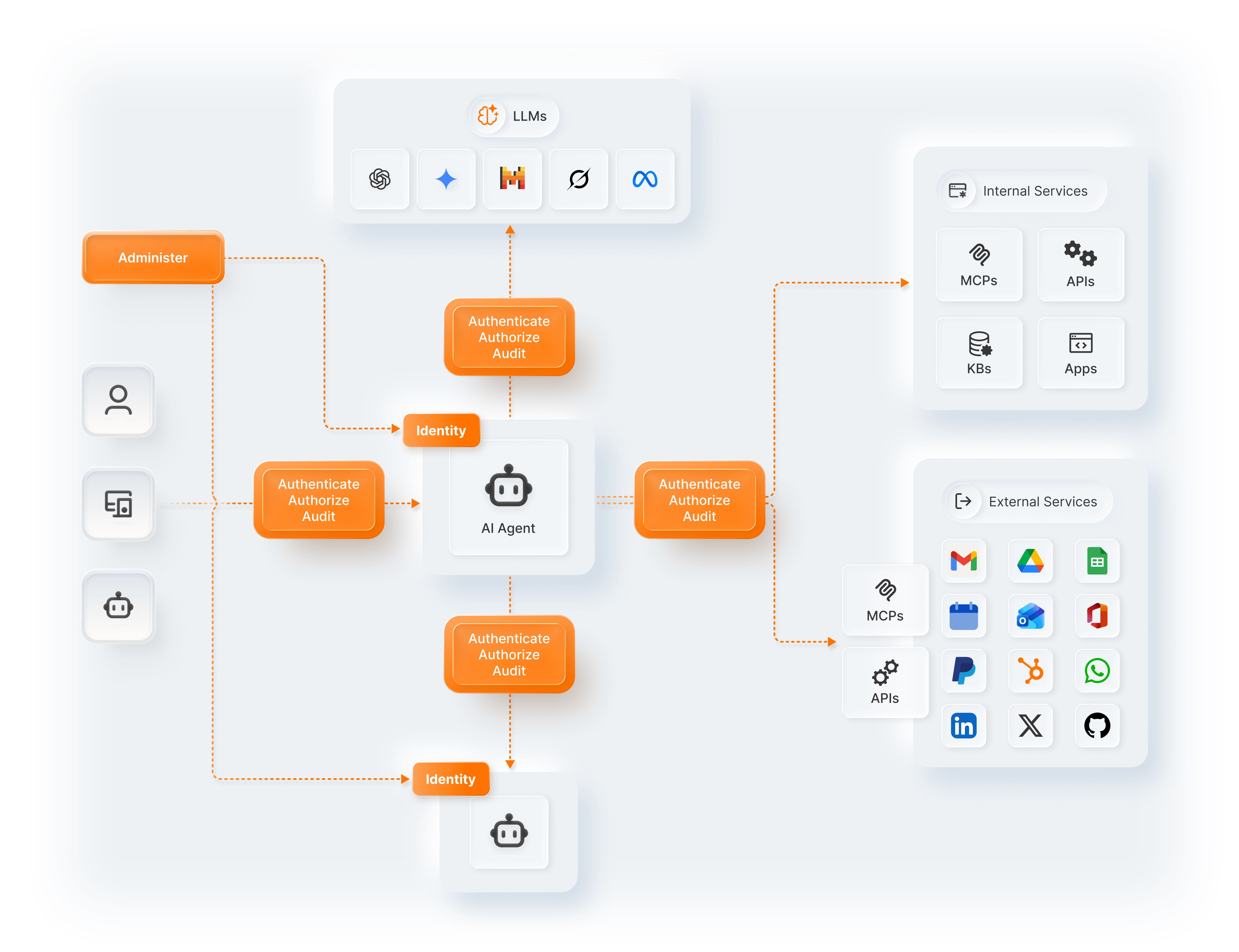
Figure 1: The Four Pillars of AI Agent Identity Evolution
Building foundations that evolve
The agentic landscape is not stable. New frameworks, orchestration patterns, and model capabilities emerge faster than most enterprise adoption cycles. Organizations that build inward, with custom registries, bespoke delegation logic, and hand-rolled attestation, end up with solutions designed for today's landscape, not tomorrow's. That liability compounds as each new pattern requires rebuilding rather than extending.
Agentic agility, the capacity of an IAM platform to absorb evolving demands, is a prerequisite for governing AI at enterprise scale. It requires standards-based identity primitives on open protocols, decoupled policy logic, composable trust models, and observability designed for distributed multi-agent chains from the outset.
The fundamental problems of identity are not new. The surface they must cover is. And foundations must be built to last longer than the technology stacked on top of them.
How WSO2 is building for this reality
WSO2 has been building enterprise identity and integration infrastructure for over two decades, through digital transformation, the shift to cloud, the API economy, and now the agentic era. That history shapes how we approach identity for agents: which IAM fundamentals carry over, and which assumptions must be rebuilt.
WSO2 Agent ID puts this into practice across all four pillars:
- Administration: provisions every AI agent with a managed identity at creation, with lifecycle states and ownership tied to a declared owner.
- Authentication: issues credentials that proves what an agent is during interactions with models, tools, and downstream systems.
- Authorization: supports both persistent permissions for autonomous agents and just-in-time delegated authority for agents acting on behalf of users.
- Audit: issues tokens that preserve the delegation chain, agent identity attributes, and the authorizing principal, so every action is traceable to its purpose.
Built on open standards, ready for any agent
Organizations are deploying agents built on OpenAI, Anthropic, and open-source models, often within the same enterprise. Locking identity governance to any single framework is a structural liability. While innovating, WSO2 is evolving around emerging standards for agent delegation, including extensions to OAuth 2.0 and OIDC, and with first class support for agent specific protocols like the Model Context Protocol (MCP), so that any agent can participate in a unified identity fabric with consistent authentication, scoped authorization, and traceable delegation.
The agentic enterprise is being assembled right now, agent by agent, workflow by workflow. The organizations that govern this transition with rigor, choosing platforms built to adapt, will earn the right to deploy agents at scale and trust them with consequential work.
Identity is not a feature of the agentic enterprise. It is the foundation everything else stands on.
Contact us to discuss how WSO2 can help you build your own AI-powered solutions and enable your Agentic Enterprise.