

Engineering a Real-Time, AI-Ready Bank Around Legacy Infrastructure

- Seshika Fernando
- Vice President/Field CTO, WSO2
A Tactical Blueprint for US Tier 2 CIOs, CDOs, and Chief Enterprise Architects
Executive summary
In 2026, the strategic directive for US Tier 2 banks ($10B–$500B assets) has shifted from building basic digital interfaces to engineering the Agentic Enterprise.
Yet, technology executives face an architectural paradox: your board expects an agentic future, but your infrastructure is trapped in a batch-processed past. While Tier 1 mega-banks pour billions into custom AI infrastructure, 70% of Tier 2 institutions remain anchored to legacy core banking systems from the "Big 3" providers (FIS, Fiserv, and Jack Henry)[^1]. Built decades ago for nightly batch processing, these platforms are structurally incapable of delivering the real-time data, sub-second latency, and low-cost tool execution that autonomous AI agents require.
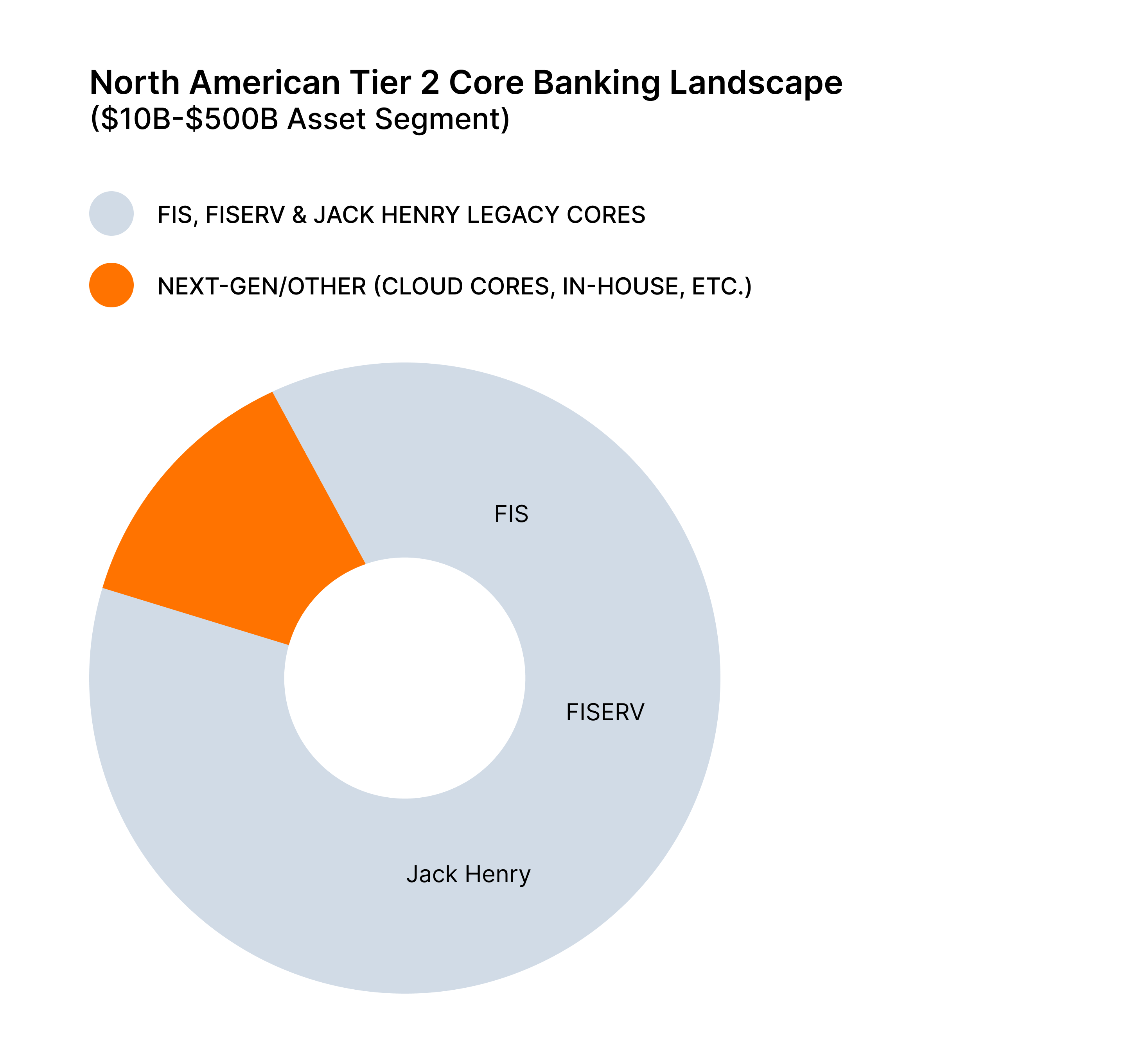 Figure 1: North American Tier 2 core banking landscape
The path forward requires a fundamental shift in strategy. You do not need to replace your core to become an agentic bank; you need to contain it.
By deploying WSO2’s Agentic Core Abstraction Layer, Tier 2 institutions can isolate the legacy core as a passive System of Record, wrapping it within a real-time, event-driven, and highly secure AI governance fabric. Instead of embarking on a high-risk, multi-year core transformation, this blueprint establishes a comprehensive, production-grade AI-enabled runtime perimeter around your existing ledger.
By leveraging AI to establish the core infrastructure for AI, you eliminate traditional integration bottlenecks and slash implementation timelines from years to weeks, allowing your bank to safely deploy autonomous agentic workflows at market speed.
1. Legacy cores don’t work for AI agents
A traditional digital application is deterministic; it requests specific data and displays it. An AI agent, however, is probabilistic and dynamic. It continuously reasons, evaluates context, loops through tasks, and utilizes tools to achieve an open-ended goal. This operational model exposes major vulnerabilities when forced to interact directly with a legacy core.
| Compute taxes | Incompatible tooling | Security gaps |
|---|---|---|
| AI agents make iterative, multi-turn calls to underlying data systems to complete a single task. Forcing an AI agent to poll a legacy ledger directly creates immense system strain, drives up core operational costs, and introduces unacceptable latency. | LLMs and agents do not speak proprietary, legacy core schemas. They communicate via standardized APIs. If your core functions cannot be safely exposed as clean REST JSON streams, and ultimately exposed via MCP, your AI models and agents cannot use them as tools. | Traditional core systems rely on perimeter security. They are not built to govern autonomous, non-human entities that make real-time operational decisions. Without a specialized abstraction layer, you cannot safely authenticate, throttle, or audit the actions of an AI agent inside your ledger. |
2. An agentic-ready, context-aware Core Abstraction Layer
The Core Abstraction Layer strategy shifts the legacy core's role from an active application hub to a passive system of record. All business logic, data and workflow orchestration, security, and AI tooling management move into a high-performance WSO2 API fabric.
While this establishes the definitive launchpad for autonomous AI agents, the immediate, non-agentic benefits of core containment allow Tier 2 institutions to match or outperform agile fintechs and challenger banks today.
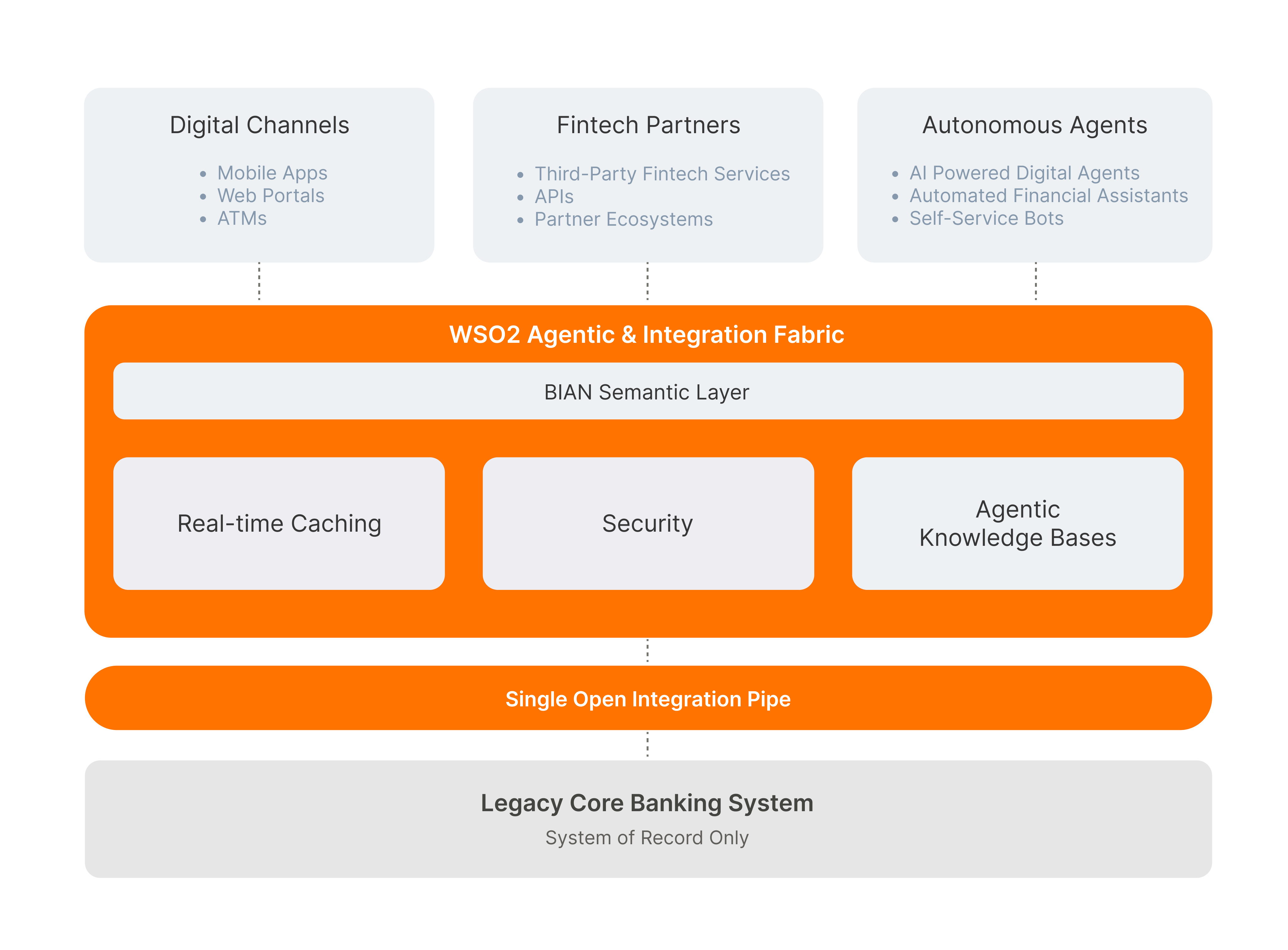 Figure 2: Agentic-ready Core Abstraction Layer
The immediate operational and strategic advantages
Elevated experiences
Liberating data from backend batch silos enables product teams to deploy real-time, personalized tools in days rather than months, while giving front-line staff a unified 360-degree customer view.
Centralized security and compliance
Instead of patching decades-old core modules, teams manage identity, access control, and granular data lineage at a single, modern API layer, safely shielding the core from external risk.
Change management
Tier 2 banks can finally deploy the same rapid feature velocity as challenger banks without having a Tier 1 mega-bank IT budget.
Freeze your legacy core spend and reallocate that budget away from basic middleware maintenance and toward visible customer innovation.
Technical foundations of the layer
Decoupling batch via event-driven caching
To fuel AI agents with real-time context without overloading the core, the WSO2 Core Abstraction Layer implements an event-driven abstraction pattern.
Under this architecture, queries pull directly from this real-time cache in milliseconds to deliver sub-second servicing while completely eliminating core query taxes. Meanwhile, authorized write actions are handled instantly at the API layer and placed into a resilient queue to update the legacy ledger asynchronously. This event-driven separation guarantees 100% front-end uptime, ensuring that even during nightly core batch processing or maintenance windows, customer-facing digital channels and agents remain fully operational.
Injecting semantic intelligence to the API fabric
Raw data alone is useless to an LLM. If an AI agent receives a fragmented database string or an ambiguous field name from a legacy core, it lacks the business context to reason effectively. To solve this, the WSO2 fabric transforms raw backend data into context-aware, self-describing APIs using BIAN (Banking Industry Architecture Network) templates.
3. Accelerating implementation using AI to build the foundation for AI
Historical multi-year timelines breed valid skepticism among leadership teams wondering how to pivot fast enough to meet immediate competitive pressures. WSO2 uses AI to build the foundations for AI, eliminating traditional engineering bottlenecks. By replacing manual, hand-coded logic and multi-year systems-integrator engagements with a production-ready ecosystem of pre-built financial primitives, the Core Abstraction Layer condenses deployment timelines from years to weeks.
| Feature | Description |
|---|---|
| Pre-built BIAN semantic blueprints | Eliminates the need to design a banking taxonomy from scratch. Ready-to-deploy templates feature out-of-the-box support for ISO 20022, ISO 8583, and SWIFT to instantly establish data boundaries. |
| AI-powered data mappers | Rather than assigning armies of developers to manually map fields, the platform uses AI-powered data mappers and native core-banking connectors to automatically translate unstructured or proprietary legacy formats into standardized BIAN templates. |
| AI copilots for API design | Developers and architects can use WSO2 AI copilots to design or redesign these APIs using simple, natural language, drastically shortening the development cycle. |
| AI-driven API chaining | Simplifies complex business processes by effortlessly connecting multiple backend services using data mappers that intelligently understand downstream flows. |
By using AI to automatically refactor, document, and map your integration fabric, you eliminate the traditional development bottleneck. We use AI to prepare the integration layer, so that your core infrastructure is finally ready to host and empower autonomous AI agents.
This means a Tier 2 bank can establish a fully functional, context-aware digital abstraction layer around a core domain in weeks, allowing you to deploy agentic capabilities at market speed without betting the bank on a multi-year IT modernization gamble.
4. Beyond connectivity: The WSO2 agentic component layer
Simply converting a legacy core into real-time, context-aware APIs is only the first step. For a Tier 2 bank to confidently run autonomous workflows, connectivity alone is insufficient. If you expose raw or even standardized endpoints directly to an AI model, you risk catastrophic security vulnerabilities, uncontained token costs, hallucinated business logic, and an inability to manage non-human identities.
To bridge this gap, the abstraction layer evolves your integration layer into an agentic enterprise fabric, where the architecture is enriched with dedicated AI governance, intelligence, and edge-security capabilities to ensure that every AI workflow remains accurate, efficient, and completely secure.
Agent-to-Agent and MCP Gateways: Traditional gateways only handle human-triggered traffic. Agent-to-Agent and MCP Gateways are specialized boundary layers that act as secure entry points for machine-to-machine collaborations, safely exposing internal tools and agents to ecosystem partners.
Knowledge Bases and Embedded Co-Pilots: KBs sit directly alongside your systems of record (Core Banking, LOS, Trade Finance), ingesting and converting banking data into a highly indexed, agent-readable format.
AI is not a separate application; it is built into the fabric itself. Embedded AI Co-Pilots, integrated directly inside the API, integration, workflow, and service blocks, dynamically optimize execution paths, self-correct integration flows, and streamline complex orchestrations.
Egress AI Gateways: Acting as an outbound firewall to external LLMs, this layer enforces security guardrails, data masking, and token cost-management while enriching prompts for compliant answers.
Agent IAM and Lifecycle Hubs: Agent IAM extends zero-trust security to non-human identities by enforcing role-based permissions. Combined with an Agent/MCP Hub for discovery and AI-driven observability for audit trails, architects gain complete lifecycle control over autonomous micro-actions.
By deploying this enriched architecture, Tier 2 banks gain more than just a connected core. They acquire an enterprise-grade AI runtime.
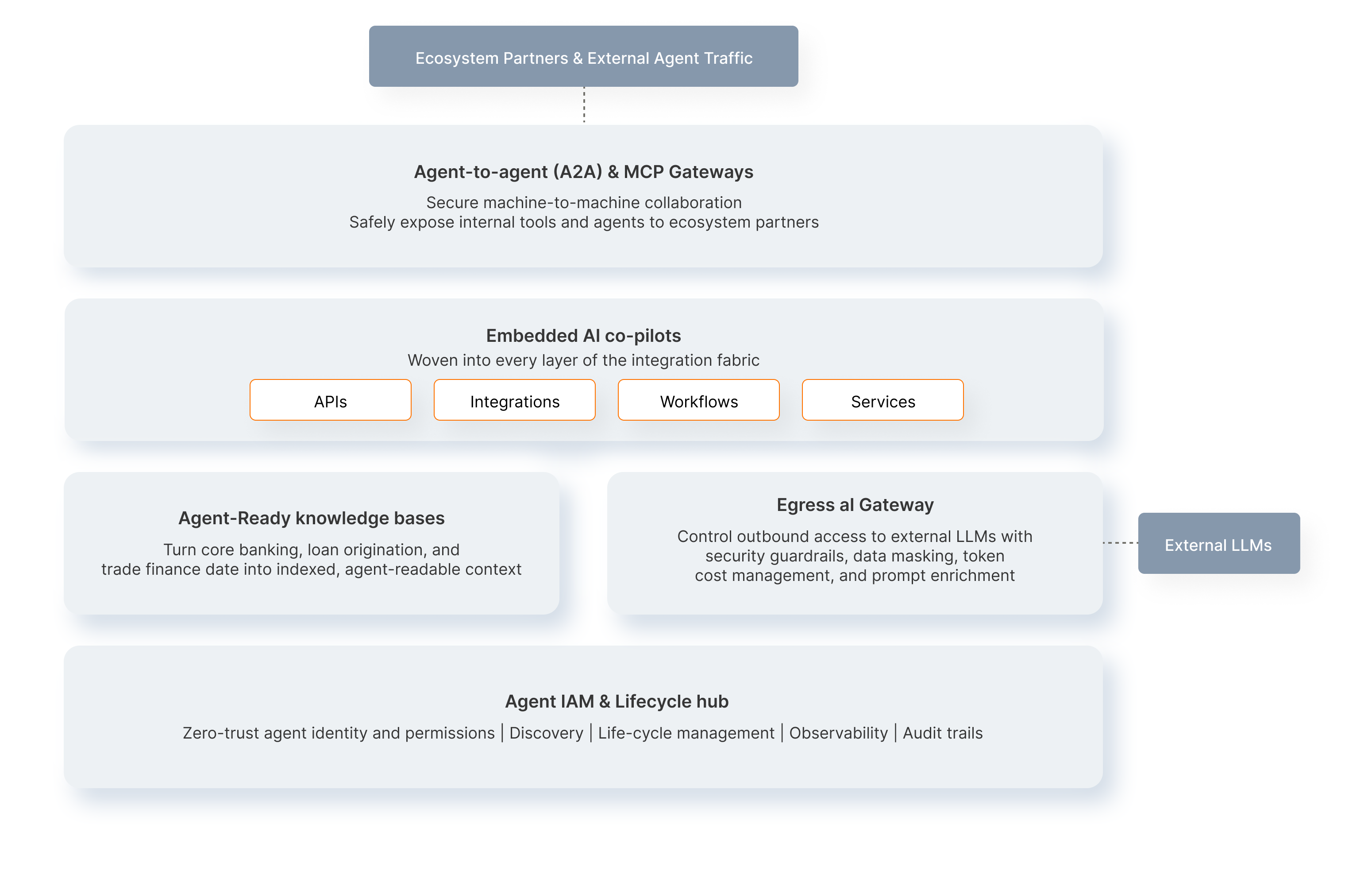 Figure 3: The WSO2 agentic component layer
5. Why heavyweight integration suites fail Tier 2 banks
When designing an abstraction layer, banks often default to evaluating heavyweight, generic horizontal integration platforms. While highly capable, these platforms present distinct commercial and operational challenges for Tier 2 institutions looking to optimize their spend in 2026:
The TCO squeeze
Heavyweight integration platforms require substantial upfront licensing commitments and often demand a large army of certified developers to maintain. For a Tier 2 bank, this approach frequently shifts your financial dependency from a core vendor monopoly to an integration vendor monopoly, consuming a significant portion of your innovation budget just to manage the middleware.
Eliminating vendor lock-in
Heavyweight suites build commercial moats around proprietary runtimes, trapping banks in a cycle of skyrocketing renewal costs and forced migrations. WSO2 breaks this monopoly with an enterprise platform built on open-source DNA and open standards. Because our core technologies are open, Tier 2 banks retain complete sovereignty over their code, integration logic, and architectural future. You get the peace of mind of a battle-tested, enterprise grade platform without the existential threat of vendor lock-in.
Horizontal complexity vs. banking agility
Generic enterprise platforms are built to service every vertical, from heavy manufacturing to retail supply chains. They lack native focus on financial-grade security, banking-specific protocol translation, and lightweight agentic enablement.
WSO2 provides a streamlined, cloud-native integration fabric. It delivers the exact decoupled architecture required to isolate a legacy core and deploy an agentic ecosystem, without the operational bloat, specialized developer footprint, or runaway licensing costs associated with generic enterprise middleware.
6. The strategic blueprint: Steps to agentic readiness
To transition your bank into an agile, agentic enterprise without undergoing a risky core replacement, adopt this phased execution roadmap:
Phase 1: Core containment and isolation
Establish a single, robust integration pipeline into your legacy FIS, Fiserv, or Jack Henry core. Deploy the Core Abstraction Layer to intercept all inbound traffic. Implement event-driven caching to decouple your read-heavy digital workloads from the core's ledger. This step stabilizes your architecture, reduces core processing fees, and ensures 100% front-end uptime.
Phase 2: Tool standardization
Map your legacy backend schemas into standard, reusable REST JSON services. Instead of building application-specific integrations, create an internal repository of banking capabilities. These services will serve as your digital foundation, ready to support fintech partnerships, new channels, and eventually, your AI agent toolkit.
Phase 3: Agentic deployment
Layer WSO2’s Agentic Components onto your established API fabric. Connect your standardized services to your AI agents powered by your preferred LLMs as MCP Tools. Apply central identity management and regulatory guardrails for agents directly at the gateway layer, enabling your teams to safely deploy autonomous AI workflows at scale.
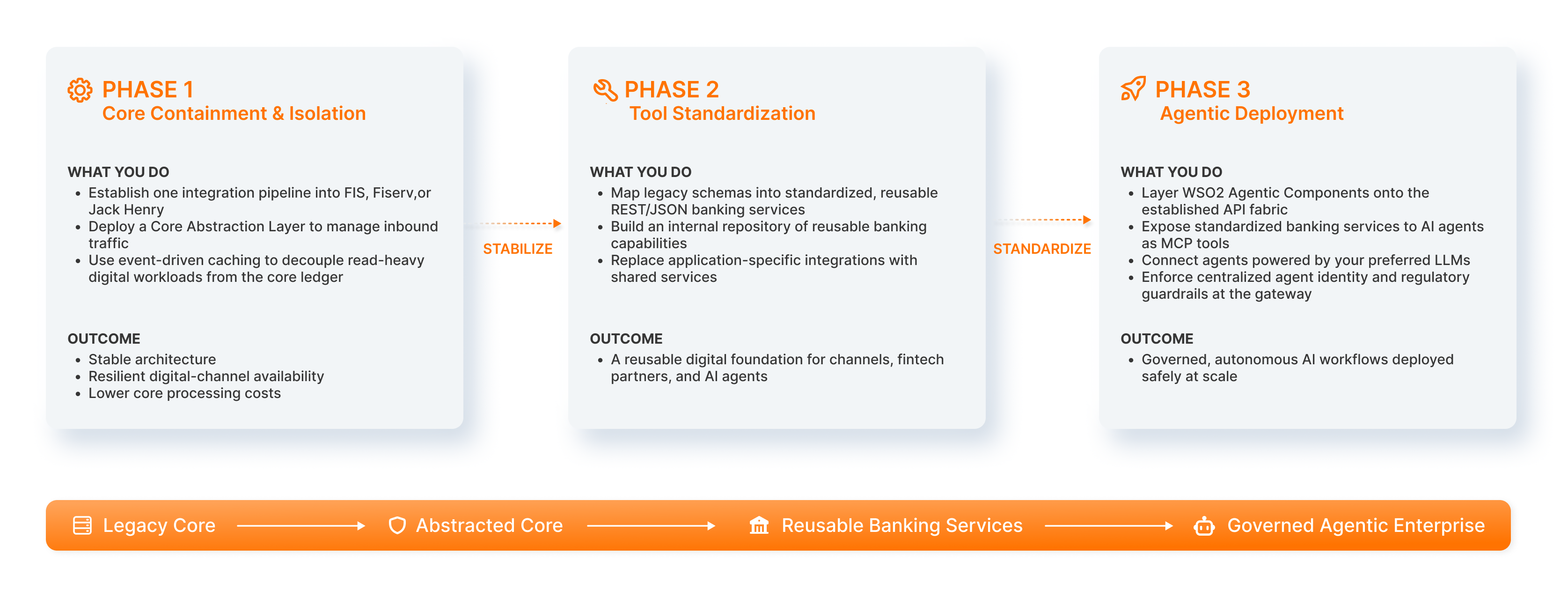 Figure 4: Three phase execution roadmap
Conclusion
The transition to an agentic enterprise is an immediate competitive necessity for Tier 2 banks. Waiting for legacy core vendors to modernize or embarking on high-risk core replacements are strategic dead ends.
The solution is to contain your core rather than replace it. By establishing a context-aware Core Abstraction Layer, institutions unlock immense immediate and long-term advantages because they can match the agility of challenger banks without a Tier 1 budget. This containment strategy allows you to instantly elevate customer and employee experiences with real-time personalized tools, shield the legacy ledger from external risks by centralizing access control at a single API perimeter, freeze legacy core spend, and pay the integration tax exactly once.
By using WSO2’s platform for core modernization, you leverage AI-powered data mappers, natural-language copilots, and BIAN blueprints to build the foundations for AI, slashing deployment timelines from years to weeks.
With an enriched runtime fabric managing your edge security, knowledge bases, and agent governance, you can safely wrap legacy liabilities in an autonomous perimeter. Do not let a legacy ledger dictate your future. Contain your core, deploy an enterprise-grade agentic runtime, and compete at market speed.
Turn your legacy infrastructure into a competitive advantage.
See how financial institutions use WSO2 to modernize core banking, accelerate open banking, and securely adopt AI, all without disruptive core replacement.
→ Learn More About WSO2 Financial Services
[1]: Alcazar, Julian, et al. "Market Structure of Core Banking Services Providers." Federal Reserve Bank of Kansas City, 27 Mar. 2024, www.kansascityfed.org/research/payments-system-research-briefings /market-structure-of-core-banking-services-providers/.
About The Author
- Seshika Fernando
- Vice President/Field CTO, WSO2