

Becoming a Connected Agentic Enterprise

- Sharya Unamboowe
- VP and GM - Integration BU, WSO2
What is a connected agentic enterprise?
An agentic enterprise is one where humans and enterprise AI agents work collaboratively. In order for an agentic enterprise to be successful, it must first be “connected”, where agents are seamlessly integrated with existing systems to access their data and functionality, and where agents make informed decisions that are grounded in enterprise context.
A connected agentic enterprise therefore, is an enterprise where agents are able to truly operate autonomously across the business, making real-time, informed, context-based decisions, and executing complex flows across enterprise systems.
The 3-stage journey to a connected agentic enterprise
The journey to become a connected agentic enterprise can be broken down into 3 stages.
Global enterprises currently find themselves at different stages of this journey, but what is common across each stage is the importance of integration to the stage’s success, and therefore to the overall success of the agentic enterprise. As Forrester Principal Analyst David Mooter says, “Agentic AI Runs On Integration, Not Data Lakes”.
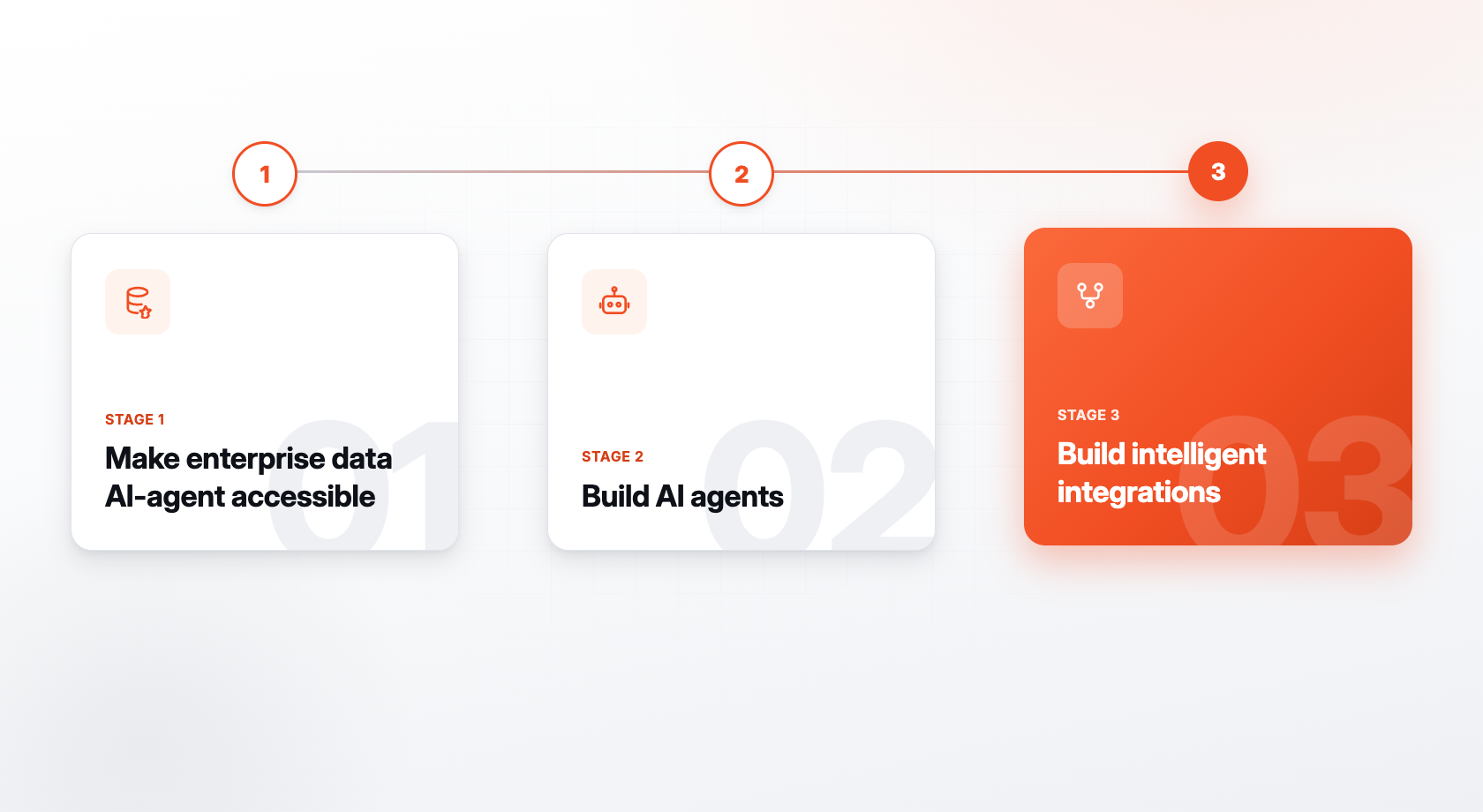 Figure 1: The 3-stage journey to a connected agentic enterprise
Make enterprise data accessible to AI agents
Agents are only as useful as the context, data, and systems they have access to. To unlock the true value of agents, enterprises require an integration layer on top of existing systems to expose their data and functionality. While many enterprises have this layer in place, it was primarily designed for system-to-system communication rather than for agent consumption. As a result, enterprises must now take the step to make this data and functionality consumable by agents. While this can be done through exposing REST or GraphQL APIs, or publishing events, the recommended approach is to use an agent-specific protocol such as the Model Context Protocol (MCP), which is designed for agent consumption. In many cases, existing APIs and events can be converted into an MCP server over having to build an MCP server from scratch, reducing the effort required to make data and systems accessible by agents.
Once this integration layer is in place, building a context layer on top of it can serve as a key differentiator for enterprises. This is a logical layer that uses capabilities such as context graphs, data catalogs, and data pipelines to combine operational data, enterprise metadata, historical interactions, semantic relationships, and real-time events into a unified format that is accessible to, and consumable by, agents. It also tracks the lifecycle and evolution of enterprise context, capturing what changed, alongside the timing and reasoning behind the changes, enabling agents to make better, more accurate decisions that are based on not only real-time data, but also historical decisions and patterns. Furthermore, new decisions made by agents also get continuously added to the context layer to help guide future decisions. Similar to the integration layer, the context layer can also be exposed via MCP for agents to access.
Build AI agents
The integration and context layer are likely to see constant tweaking as data grows, and new systems and business functionality are introduced, but the next stage of the journey can begin once the base is established. This stage, where most enterprises find themselves today, is to actually build the autonomous agents, and then connect them to the previously exposed context, data, and systems using MCP.
These agents can be a chatbot that provides a conversational interface for users to interact with. The agent can interact with LLM, data, and systems they are connected to, reason, plan, make decisions, and provide intelligent responses to the user. This includes concepts such as retrieval augmented generation (RAG) to provide responses grounded in internal knowledge. These agents are already in widespread use across the globe, and help enterprises provide exceptional, consistent, and real-time experiences for their customers while reducing the burden on human resources. Examples of such agents include customer support agents, travel booking agents, and financial planning agents.
Enterprise agents can also go beyond conversational chatbots, and become active participants within broader integration flows, combining non-deterministic AI reasoning with deterministic integration logic. Additionally, they may collaborate with other specialized agents, each responsible for a specific business function or domain, to collectively accomplish more complex workflows. This leads us to the 3rd and final stage of becoming a connected agentic enterprise, building intelligent integrations.
Build intelligent integrations
This stage is where enterprises are able to realize the full potential of an agent where the agent can autonomously make and execute business decisions.
Traditional integrations such as events, APIs, files, and automations are inherently deterministic. The logic is entirely predictable. You provide the same input, and it will provide the same output every single time. Agents on the other hand are non-deterministic. They reason, and make decisions based on the context, information, and options available to them. Given the same input, they might not always do the same thing twice.
An intelligent integration combines non-deterministic agents and deterministic integrations into a single integration flow. Agents are triggered through human actions, events, APIs, files, or automations. The agent then reasons and decides based on the information and tools they have access to, and the context they are working in. After making a decision, the agent executes the next step, which can be to trigger one of multiple deterministic integrations, each of which has a guaranteed outcome, to complete the end-to-end flow.
A real-world example of such a flow is an insurance claims processing agent where customers can interact with an agent to submit an insurance claim. The agent, triggered by the customer’s action to submit a claim, will converse with the customer to gather information related to the claim. The agent will reason by comparing the information provided with historical and real-time context and data, including conducting fraud checks and referring to policy guidelines, before making a decision. This can be a back-and-forth process between agent and customer until the agent has the required information to make a decision. The ultimate decision made by the agent can be one of many: instantly reject the claim with comments, instantly approve the claim, and send the claim to a human for final approval with comments. Each of these options would be a subsequent deterministic integration triggered by the agent.
Important to note is that the agent might receive the same set of information on multiple occasions, but make a different decision based on their reasoning on that occasion. For example, they could have received more context between the first claim and the second claim, leading them to make a different decision on the second claim.
Governance, cost controls, and flexibility
While the three stages provide a roadmap for global enterprises to become a connected agentic enterprise, there are several foundational elements that can make or break AI initiatives: governance, cost controls, and flexibility. While these are not integration-specific problems, integration does have a role to play in supporting each of these.
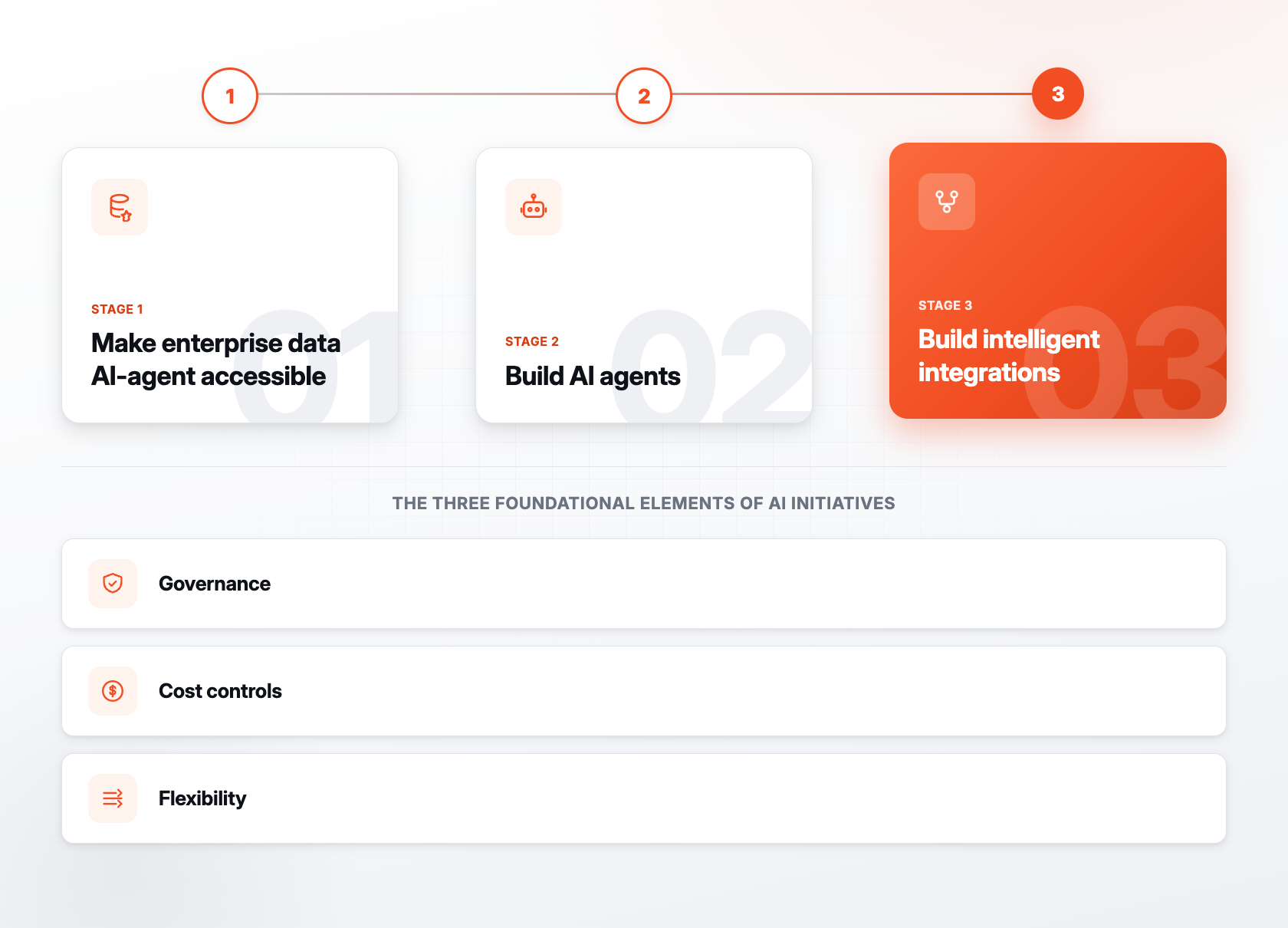 Figure 2: The 3 foundational elements of AI initiatives
Governance
As agents become more autonomous, governance becomes increasingly important as agentic systems can cause a lot of damage if left unchecked. Strong governance and guardrails help ensure that agents operate as expected, and minimize the blast radius in a scenario where an agent doesn’t operate as expected.
This can include governance implemented within the agent and integration logic; evaluation frameworks to validate the agent’s reasoning and decision making steps at the point of building the agent; and human-in-the-loop approvals for sensitive or high-risk actions during execution to ensure that agent autonomy is balanced with appropriate human oversight.
Cost controls
Controlling AI-related costs is also key to the success of AI initiatives as unrestricted token consumption can quickly drain AI budgets and prevent the initiative from taking off. While controlling LLM token consumption requires an AI gateway, there has been a significant shift in development approaches from low-code to AI-assisted natural-language based development, where developers simply describe the requirement and AI generates the code, to build integration and agents. This shift has led to integration and agent development technology also having a role to play in reducing token consumption through cleaner prompts, higher quality code generation, less hallucination, and fewer code regeneration cycles.
Flexibility
The AI space is changing rapidly, as is the world in general. The status-quo today is unlikely to be the status-quo in a year’s time. It is definitely not going to be the status-quo in 3 years. Enterprises therefore, must approach their AI initiatives with flexibility in mind. There are two primary aspects to achieving this.
The first is to use software that supports open standards such as MCP, REST, GraphQL, gRPC, enabling interoperability by allowing organizations to seamlessly switch software vendors if costs become prohibitive, regulatory compliance requirements are not met, or required features are not provided. The second is to use open source software where enterprises have the ability to take their code and run it anywhere they want even without a subscription from the vendor. This protects the enterprise from vendor lock-in, and ensures business continuity. Open source software also gives enterprises full visibility into the source code to understand how and where their data is being processed, along with the ability to modify the code if needed to meet changing regulatory compliance requirements.
WSO2 Integration Platform: powering the connected agentic enterprise
Considering the importance of integration to the success of the agentic enterprise, choosing the right integration technology for their AI initiatives becomes crucial. WSO2 Integration Platform, a core component of WSO2 Agentic Enterprise Fabric (AEF), is a 100% open source (under an Apache 2.0 license) integration technology purpose-built to support every stage of this journey, enabling enterprises to expose business capabilities, build AI agents, and orchestrate intelligent business processes with governance, cost controls, and flexibility built-in.
Enterprises can use the platform to build deterministic integrations across events, APIs, files, and automations, expose those capabilities through open standards such as MCP, REST, GraphQL, and gRPC, and build AI agents that securely interact with enterprise context, data, and systems. As enterprises mature, these deterministic integrations and non-deterministic AI agents can be combined into intelligent integrations that automate end-to-end business processes while maintaining governance and control through agent evaluation frameworks and human-in-the-loop oversight.
Additionally, WSO2 Integration Platform provides an AI-assisted natural language-based development built on top of the Ballerina programming language, a language designed for building integrations and AI agents. The integration-specific abstracts of the language enables developers to implement governance directly into their integrations and agents through policy checks, validation logic, safety rules, and more. These same abstracts also help with generating cleaner prompts, and better quality code when it comes to developing integrations and AI agents, compared to general purpose programming languages, helping enterprises reduce token consumption and AI-related costs.
What’s next?
Enterprises don’t become connected agentic enterprises overnight. It is a 3-stage journey that requires using integration at each stage, while governance, cost controls, and flexibility provide the underlying foundation that keeps AI initiatives safe, sustainable, and future-proof.
Most enterprises are already somewhere on this journey, but knowing exactly where you stand today, and whether you have the correct foundation in place are key to overall success. That's where WSO2 can help. Contact us for a complimentary assessment of where your enterprise is on the journey to becoming a connected agentic enterprise, and one our experts will work hand-in-hand with you to build a roadmap of what's needed to position you for success.