





The Ghost in the Machine: Rewiring your Digital DNA for the Agentic Era
For decades, software was purely deterministic. There was no "ghost in the machine"—just code executing predefined rules. But as we weave Generative AI into our digital DNA, we are splicing probabilistic, autonomous agents into every system. The results are a dizzying mix where AI achieves superhuman feats one minute, and fails in spectacularly simple ways the next.
Speakers
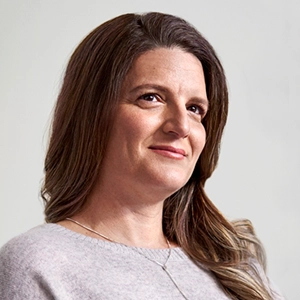
Dr. Rania Khalaf is Chief AI Officer and GM of AI at WSO2, leading the company's AI and Agentic roadmap, including the new Agent Platform. With deep expertise at the intersection of AI, cloud platforms, and enterprise software, Dr. Khalaf has a proven track record of building AI-native products from zero to market and driving company-wide transformations. Previously, she was Chief Information and Data Officer at Inari, a unicorn biotech startup where she built its digital and AI organization through a period of extraordinary growth, delivering deep learning and knowledge graph platforms for gene discovery. She was Director of IBM Research AI Engineering and Distinguished Research Staff Member leading an organization of researchers and engineers at the frontier of AI and cloud, driving innovations from scientific breakthrough to market, including award-winning Watson products and open source projects that became industry standards. She holds Bachelor's and Master's degrees from MIT and a PhD from the University of Stuttgart, with technical depth resulting in 90+ publications and over 8,000 citations. Rania serves on academic and industry boards and is a frequent speaker at institutions including MIT, Harvard, and UC Berkeley.
Beyond Defaults – Extending and Customizing OpenChoreo for Your Enterprise
OpenChoreo is a complete, open source developer platform for Kubernetes. It ships with sensible defaults for GitOps, CI/CD, networking, and observability, and it works out of the box. But every enterprise has its own deployment standards, security and compliance requirements, promotion workflows, toolchain preferences, and infrastructure topology. In this talk, I'll walk through OpenChoreo's key extension surfaces and how to apply them.
Speakers
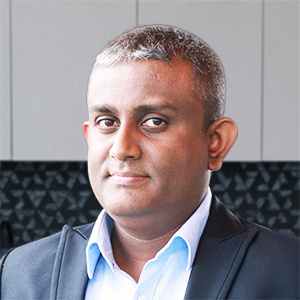
Manjula Rathnayaka is the Director of Engineering at WSO2, leading the architecture and engineering of WSO2 Cloud offerings. With over 15 years of experience, he has been instrumental in building and scaling cloud platforms across virtualized and Kubernetes-based environments. He is passionate about platform engineering and cloud-native architectures, with deep expertise in Kubernetes and the CNCF ecosystem. Manjula holds CKS, CKA, and CKAD certifications, and earned his B.Sc. in Engineering from the University of Moratuwa, Sri Lanka.
The Evolution of Platform Engineering – From Developer Platforms to AI-Native Platforms
Platform engineering is entering a new phase, from internal developer platforms that streamline delivery to AI-native platforms that actively participate in operations. Traditional IDPs brought self-service, standardization, and golden paths on top of Kubernetes. Now, platforms are becoming intelligent systems that learn from telemetry and understand system-wide context.
Speakers
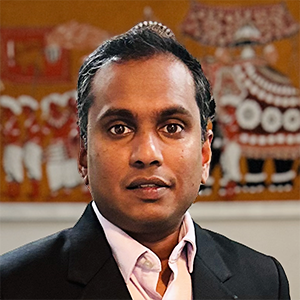
Lakmal Warusawithana is GM of the Choreo BU, VP and Distinguished Engineer at WSO2, specializing in cloud-native platforms, Kubernetes, and platform engineering. He is a maintainer of OpenChoreo, a CNCF Sandbox project, and has led the design of scalable developer platforms for enterprises. Previously, he was VP of the Apache Stratos PaaS project and co-founded thinkCube, building cloud platforms for telecom operators. Lakmal is a frequent speaker at industry conferences.
AI Cost Attribution & Optimization for LLM Consumption
AI is rapidly shifting from an experimental feature to a core product capability delivered through APIs. But unlike traditional APIs, LLM consumption has highly variable costs driven by prompt size, output length, model choice, reasoning depth, retries, tool calls, retrieval, and agent workflows. This session explores how organizations can make AI consumption economically sustainable by moving beyond request-based metrics toward AI-specific metering, cost attribution, governance, and optimization.
Speakers
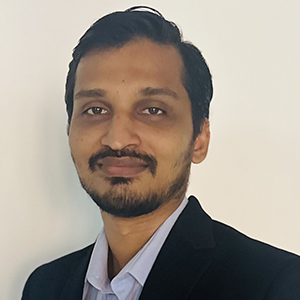
Anusha Jayasundara is a Senior Technical Lead at WSO2 with over nine years of experience driving innovation in API management, governance, analytics, and cloud-native integration. He has led the design and implementation of key capabilities in WSO2 API Manager, with deep expertise in API Analytics, streaming data integration, and runtime governance. Anusha is passionate about building scalable, secure, and insight-driven API ecosystems that empower organizations to thrive in multi-cloud and hybrid environments.
Hybrid Architecture and Multi-Gateway Control
As API ecosystems expand across cloud, on-prem, and edge, the traditional single-gateway model is no longer sufficient. Organizations are shifting to hybrid architectures with gateways distributed across regions and platforms. While this boosts scalability and reduces latency, it creates significant hurdles in governance and operational consistency. In this talk, we explore the move toward hybrid API architectures and the realities of managing multiple gateways.
Speakers

Pubudu Gunatilaka is a Director at WSO2, where he leads the product architecture for the WSO2 API Platform. With over a decade of experience in API management and cloud-native architectures, he has been instrumental in shaping and advancing WSO2's API management offerings. A recognized thought leader in the field, Pubudu has shared his expertise at leading global conferences such as APIDays, Nordic APIs, Open Source Summit, and Conf42, as well as numerous technology meetups. He is passionate about driving innovation in API management, API gateways, and API security, helping enterprises build scalable, resilient, and future-ready API strategies.
Designing APIs & MCP for AI Readiness
APIs power modern digital systems. But they were designed for human developers building deterministic applications. Today, those APIs are increasingly consumed by AI-driven and agentic systems that are probabilistic, non-deterministic, and autonomous by nature. This mismatch introduces real risks such as runaway costs, unexpected behavior, security gaps, and brittle integrations.
Speakers
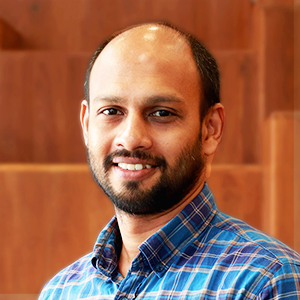
Nuwan has over 15 years of experience in the technology space, particularly in API management and integration. Since joining WSO2 in 2011 as a software engineer, he has been actively engaged in developing products as well as implementing solutions pertaining to integration and API management. In his current role, Nuwan is responsible for driving product innovation and management for WSO2's API Platform Business unit. His areas of expertise include microservices, APIs, API management, enterprise integration, and enterprise application security. He has authored 'Microservices Security in Action' and has delivered talks at several global technology-related conferences on integration, APIs, and cloud-native technologies.
Leading the Agentic Enterprise
In this live podcast-style session, WSO2’s CTO and Chief AI Officer will be joined by customer executives and industry influencers for a candid discussion on what it really takes to lead in the agentic era. The conversation will explore how enterprises are thinking about AI agents, modernization, governance, and the operating changes needed to turn early momentum into lasting business value. Expect a practical discussion grounded in real-world leadership perspectives, not theory.
Speakers

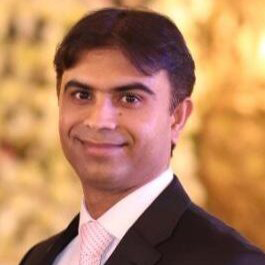

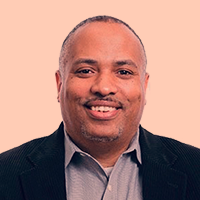
Glenn Donaldson (Moderator)
Chief Architect & Director, Enterprise Architecture & Integration - Office of Technology & Digital Innovation

Abstractions for the Agentic Enterprise
Every architectural era is defined not by what it adds, but by what it hides. Client-server abstracted hardware. Cloud-native abstracted infrastructure. Platformless pushed the platform into the background. Each shift hid complexity and freed architects to solve harder problems at a higher level.
The agentic era follows the same pattern. This time, the abstraction target is workflow and decision-making. When agents can plan, reason, and act, the human role moves up the stack to intent.
Speakers
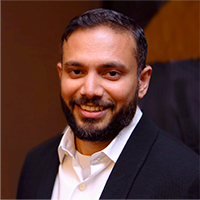
Asanka's goal is to connect humans and technology by educating the community and helping organizations become digitally driven. Despite having high-level technical objectives, he truly enjoys writing code. He shares his knowledge on various technical topics by creating content like articles, blogs, and podcasts to educate the community. Additionally, he engages with the community through speaking engagements and conducting workshops. He strives to be a trusted advocate for digital strategists, helping enterprises transform into digital-driven organizations. With over 20 years of industry experience, he has gained valuable insights into designing and implementing highly scalable distributed systems, microservice architectures, and business integration solutions. His areas of specialization include application architecture and development using modern programming technologies.
From Domain Discovery to Working APIs with AI
AI is making code generation cheap. The constraint in API work is shifting to design; how systems are defined, aligned, and governed over time. This talk outlines a practical approach to using AI as a design collaborator that augments and amplifies human capability rather than replacing it. Starting from domain discovery, you’ll see how AI extracts a shared vocabulary and carries it through OpenAPI definitions, documentation, security profiles, and test scripts all ending in a working prototype.
Speakers
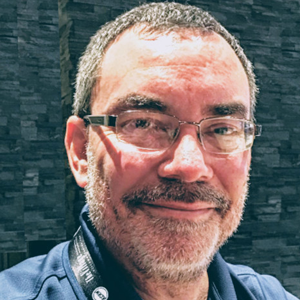
Mike Amundsen
Author, Speaker, Advisor
Mike Amundsen is an internationally recognized author and speaker focused on network architecture, Web development, and the intersection of technology and society. He helps organizations design sustainable API ecosystems and navigate digital transformation, and is the author of RESTful Web API Patterns and Practices Cookbook (2022) and Design and Build Great APIs (2020). His current work explores AI-augmented API design, composable service platforms, and the future of human–machine collaboration.
Moving Millions with WSO2
HTM moves over two million passengers each week and processes millions of digital requests every day, from vehicle telemetry to payment transactions. WSO2 serves as the backbone of our integration landscape, securely connecting fleets, timetables, and passenger platforms across The Hague. This session explores how HTM uses WSO2 to deliver real-time data, maintain resilience, and ensure security in a city that recently hosted high-profile events like the NATO Summit.
Speakers

Toby Van Willegen
Application and Software Architect
Toby van Willegen is a 28-year-old Application and Solution Architect at HTM Personenvervoer N.V., The Hague's public transport company. With nearly 8 years of experience in the field and a background in Computer Science from Delft University of Technology, Toby focuses on providing HTM with a unified application and integration landscape. His work involves designing scalable systems that connect vehicle fleets, timetables, and passenger services. Previously, Toby played a key role in developing an online logistics platform, showcasing his expertise in real-time data processing and system architecture. He is passionate about driving innovation in public transport technology.