

Architecture Diagramming: From L0 to Ln - Simplifying for Every Audience

- Erandi Ganepola
- Associate Lead - Solutions Engineer, WSO2
The timeless power of diagrams

Leonardo da Vinci’s flying machine | Source: https://www.leonardodavinci.net/flyingmachine.jsp
Visual diagrams serve as a bridge across centuries, transforming complex systems into simplified forms by using abstraction to illuminate essential relationships and structures. A good example is Leonardo da Vinci’s 15th-century flying machine sketches that remain intuitive and understandable even today, after 500-plus years. That’s the power of architecture diagrams: they simplify complex systems into clear visuals, making complexity understandable now and in the future.
Our modern systems may be far more complex than da Vinci’s designs, but they benefit from structured visual abstraction more than ever. Even when technology replaces human workers, it is human architects who are by nature, visual readers; design these solutions to address real-world challenges. As systems grow increasingly complex, the ability to communicate intricate details in a simplified, approachable and comprehensible manner becomes essential. That’s why even today, diagrams remain one of the most effective communication media for bridging gaps across diverse professional and social backgrounds, while also serving as structured documentation and contractual references.
A short history & landscape of architecture diagram types
Architecture diagramming has evolved significantly, from initial flow sketches to formal notations.
Here’s a set of widely used diagram types over the years:
- Flowcharts/ DFDs: Explain end-to-end logic and data movement; great for integrations and transformations.
- Layered & Component (boxes-and-lines): Show structure and boundaries (ex: presentation, API, integration, core, data) and how parts relate.
- UML (selectively): Component, Deployment, and Sequence diagrams give precision for technical audiences, use sparingly to avoid heaviness.
- 4+1 View Model: Multiple viewpoints (logical, development, process, physical + scenarios) to communicate different concerns.
- BPMN: Formal business-process flows that business and tech can validate together.
- TOGAF (framework) + ArchiMate (notation): Enterprise-level alignment across Business/Application/Technology layers, with strong governance and traceability.
- C4 Model: Lightweight Context → Container → Component → Code zoom levels—ideal for modern microservice/cloud systems.
- Cloud/Infra Views: Concrete runtime topology (AWS/Azure/GCP/K8s) for deployment, resilience, and operations.
Bottom line: Ultimately, no single diagram suits every need. The ideal view depends on the audience and purpose. However, the theoretical depth and inherent complexity of many diagram types mentioned above, can inadvertently hinder clear communication. This often distracts from essential information, potentially overwhelming the audience or leading to misunderstandings.
What we use at WSO2
Knowing your audience first
When presenting an architecture diagram, different stakeholders require different perspectives based on their interests. Therefore, understanding your audience is paramount:
- Business leaders and executives want to grasp the why and the value, focusing on return on investment, time savings, and user experience improvements.
- Architects and product owners concentrate on the what and how the solution works, including major component interactions, integration patterns, and the technology decisions needed to solve the technical problem.
- Deployment teams (DevOps, SRE, infrastructure, etc.) care about where and how the deployment works, such as infrastructure and networking requirements, ports, and runtime configurations.
- Implementation teams (Developers, Engineers) care about how the implementation can be done, what the user experience should be, data types, communication protocols, etc.
- Additionally, there may be other specialized diagrams, those focusing on CI/CD flows, security architecture, etc.
Each group benefits most from diagrams tailored to a level of detail appropriate for their background and needs. They desire to know the right amount of information at the right time without being overwhelmed.
Simplified architecture diagraming methodology
Simplicity in this context is more about communicating complexity understandably. A simplified, level-based method lets you start at Level 0 (L0), then disclose detail step-by-step until Level n (Ln), depending on the complexity of the system and only when the conversation and decisions require it. That is why at WSO2 we practice L0-Ln architecture diagramming methodology.
The L0–Ln idea applies within each architecture category such as business, solution, deployment, etc; not across them. Additionally, the Lo-Ln model can construct any notation type described in the "Architecture Diagram Evolution" section.
For example, let’s take an illustration in the solution architecture vertical that is beneficial for enterprise architects and product owners:
- L0: Single, abstract view of the solution, major components and interactions, no product names or protocols.
- L1: Introduces concrete technologies/products (ex: API gateway, IDP, integration runtime) and the high-level integration flow.
- L2: Communication patterns (ex: REST, async), microservices structure, domain structure, data paths, error handling, etc.
- L3–Ln: Deep dives into each domain/component and nitty gritties.
This same pattern applies independently to other verticals such as Business and Deployment.
Following showcases an abstract of how L0 to Ln can be applied in different verticals:
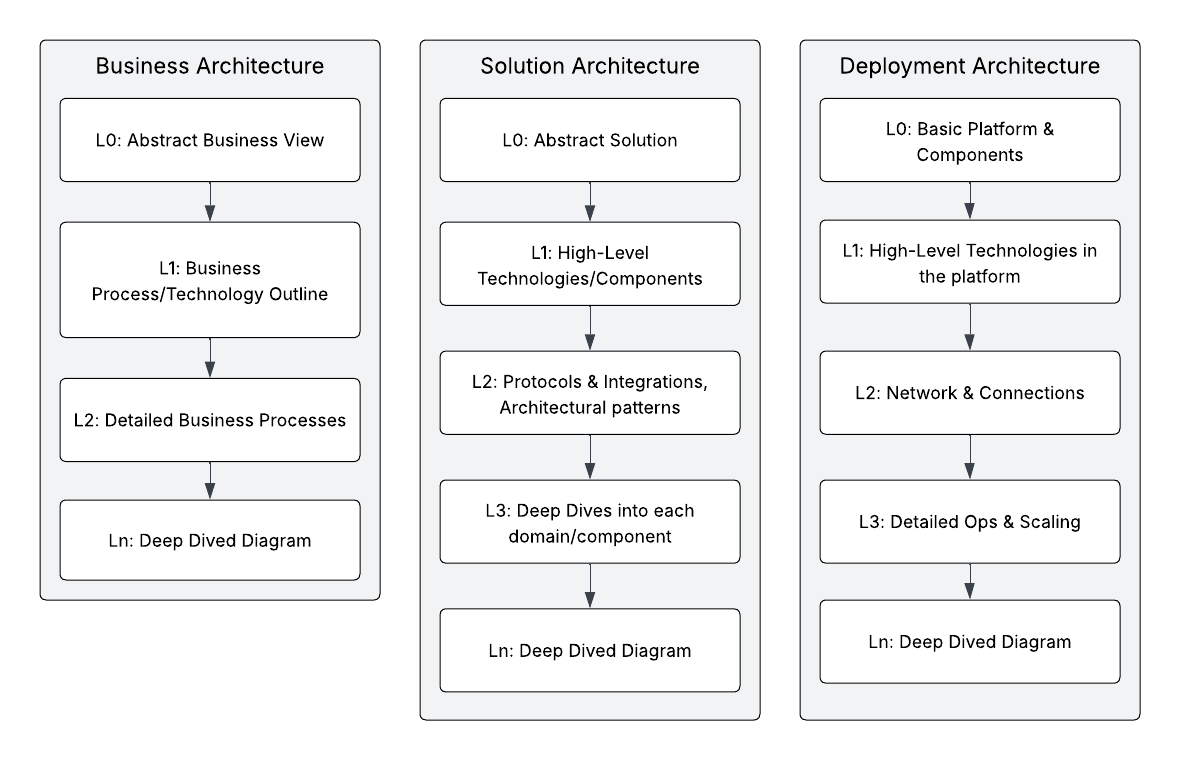
It's important to remember that this isn't a rigid framework, but a practical methodology tailored to the audience with the purpose of communicating complexity understandably level by level. In a real-world scenario, diagrams from different verticals can be cross-referenced based on audience understanding. For instance, a technically savvy CEO might be presented with an L1 solution architecture diagram after a discussion of the L0 business architecture.
What diagramming notation should you use?
Ultimately, it doesn't truly matter. Whether you opt for UML, C4, or data flow notations, the key is to choose a method that facilitates clear and simple communication at every level.
Why L0 to Ln works
The effectiveness of the L0 to Ln approach stems from several key benefits that streamline communication and collaboration in architecture diagramming:
- Simplicity: Show complexities in a simplified manner, making them easier to digest and comprehend. This ensures the audience understands the exact important and necessary details at the right time.
- Audience-first clarity: Each level answers only what that audience needs now; noise is deferred to deeper levels.
- Guided elaboration: Start abstract; add detail within the same vertical only when a decision requires it, preventing “one diagram to rule them all.”
- Clean cross-references: Separate per-vertical ladders avoid the common confusion of reading L0→L2 as Business→Solution→Deployment; you relate views, you don’t merge them.
- Operationally useful docs: Modular levels become ready-made artifacts for onboarding new personas, reviews, audits, and runbooks; easy to keep current and reuse.
Example use case of an apparel manufacturer & distributor (B2B & B2C)
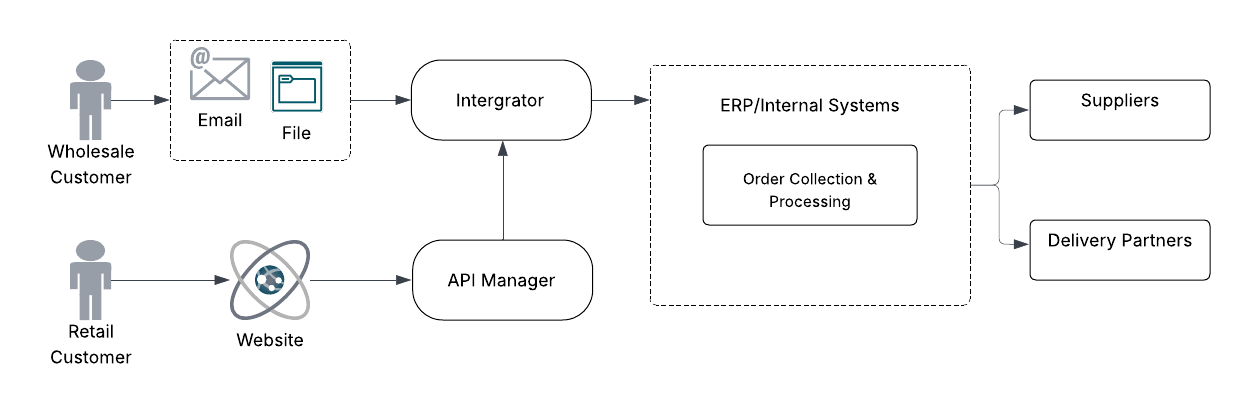
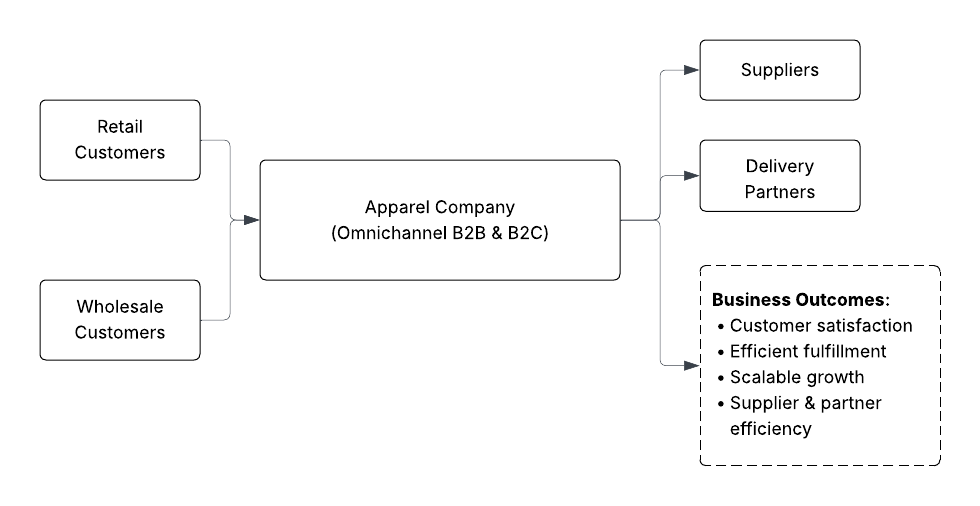
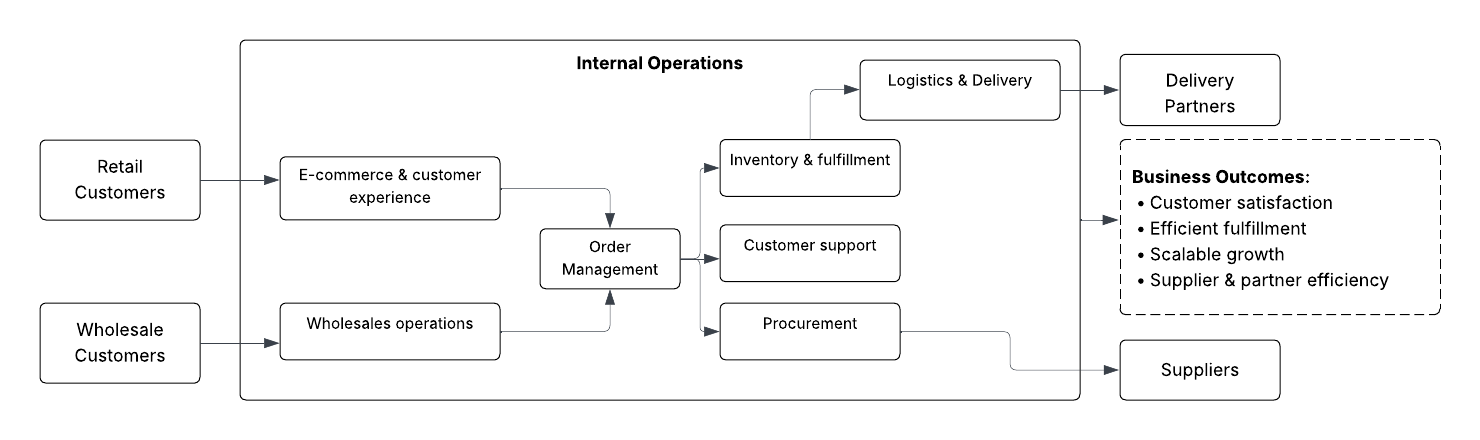
To demonstrate the L0 to Ln diagramming approach, let’s consider a real-world use case of an Omnichannel, apparel manufacturer & distributor (B2B & B2C) and draw diagrams for different verticals.
In this scenario, an apparel company processes orders from two distinct customer segments and it handles multiple sales channels (website, email, EDI, etc.):
- Retail customers place orders via an e-commerce website.
- Wholesale customers send orders through email or file uploads.
Regardless of the source, all incoming orders are collected and funneled into the company’s ERP system, which handles order validation and fulfillment processes. The ERP is responsible for:
- Coordinating with suppliers to source raw materials, and
- Engaging with delivery partners to dispatch finished goods to customers.
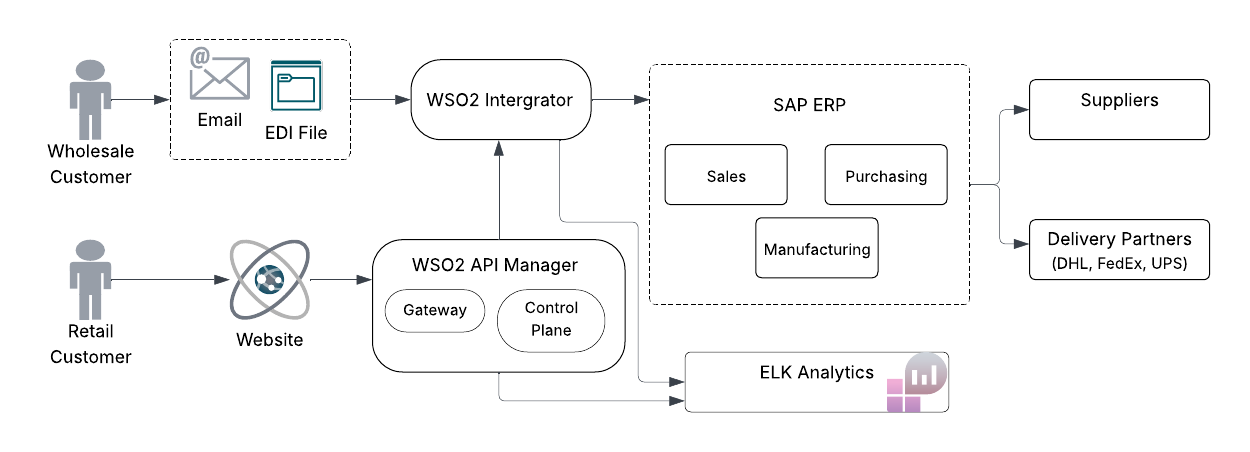
To orchestrate these diverse interactions, the system relies on a layered architecture:
- An API Management layer acts as the secure external interface for incoming and outgoing interactions.
- An Integration layer handles data transformation, routing, and system interoperability.
- Core ERP/Internal Systems perform business logic, storage, and coordination tasks.
This architecture ensures seamless communication across different systems and stakeholders, while maintaining flexibility, scalability, and governance across the solution.
Solution architecture diagrams
Following are the sample Solution Architecture diagrams, starting with the most abstract view of the solution and progressively increasing in granularity (L0 to Ln) for the use case.
Solution architecture diagram - L0
Solution architecture diagram - L1
Business architecture diagrams
Following are two sample Business Architecture diagrams, starting with the most abstract view of the business process and progressively increasing in granularity into the detailed business processes and outcomes (L0 to Ln).
Business architecture diagram - L0
Business architecture diagram - L1
Deployment architecture diagrams
Following are two sample Deployment Architecture diagrams, starting with the most abstract view of the deployment and progressively increasing in granularity into deployment, components and infrastructure level details (L0 to Ln).
Deployment architecture diagram - L0
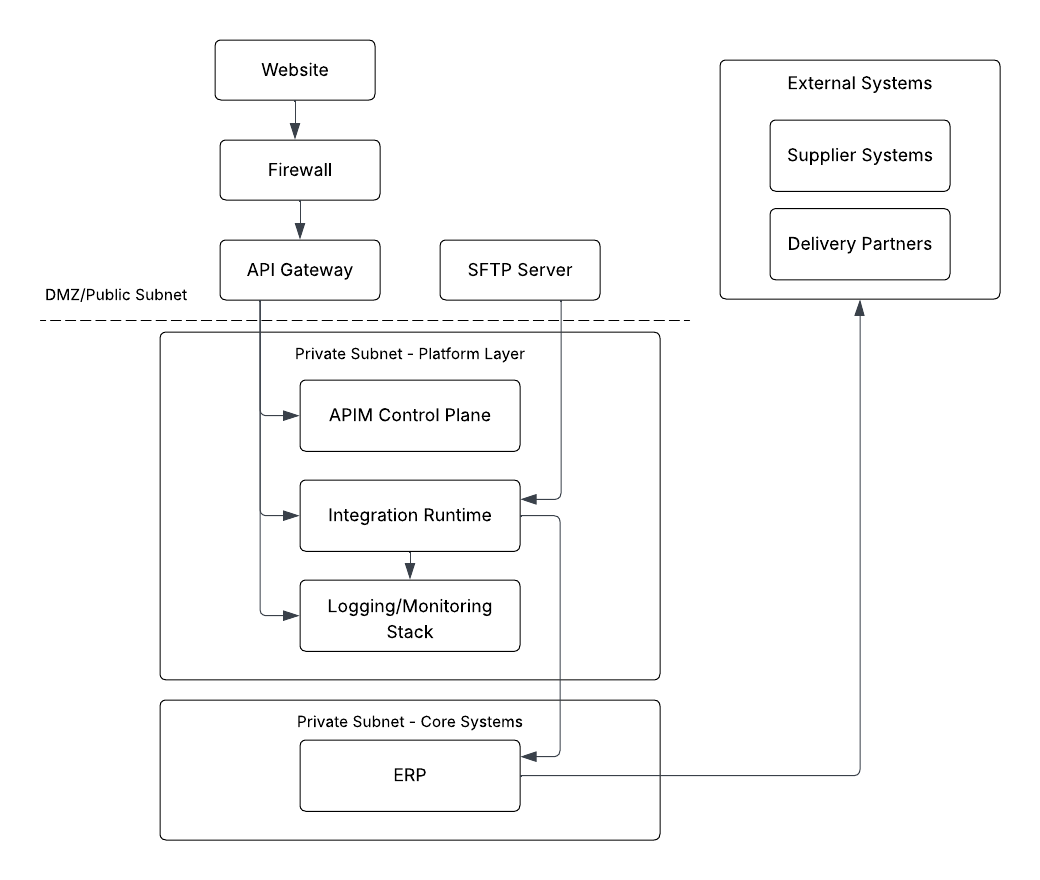
Deployment architecture diagram - L1
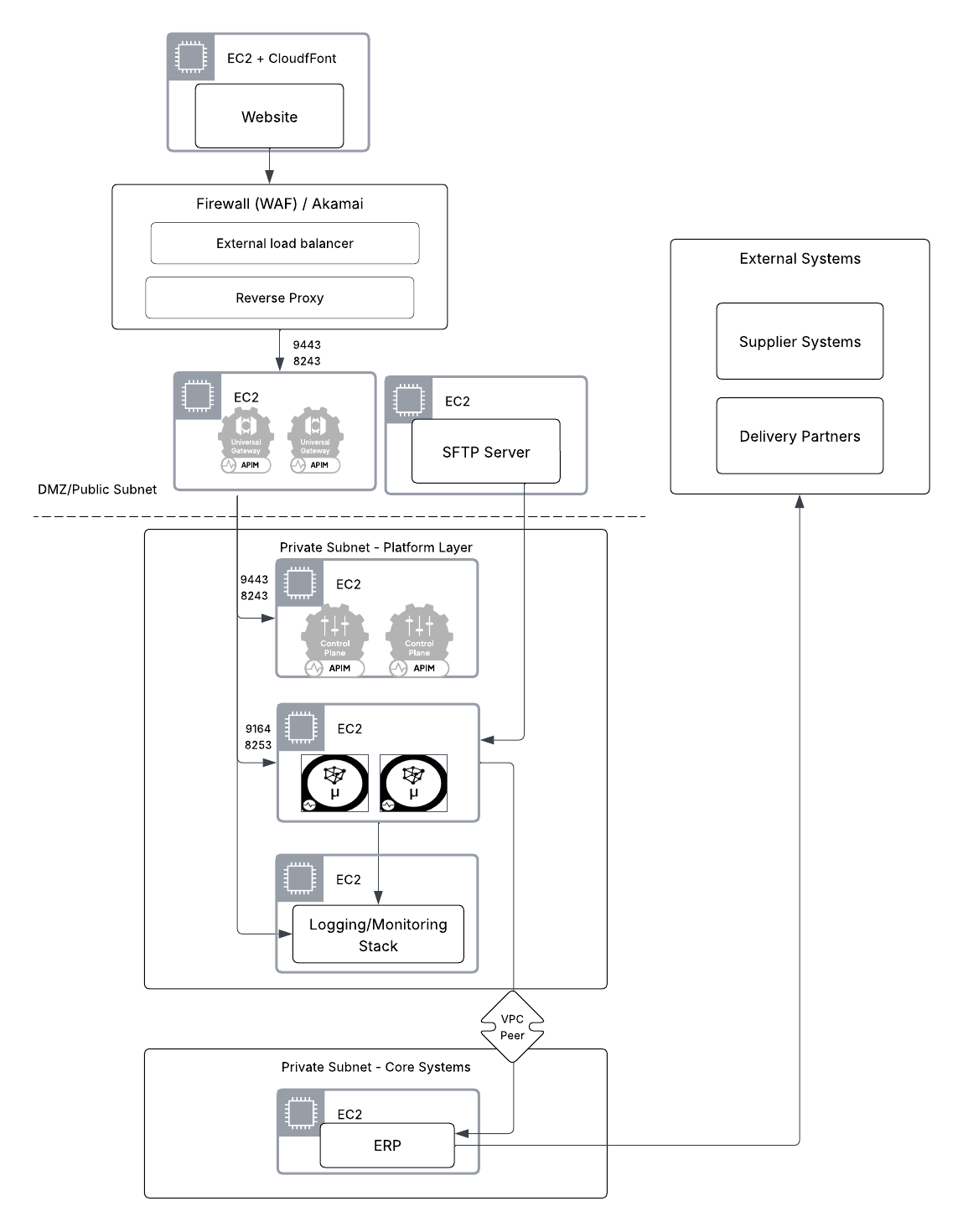
The above diagrams which represent L0 to Ln architecture diagrams in solution, business, and deployment verticals; serve as references for any other use case and vertical.
Final thoughts
The L0-Ln methodology we’ve designed and refined at WSO2 is more than a diagramming framework; it’s a human-centered way for communicating architectural complexity understandably. By layering information to match the audience, it drives clearer understanding, smoother collaboration, and better decisions across the lifecycle among different audiences. Whether briefing a C-level leader or working with DevOps engineers, L0→Ln ensures the right level of detail at the right time.
Outcomes we consistently see:
- Faster onboarding: new team members can grasp the system quickly by starting at L0 and drilling down as needed.
- A path to enterprise architecture: L0→Ln scales from product/team views to org-wide landscapes, helping define enterprise architecture in a structured yet flexible way.
- Iterative and adaptive documentation: durable L0 anchors with change-friendly L0-Ln details that evolve with technology and business priorities.
As we delve deeper into architectural principles, the primary objective is not only to design systems; but to communicate those designs effectively. Always remember that lucid, impactful communication is the bedrock of successful architecture. That is where L0-Ln architecture diagramming effectively communicates complexities in modern world systems in a simplified, understandable manner to the relevant audience.