

The Six-Phase Framework to Migrate from Your Legacy Integration Platform

- Isuru Udana
- Director - Engineering, WSO2
Introduction
For many integration architects and developers, the legacy platform they have mastered feels comfortable, a familiar landscape where their expertise is well-established. However, this comfort comes at a significant and steadily increasing cost in today’s rapidly evolving technological and business landscape, as the reliance on outdated methods and technologies inevitably hinders an organization's ability to continuously adapt and innovate.
As H. Nelson Jackson observed in the early 1900s, "I do not believe you can do today's job with yesterday's methods and be in business tomorrow." This truth resonates even more strongly in the complex and dynamic realm of enterprise integration, where the demands on modern businesses — from building AI-native businesses to real-time data processing and cloud-native applications to microservices architectures and enhanced security protocols — far exceed the capabilities of traditional integration approaches. Sticking with legacy integration platforms is akin to trying to navigate a digital highway with an analog map; it's inefficient, prone to errors, and ultimately unsustainable.
Our extensive experience at WSO2, particularly in competitive scenarios where we have successfully displaced legacy technologies, clearly demonstrates that the vast majority of enterprises are not only aware of this challenge, but are actively engaged in some stage of migration away from their legacy integration platforms. This widespread movement underscores a critical understanding across industries: modernization is no longer an option, but a strategic imperative for long-term survival and growth. The drive for greater agility, scalability, cost efficiency, and improved customer and developer experiences is compelling organizations to re-evaluate their integration strategies and embrace modern solutions.
The unavoidable case for modernization
The simple fact is that legacy integration, often consuming up to 70% of the IT budget just for maintenance, cannot meet modern requirements due to its inherent limitations. These systems, built on outdated architectures and proprietary technologies, are notoriously inflexible and difficult to adapt.
This rigidity not only hinders an organization's ability to respond swiftly to market changes, but also siphons off a significant portion of the IT budget, leaving little room for innovation. The inability to scale with growing data volumes and transaction rates, coupled with heightened security vulnerabilities and limited AI-native and cloud-native capabilities, further exacerbates the problem.
Moreover, the lack of real-time data exchange, vendor lock-in, complex development cycles, and poor visibility into operations collectively render legacy integration inadequate for the demands of today's dynamic digital landscape.
Why migrate from legacy integration:
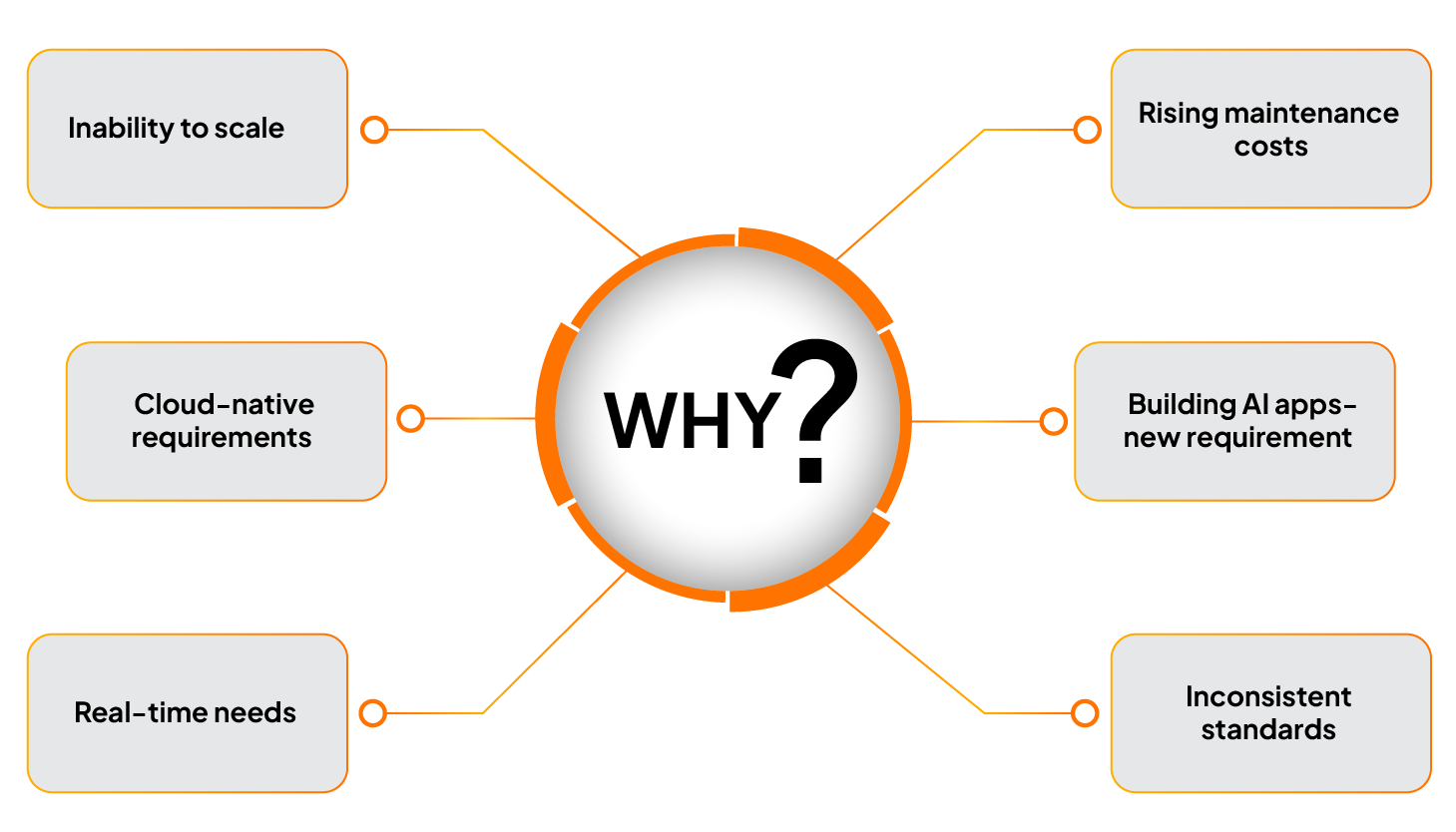
Figure 1: Why migrate from legacy integration?
- Rising costs: High support and licensing fees, and the inability to find skilled resources to work on legacy systems leads to constantly rising costs.
- Lack of AI/GenAI readiness: The next wave of business value comes from AI applications, which cannot be built or connected effectively by outdated integration layers.
- Inability to scale: Legacy systems are not designed for the increased load, traffic, and diversity of integrations in today's world.
- Not cloud-native: Modern systems demand agility and specific cloud-native requirements that older, centralized architectures struggle to serve.
- Prevents real-time decision making: Synchronizing data in real-time is critical, but legacy systems built on batch jobs and file transfers often cannot deliver the required speed.
- Inconsistent standards: Years of varied approaches integration development leads to technical debt, data incompatibility, increased errors, poor scalability, and more.
The six-phase framework for a risk-free migration
Successfully replacing a decades-old, mission-critical integration layer presents significant challenges. These complexities are multifaceted, encompassing technical, organizational, and historical dimensions. Factors such as cultural resistance, intricate dependencies among existing systems, and the potential costs and risks of replacement solutions contribute to the difficulty. Furthermore, the absence of comprehensive documentation and the departure of original architects and engineers often compound these issues. Consequently, a migration is a high-stakes endeavor, necessitating a meticulously planned and executed strategy to prevent any disruption to core business operations.
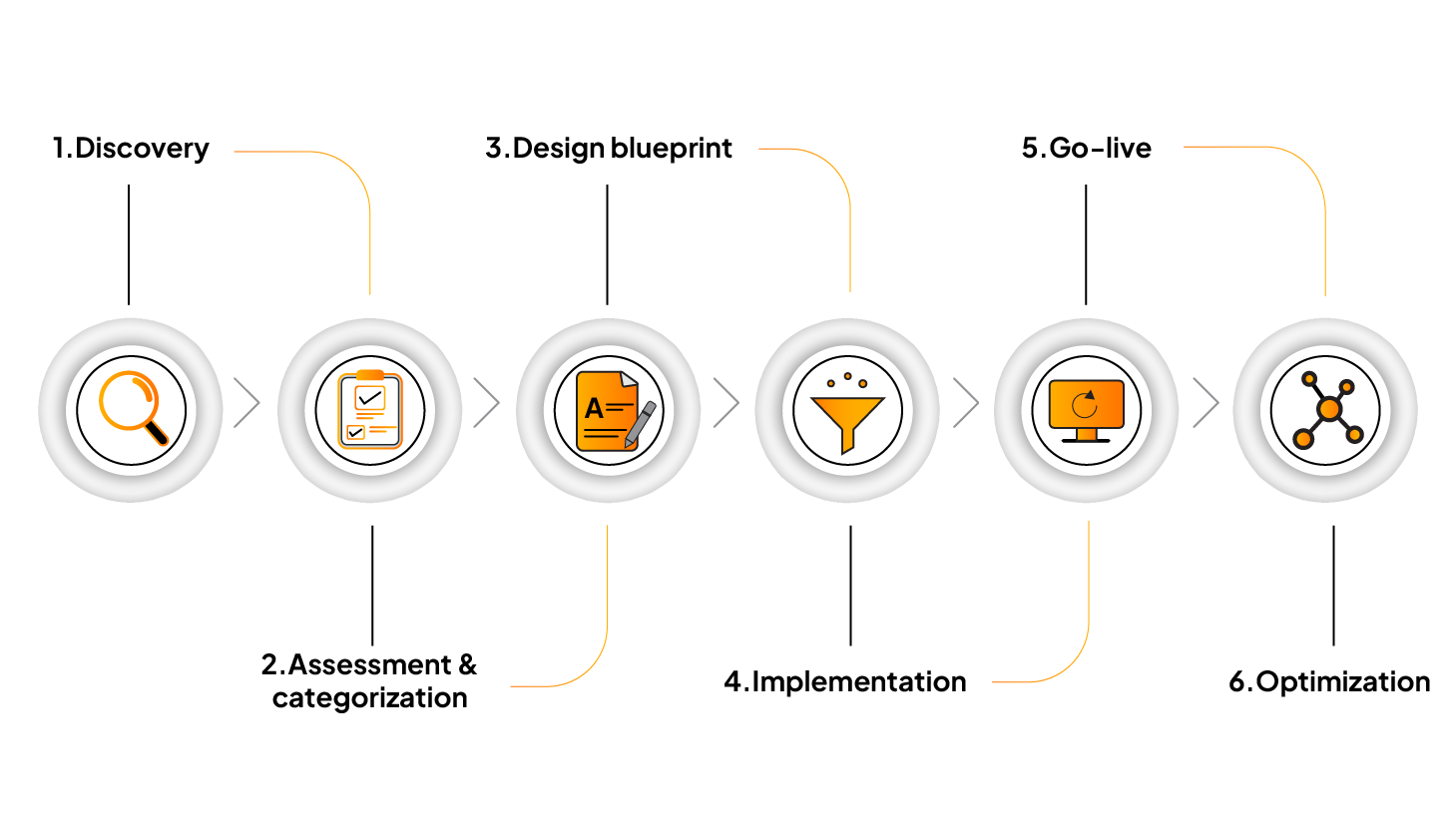
Figure 2: Six-phase migration framework
This six-phase framework, designed and optimized using WSO2’s extensive experience helping our customers with such migrations, offers a predictable and reliable path forward through this labyrinth of legacy.
Phase 1: Discover—uncover the unknowns
This is arguably the most challenging and pivotal phase within the entire modernization process as it often involves significant technical complexities, requires deep understanding of existing systems and integrations, and can uncover unforeseen dependencies or technical debt.
Success in this phase is a strong indicator of the overall project's potential for success, while missteps can lead to project delays, increased costs, or even outright failure. Therefore, meticulous planning, careful execution, and a skilled team are important to navigate this phase effectively.
- Understand the existing systems and integrations: Review existing documentation, and speak to the architects, developers, and system owners to understand and validate the behavior of existing systems and integrations.
- Map external dependencies: Identify all connected systems—SaaS, APIs, databases, and message brokers—while paying extra attention to proprietary legacy systems and custom protocols (e.g. file-based/FTP) as these will require custom development or connectors.
- Accelerate discovery with AI: Use AI tools to analyze logs and configurations for redundancy, identify fragile segments, and spot common issues to gain an immediate overview of the existing landscape.
Phase 2: Assess the migration effort, and define the roadmap
Once the discovery phase is complete, the next critical step is to assess and categorize each integration to estimate the migration effort, and define a clear and actionable roadmap that will serve as a strategic blueprint for the entire migration, outlining key milestones, dependencies, expected outcomes, and possible risks and mitigation actions for each risk.
The effort estimation must be extremely thorough, and quantify the resources, time, and budget required for each stage of the project. It should also be as granular as possible, breaking down the overall effort into smaller, manageable tasks to ensure accuracy and facilitate effective resource allocation.
- Categorize and prioritize: Not everything must move at once, so categorize integrations for migration based on their priority.
- Evaluate the complexity: Do not simply count artifacts, but also account for complex transformation logic, custom retry mechanisms, and proprietary protocol handling, which can significantly increase the migration effort.
It is also important that the roadmap and effort estimates are developed collaboratively with all relevant stakeholders to foster alignment and secure buy-in.
Phase 3: Design the blueprint—modernize, don't replicate
This is the opportunity to move beyond legacy limitations. You are modernizing the architecture, not just the code. This strategic shift involves embracing contemporary design principles, leveraging cloud-native capabilities, and adopting agile methodologies to create a more resilient, scalable, and adaptable integration landscape.
- Define the future-state architecture: Decentralized microservices-style, or a centralized integration hub / ESB.
- Select the deployment model: On-premises, private cloud, iPaaS, or hybrid.
- Create standards: Create reusable components and templates (integration flows, functions, and error handlers) that all development teams must adhere to, ensuring future consistency.
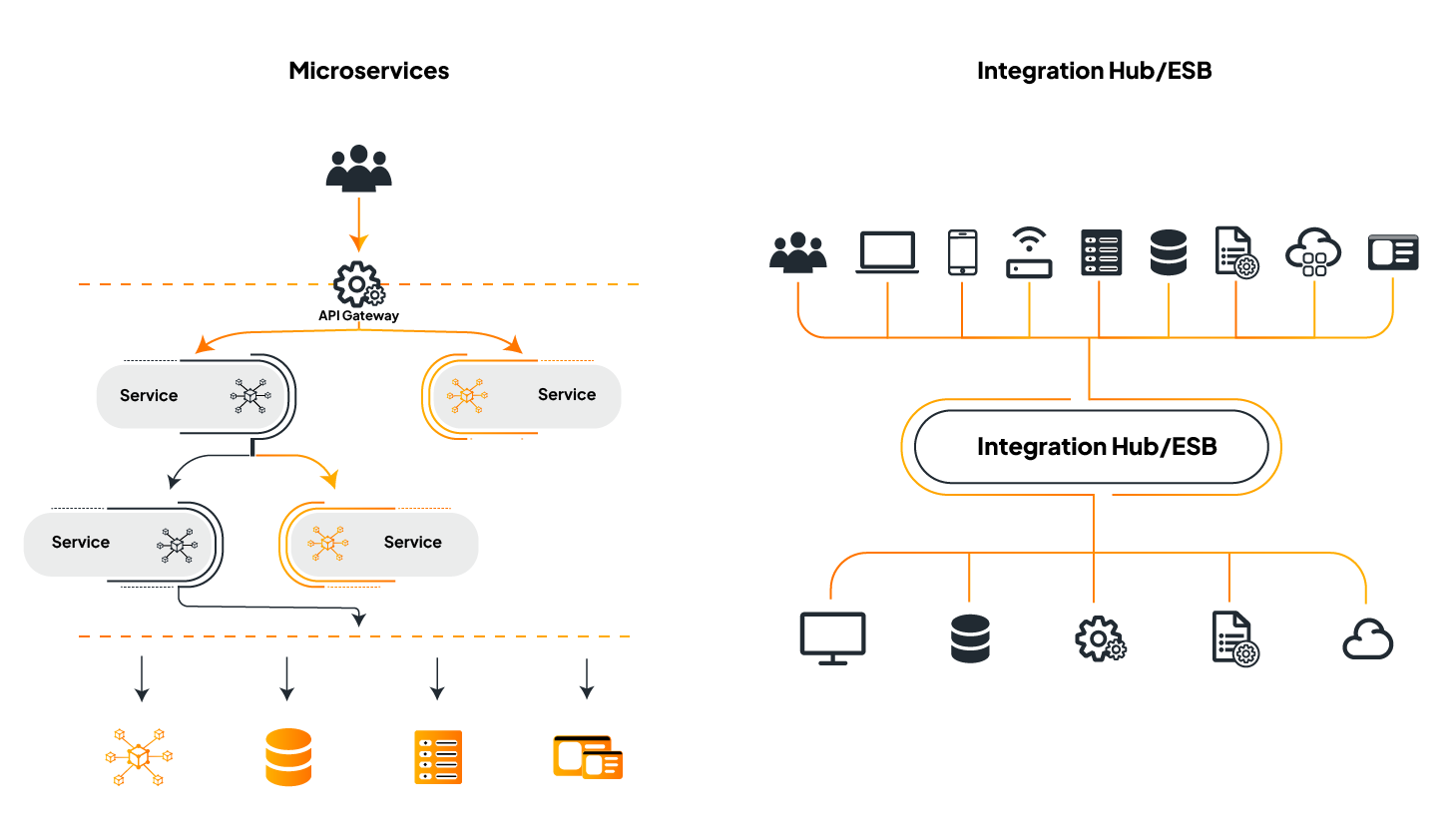
Figure 3: Architecture styles
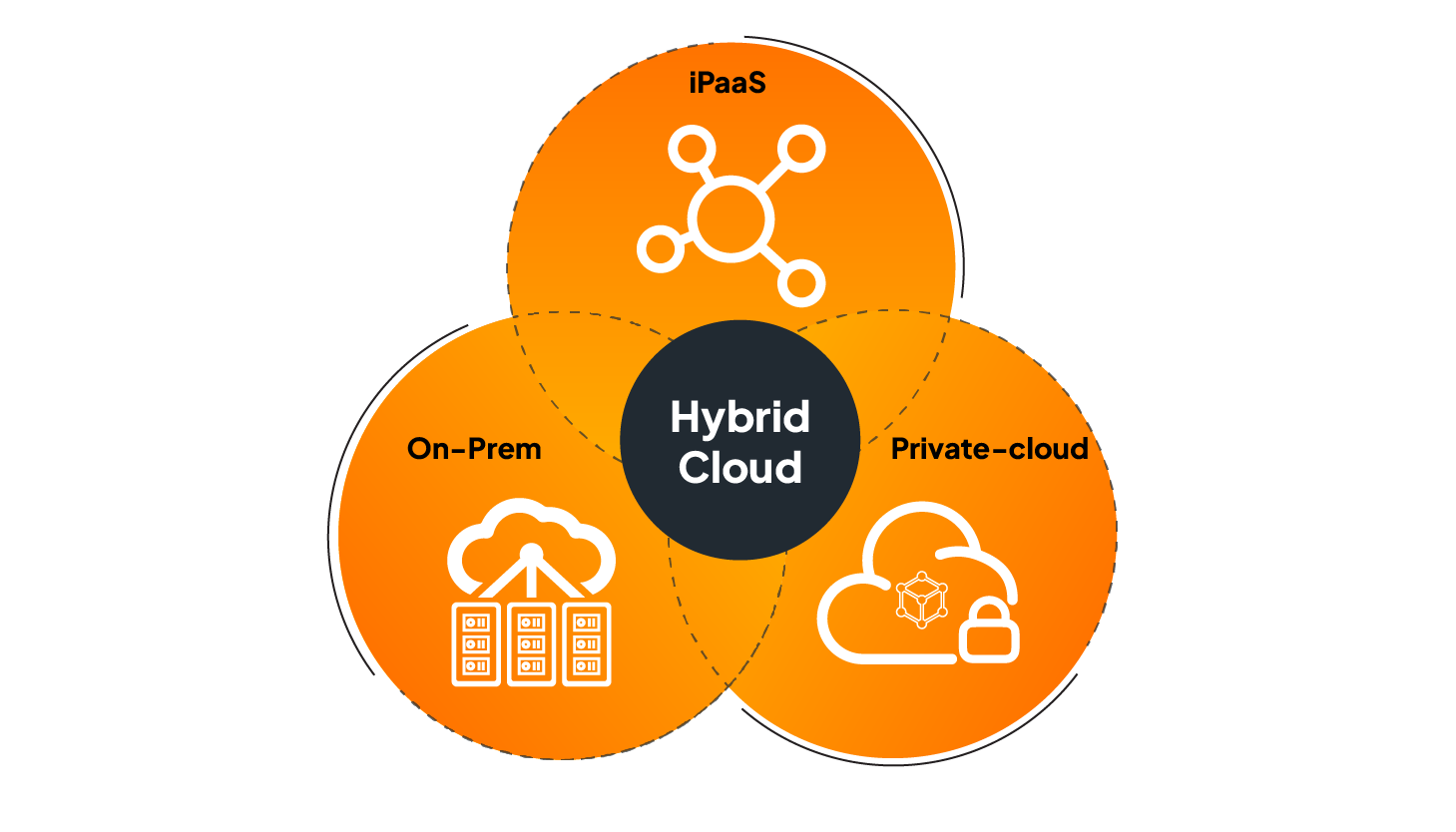
Figure 4: Deployment options
Phase 4: Implementation—build confidence and momentum
Migrations are complex by nature, generally leading to a constant sense of unease amongst stakeholders during the implementation phase, which is why it is essential to build confidence and momentum very early in the implementation phase by aligning the three critical aspects of any migration—people, processes, and tools.
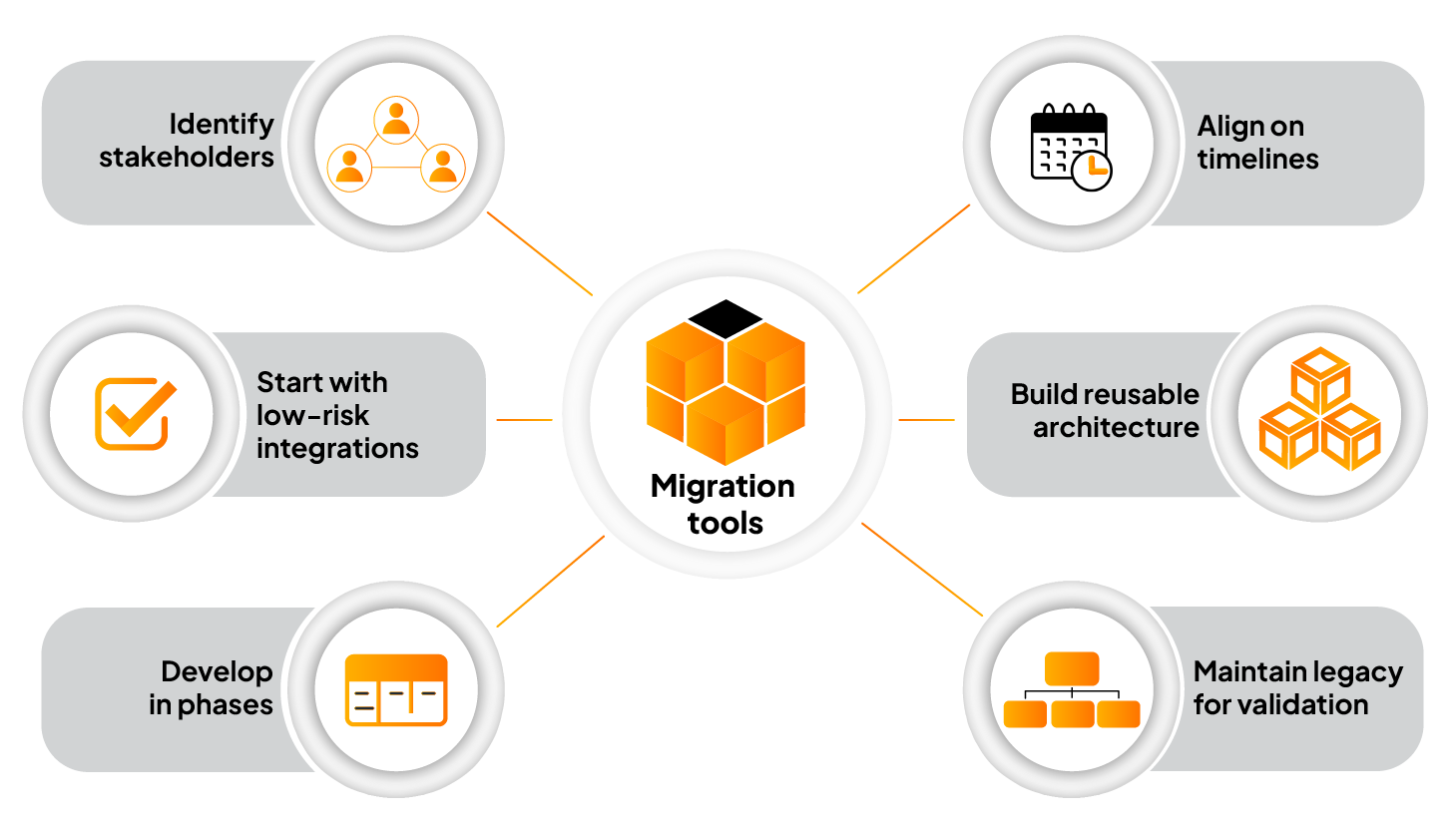
- Identify the key stakeholders, both business and technical, and assign clear roles and responsibilities upfront to avoid ambiguity and a lack of ownership during the migration project.
- Align on timelines for all key milestones with achievable targets. These milestones should not be too far apart in order to show consistent progress, and maintain momentum.
- Start small and begin with developing low-risk integrations to build team confidence and familiarity with the new integration platform.
- Build reusable templates that enable development teams to reuse existing work while adhering to common standards and patterns.
- Develop in phases by breaking down the project into separate parts, so that development teams can work in parallel and without dependencies.
- Maintain the legacy integration platform in order to verify and validate the behavior of modern implementation against the older implementation.
- Testing and validation is crucial for successful migration, building stakeholder trust, and preventing issues. Establish a multi-layered testing strategy covering unit, integration, performance, and end-to-end validation, including functional and non-functional aspects. Adopt a "shift-left" approach, testing early and continuously, automating where possible, and integrating into CI/CD pipelines. Perform regression testing against the legacy system, investigating any discrepancies. Validate performance and load under realistic workloads, especially for high-volume integrations. Finally, engage business users in UAT to ensure alignment with requirements.
- Leverage migration tooling where possible to automate the conversion of project configurations from the legacy platform to the modern platform. This tooling can also assess the migration effort for any code requiring manual migration.
Phase 5: Go-live—mitigate risk with a phased rollout
Organizations that are ready to go-live on their modern integration platform must be careful to avoid a "big bang" approach, which often leads to higher failure rates due to its inherent risks and complexities, and adopt an incremental go-live approach instead. Such an approach ensures minimal disruption to ongoing operations, allows for continuous testing and feedback, and enables organizations to adapt to changes throughout the migration. An incremental transition also helps in managing risks by breaking down a large, complex project into smaller, more manageable phases, each delivering tangible value.
- Phased go-live approach: Deploy your integrations in small batches, and route traffic incrementally to the new platform. Do not use your production environment as a validation stage. Validate early by running existing test cases against the new platform in your pre-product environment. If test cases are lacking, build them against the legacy platform first, and then test them against the new platform.
- Fail-fast, fix-fast execution: Employ canary deployments to route small amounts of traffic to the new system while the legacy system is still running, and immediately roll-back traffic from the new system if you encounter any issues.
- Risk mitigation: Use a parallel run strategy to keep both systems operational for a defined period until successful cutover is confirmed, and prioritize rollouts to migrate non-critical integration first (e.g. internal data synchronizations, nightly jobs, etc.) before tackling high-risk, critical integrations (e.g. payment gateway integrations).
- Clear communication: Maintain clear and regular communication with all stakeholders throughout the process as providing consistent updates ensures everyone is aware of the current status, thereby fostering trust and confidence.
Phase 6: Optimization—ensure long-term sustainability
Short-term success is defined by a successful migration, but long-term success is defined by not having to repeat the process again in the near future—the ultimate goal is to establish robust and adaptable systems and practices that negate the need for a repeat of the migration.
This requires strategic planning and meticulous execution that builds future-proof architectures, fosters continuous improvement, and embeds a culture of agility and innovation within the organization. By doing so, the investment in modernization yields lasting benefits, allowing the organization to focus on growth and strategic initiatives rather than perpetually addressing technical debt or outdated systems.
- Documentation: Clearly document everything that was created during the migration.
- Automation: Create fully automated test cases in order to prevent regressions, and ensure sustainability.
- AI to improve: Use AI to identify bottlenecks, flag error-prone integrations, eliminate redundant logic, and continuously improve the new architecture.
Continuous evaluation of the business impact after migration is also essential. Measuring performance improvements, cost reductions, and user adoption rates not only provides tangible evidence of success, but also highlights areas for further optimization, thereby helping to ensure the long-term success of the migration project.
Conclusion
Migrating from a long-standing integration platform presents significant challenges and unforeseen obstacles. To maximize the chances of a successful migration, organizations must not only be adaptable to constantly changing situations, but also plan to proactively mitigate risks. This involves securing stakeholder buy-in with clearly defined roles and responsibilities, establishing a well-defined roadmap with achievable milestones, starting small to achieve quick wins to build confidence and momentum, and automating processes as much as possible to minimize human error.
This six-phase migration framework is designed based on WSO2’s experience of migrating customers from legacy integration platforms to our modern integration technology, and provides organizations with a tried, tested, and optimized migration approach, helping to minimize risk and maximize the chances of success.
How WSO2 can help with your migration journey
WSO2 offers two modern, AI-native and cloud-native integration platforms for enterprises looking to migrate from legacy systems—WSO2 Integrator, a 100% open-source, downloadable software, and Devant by WSO2, an AI integration platform as a service. WSO2 also provides tools that automate 60% - 90% of the migration effort, minimizing risks. These tools also estimate the manual effort needed for the remaining portion, giving organizations a clear upfront picture of the effort required to complete their migration project.
Try our automated migration tools:
Reach out today to start your migration journey with a free assessment, or use the tools to run your own assessment.
Start Your MigrationAbout The Author
- Isuru Udana
- Director - Engineering, WSO2