



What is Platform Engineering?
Platform engineering is the discipline of designing and building self-service internal platforms that optimize the software development lifecycle. It enables developers to focus on writing and delivering high-quality code without getting bogged down by operational complexities.
In today’s fast-paced digital world, organizations face increasing challenges in managing infrastructure, security, and governance while ensuring rapid application delivery. Platform engineering bridges this gap by providing standardized tools, automation, and workflows, allowing teams to build, deploy, and scale applications confidently.
Get up to speed on platform engineering with this comprehensive blog, covering core principles, best practices, key benefits, challenges, and more.
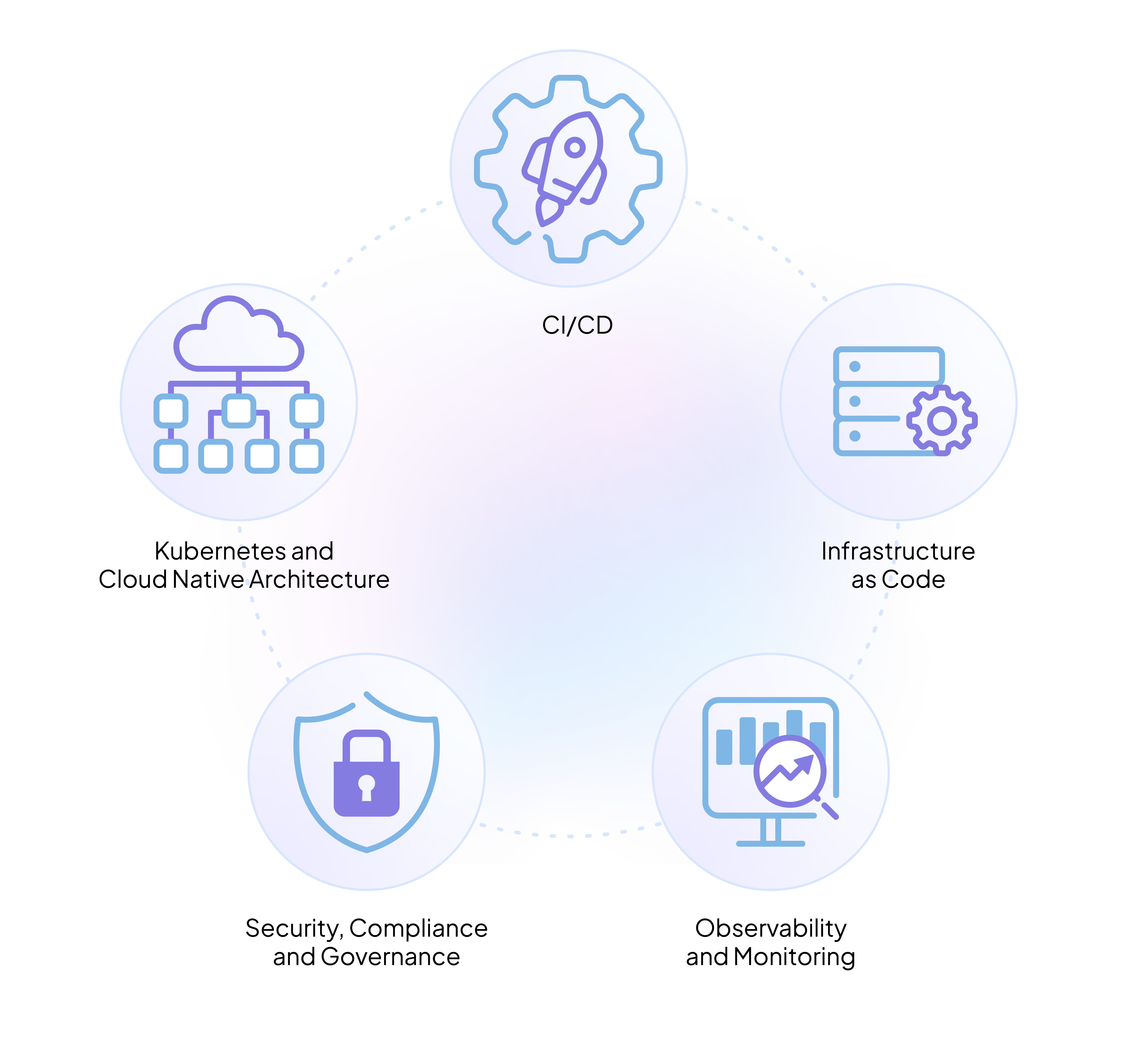
What problems does platform engineering solve?
The biggest challenge in modern software development is balancing speed, security, and reliability while reducing operational complexity.
Here are the key pain points that platform engineering addresses:
- Infrastructure complexity
Managing infrastructure across multi-cloud environments and on-premises systems is complex and resource-intensive. Platform engineering standardizes environments, reducing inconsistencies and deployment failures. - Developer cognitive load & slow delivery
Over-reliance on operations teams can slow down the deployment process, hindering innovation and responsiveness. With self-service internal platforms, developers can ship features faster without relying on Ops teams. - Security & compliance bottlenecks
As software applications proliferate, maintaining security best practices and compliance becomes increasingly challenging. Platform engineering automates governance while maintaining agility. - Fragmented tools and processes
Disparate toolsets lead to inconsistent workflows and increase the likelihood of errors. A unified platform bridges the gap, providing visibility and control while empowering developers.
Key aspects of platform engineering
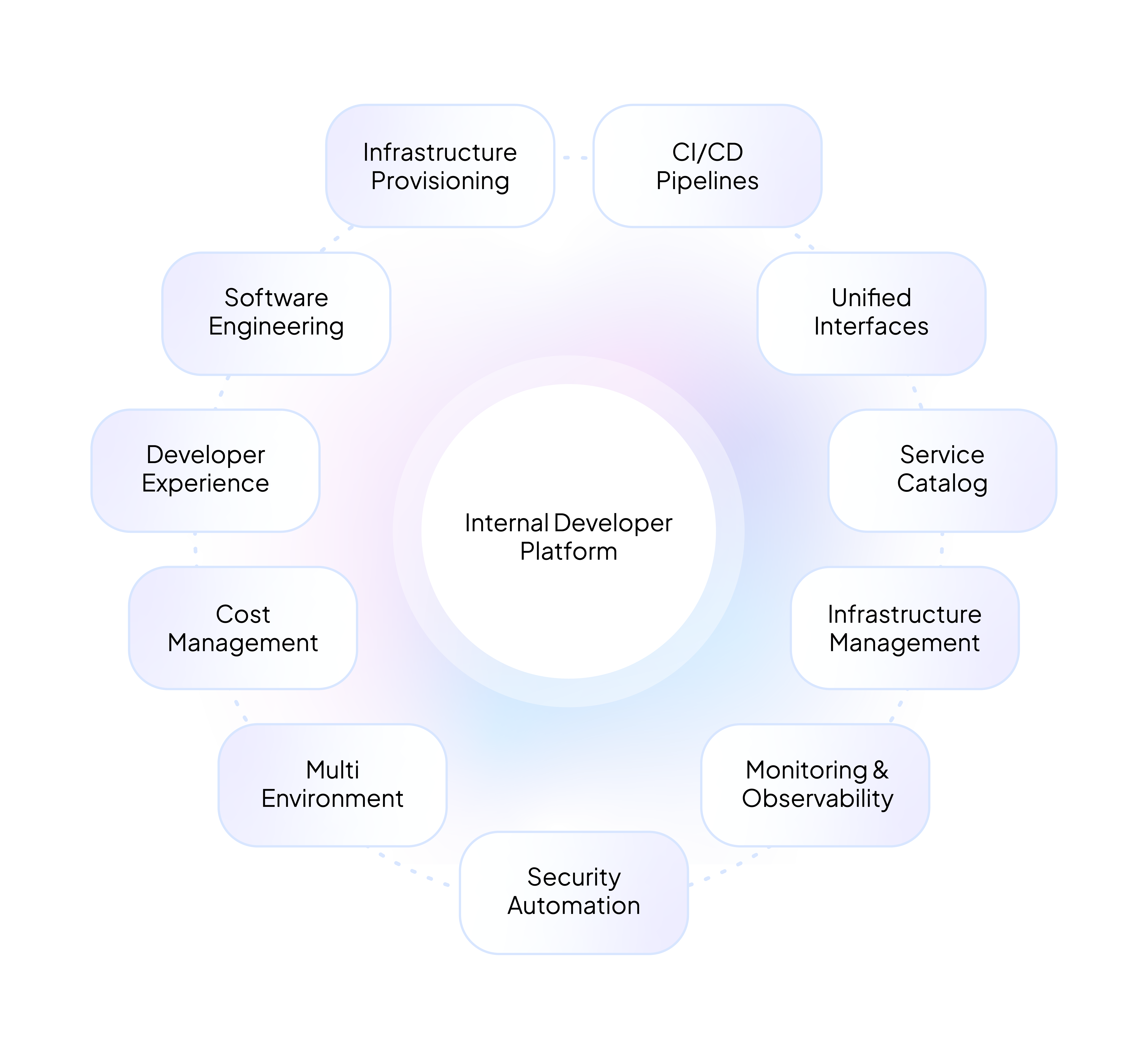
1 Internal developer platforms (IDPs)
Internal developer platforms (IDPs) provide a unified interface for developers, integrating infrastructure, CI/CD pipelines, observability, and security controls into a cohesive system. Instead of manually configuring environments, IDPs enable self-service workflows, reducing bottlenecks and improving deployment speed.
2 Automation & self-service
By automating repetitive tasks such as environment provisioning, deployments, and security checks, platform engineering enables developers to ship faster without waiting on operations teams. Self-service capabilities reduce cognitive load, allowing developers to focus purely on building software.
Discover how WSO2 Developer Platform enables self-service and boosts productivity
3 Governance & security
Platform engineering embeds Zero-Trust security models, access controls, and governance frameworks into the software lifecycle. This ensures compliance while maintaining agility, preventing security gaps from slowing down development.
Read how WSO2 Developer Platform implemented Zero Trust security
4 Observability & monitoring
Real-time monitoring, logging, and tracing give teams deep insights into application performance and infrastructure health. By proactively detecting issues, teams can prevent downtime and improve reliability.
See how WSO2 Developer Platform enables observability and real-time insights
Benefits of platform engineering
Implementing platform engineering brings measurable advantages:
Enhanced developer experience
Empowers developers with self-service workflows, allowing them to focus on coding instead of managing infrastructure. Accelerates onboarding and application delivery for greater efficiency.
Operational efficiency & cost reduction
Streamlines infrastructure provisioning, CI/CD pipelines, and scaling through automation, while optimizing resource allocation to minimize cloud costs.
Scalability & reliability
Delivers consistent, seamless deployments across multiple environments with auto-scaling, failover strategies, and real-time performance monitoring for maximum resilience.
Stronger security & compliance
Enforces built-in governance and zero-trust architecture to eliminate security gaps, while standardized policies minimize human errors in configurations, ensuring robust protection.
Observability & data-driven insights
Gain real-time performance analytics through integrated monitoring and logging, enabling teams to proactively detect and resolve issues before they affect users.
Start your platform engineering journey with WSO2 Developer Platform
Ready to streamline software delivery with platform engineering?
Sign up for WSO2 Developer Platform’s fully-managed IDP built to streamline your workflows, boost developer autonomy, and scale with ease. From security to observability, WSO2 Developer Platform has all you need to create a powerful, efficient, and future-ready platform.
Resources to deepen your understanding
Introduction to platform engineering
These foundational resources will help you understand why platform engineering matters and how it transforms software development.
Platform engineering for architects & technical leaders
For enterprise architects and tech leads, these resources provide deep technical insights into designing and implementing effective internal platforms.
DevOps, SRE & modern CI/CD practices
Understand how platform engineering integrates with site Reliability Engineering (SRE), DevOps, and GitOps to enhance scalability, automation, and resilience.