

Unleash the Power of AI: Develop a Question Answering Service with OpenAI and Ballerina
This article is based on Ballerina Swan Lake Update 4 (2201.4.0).
Introduction
The new wave of large language models (LLMs) has gained immense popularity worldwide. Many people have been exploring various use cases around the powerful LLMs, with question answering based on document data being a particularly interesting scenario.




Panel: From Efficiency to Innovation — The Role of AI in Government
As governments worldwide move beyond experimental AI pilots, the focus has shifted from simple efficiency gains to foundational innovation. This session brings together a global selection of public sector leaders from leading local, state, and national govt. agencies to discuss the reality of building AI-driven public infrastructure. We will explore how AI is being used to bridge the rural healthcare and technology gap, ensure fiscal transparency, promote citizen centric experiences, and drive national digital sovereignty.
Speakers

Manish Ritwik
Independent Consultant Focusing on the Public Sector
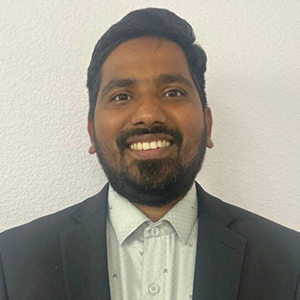
Mahaboob Mulla
Independent Consultant – Public Sector Digital Transformation

Stanley Fabrizio Pacios
Auditor



The Ghost in the Machine: Rewiring your Digital DNA for the Agentic Era
For decades, software was purely deterministic. There was no "ghost in the machine"—just code executing predefined rules. But as we weave Generative AI into our digital DNA, we are splicing probabilistic, autonomous agents into every system. The results are a dizzying mix where AI achieves superhuman feats one minute, and fails in spectacularly simple ways the next.
Speakers

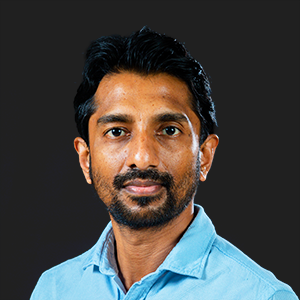
Dr. Rania Khalaf is Chief AI Officer and GM of AI at WSO2, leading the company's AI and Agentic roadmap, including the new Agent Platform. With deep expertise at the intersection of AI, cloud platforms, and enterprise software, Dr. Khalaf has a proven track record of building AI-native products from zero to market and driving company-wide transformations. Previously, she was Chief Information and Data Officer at Inari, a unicorn biotech startup where she built its digital and AI organization through a period of extraordinary growth, delivering deep learning and knowledge graph platforms for gene discovery. She was Director of IBM Research AI Engineering and Distinguished Research Staff Member leading an organization of researchers and engineers at the frontier of AI and cloud, driving innovations from scientific breakthrough to market, including award-winning Watson products and open source projects that became industry standards. She holds Bachelor's and Master's degrees from MIT and a PhD from the University of Stuttgart, with technical depth resulting in 90+ publications and over 8,000 citations. Rania serves on academic and industry boards and is a frequent speaker at institutions including MIT, Harvard, and UC Berkeley.
Building Blocks of the Agentic Enterprise
AI agents are moving from experimental systems into production: automating workflows, calling external tools, and making autonomous decisions on behalf of users and organizations. This is a fundamentally different kind of software, and it requires infrastructure that has never existed before, not because the existing stack is broken, but because it was built for software that executes predefined logic, not software that decides what to do, chooses which tools to use, and spends money on its own.
Speakers

Nadheesh Jihan is an AI leader at WSO2 with 8+years of experience applying AI across IAM, API Management, and enterprise integration. He brings a multidisciplinary perspective, combining deep systems expertise with a strong understanding of how AI and agentic architectures fit into real-world enterprise environments. He is a core contributor to the Agent Manager initiative, shaping how agentic AI systems are built and governed at scale. His work focuses on applying AI to enterprise platforms while also leveraging those platforms to enable scalable, production-grade AI systems.
Introduction to AI Agent Manager
Enterprises are deploying AI agents at an unprecedented pace, but most are flying blind. The gap between building an agent and running one reliably in production has never been wider. Shadow agents access production APIs without oversight, prototypes are pushed to production without guardrails, and agents operate using shared human credentials with no audit trail.
Speakers
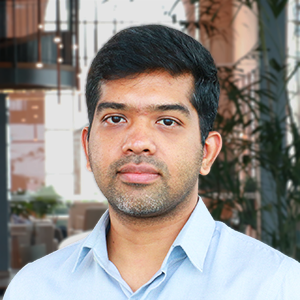
Asanka brings over 12 years of experience in the technology domain, with a strong foundation in messaging systems, enterprise integration, and platform engineering. He currently leads the architecture and engineering of Agent Manager at WSO2 - an AI agent management solution built on top of cloud-native infrastructure. With deep expertise spanning enterprise integration, developer platforms, and now AI agent management, Asanka has been instrumental in helping enterprises architect and execute their integration and platform strategies using WSO2 products.
Managing the Agent Lifecycle at Scale
As enterprises shift from AI experimentation to production deployment, managing AI agent lifecycles at scale has become a key challenge. Unlike traditional software, AI agents are nondeterministic, context-driven, and continuously evolving. This shift requires reimagining the software development lifecycle as an Agent Development Lifecycle (ADLC).
Speakers
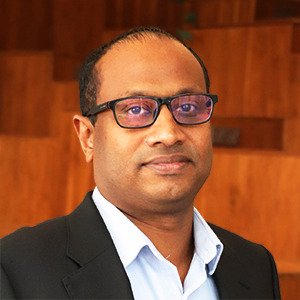
Malith Jayasinghe is VP of AI at WSO2, where he leads initiatives to build scalable, secure, and production-ready AI systems for the enterprise. With over 15 years of experience in building, scaling, and optimizing complex systems, he focuses on making AI production-ready and improving developer productivity. His work spans AI strategy, agent platforms, observability, evaluation, governance, security, and enterprise integration. An architect, product leader, and frequent speaker at events such as DeveloperWeek, the Global Big Data Conference, and DEV DAY, Malith shares insights on enterprise AI, software architecture, and emerging technology trends. He holds a PhD in Computer Science from RMIT University, Australia, and has published in respected academic venues including IEEE Transactions on Parallel and Distributed Systems (TPDS) and the Journal of Parallel and Distributed Computing (JPDC).
You Can’t Have AI Without Interoperability—And You Can’t Scale Interoperability Without AI
AI in healthcare is advancing rapidly—but its effectiveness is fundamentally constrained by fragmented, inconsistent data. Interoperability provides the structured, normalized foundation AI depends on, yet traditional approaches to interoperability remain slow, expensive, and difficult to scale.
This session explores the emerging symbiotic relationship between interoperability and AI. Let’s discuss how interoperable data unlocks high-quality AI, and how AI—through agentic systems, automation, and continuous learning—can dramatically accelerate interoperability itself.
Speakers


Chami Rupasinghe is an experienced Product Leader at Microsoft working on the next generation of healthcare interoperability and AI systems. He focuses on rethinking how data moves across healthcare—evolving from static pipelines to intelligent, agent-driven systems that continuously improve. With a background spanning product, data science, and cloud platforms, and over a decade of experience leading engineering teams, Chami works at the intersection of AI, interoperability, and platform design to enable trustworthy, scalable healthcare intelligence.
Introducing WSO2 Identity Server 7.3: Agentic AI, B2B CIAM, and Decentralized Identity
WSO2 Identity Server's goal is to make IAM simpler for developers without trading away the depth that production environments require. Version 7.3 advances that goal across three areas: securing AI agents that operate in the background, making B2B CIAM less complex, and bringing decentralized identity into the core product.
From Pilots to Production: Becoming an Agentic Enterprise with AWS and WSO2
Speakers
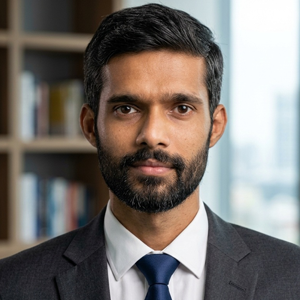
Ganesh Hegde
Sr. GenAI Specialist

Ganesh Hegde is a Senior Worldwide Specialist in Generative AI at Amazon Web Services, with deep expertise in building and customizing foundation models that power agentic AI systems ready for production at scale. His work spans the full spectrum of intelligent, autonomous workflows, from foundation model training, supervised fine-tuning, and reinforcement learning to multi-turn reasoning, tool calling, and governed agentic architectures on AWS. Ganesh leads customer engagements across Amazon's Nova Forge model customization service, SageMaker HyperPod distributed training infrastructure, and serverless training capabilities, enabling organizations to build purpose-built models that drive reliable agentic systems. He is passionate about helping enterprises navigate the practical challenges of deploying AI agents with the right guardrails, governance, and infrastructure to deliver real business impact.
From Integration to Orchestration: WSO2 + Solace and the Event-Driven Future of Agentic AI
Modern enterprises are navigating two transformation waves simultaneously: the pressure to connect everything through real-time, event-driven architectures, and the race to deploy AI agents that can reason, act, and collaborate autonomously across systems.
No single platform wins both battles alone. That's why WSO2 and Solace are better together.
Speakers


Michael is Senior Technical Director at Solace, where he leads the Strategic Partner group and helps enterprises adopt event-driven architecture (EDA) at scale. Over the past decade at Solace, he has guided organizations through modern integration patterns and real-time event streaming. His current focus is helping enterprises operationalize Agentic AI by building the event-driven backbone necessary for autonomous agents to act on real-time data with precision.Michael’s deep history includes roles with IBM’s WebSphere team and several integration startups.