

Bad Actors are Harnessing the Power of AI—Is Your Identity Defense Ready?
The age of agentic AI introduces unprecedented risks. In the rapidly evolving landscape of artificial intelligence, agentic AI is emerging as a transformative force, capable of autonomous decision-making, learning, and interaction. These sophisticated AI systems are poised to revolutionize industries and daily life. Conversely, these same capabilities can be exploited by attackers to launch highly effective and scalable cyberattacks.
How We Gave Life to an AI Agent with the Unitree Go2 Robot
Every year, WSO2Con brings together developers, tech enthusiasts, and IT leaders from around the world to dive into the latest in APIs, identity management, integration, and now AI. It’s a space to learn from keynotes and hands-on sessions, share best practices, and get a first look at what’s new from WSO2.
The Silent Security Problem of AI Agents: Bridging the IAM Gap
The increasing use of AI agents in enterprise workflows introduces new identity and security vulnerabilities that conventional identity and access management (IAM) systems are under-equipped to address. Here’s how to close the gap.
AI agents are no longer a futuristic concept. They’re booking meetings, writing emails, generating code, automating internal workflows, and making autonomous decisions on behalf of humans or systems, or on their own. But behind the excitement lies a silent security question: Are these agents acting with proper IAM?




What You Can Do with the AI Gateway
As generative AI moves from experimentation to enterprise adoption, organizations must rethink how they integrate and govern AI capabilities across their systems. The AI Gateway emerges as a critical architectural component that bridges the gap between foundation models and real-world applications, offering centralized governance, security, and operational control. In this session, we unpack what you can achieve with an AI Gateway and why it’s essential in today’s AI-powered ecosystems.
Speakers


Arshardh Ifthikar is an expert in API Management, Generative AI application development, and enterprise integration, specializing in building scalable API architectures and optimizing egress control for AI and SaaS applications. As a technical lead of the API Manager team, he has played a key role in helping numerous customers successfully deploy and integrate advanced API management solutions. With a strong focus on AI-driven innovations, Arshardh brings deep expertise in shaping modern API ecosystems.
Bijira: API PaaS for the Cloud and AI-Native Era
The rapid evolution of cloud-native architectures and AI-driven applications demands a new era of API management. This session introduces Bijira, a cutting-edge, AI-native, and scalable SaaS platform built to revolutionize API operations. Bijira streamlines governance, significantly boosts developer productivity through integrated AI, and offers robust Model Context Protocol (MCP) management.
Speakers

Pubudu Gunatilaka is an Associate Director at WSO2, leading the product architecture for WSO2 API Manager. With over 9 years of experience in API management and cloud-native architectures, he has played a key role in advancing WSO2's API management solutions. A recognized thought leader in the industry, Pubudu has shared his expertise at global conferences such as APIDays, Nordic APIs, and Conf42, along with various tech meetups. He is dedicated to driving innovation in API management, Kubernetes-native API gateways, and API security to help enterprises build scalable and future-ready API strategies.
How AI is Shaping the Future
We are in a dizzying and contradictory moment. One minute, AI is achieving superhuman feats of logic with a gold in the Math Olympiad; the next, it is failing in spectacularly human-like ways, deleting production databases in a single act of misaligned agency. This is not noise; it is the signal of a paradigm shift, moving us from an era of passive software tools and predefined user experiences to one of active, autonomous agents with fluid interactions. This new reality is changing the very nature of computing and leading to more - not less - code.
Speakers

Rania Khalaf is Chief AI Officer at WSO2 and a global AI and cloud leader with a track record of driving innovation and building diverse, high-performing teams. Previously, she was CIO and Chief Data Officer at Inari, where she built data and AI-driven capabilities for food security and sustainability. As Director of AI Engineering and Distinguished Scientist at IBM Research, she advanced AI and cloud innovations, delivering them into open source, and to products in Watson and the IBM Cloud. She holds Bachelor's and Master's degrees from MIT and a PhD from the University of Stuttgart. Rania serves on academic and industry boards, driving impact in AI, sustainability, and education.
Rewriting Software with AI, Agents, and What’s Next?
AI isn’t just changing software development—it’s rewriting the playbook. From coding assistants to autonomous agents, AI is becoming a core part of how we build, integrate, and evolve software. But what does that mean for developers, and how does the software stack need to adapt? In this panel, we’ll dive into real-world lessons from building AI-powered dev tools, agent frameworks, and enterprise AI systems—unpacking what works, what doesn’t, and what’s next in AI-native development.
Speakers
Rania Khalaf is Chief AI Officer at WSO2 and a global AI and cloud leader with a track record of driving innovation and building diverse, high-performing teams. Previously, she was CIO and Chief Data Officer at Inari, where she built data and AI-driven capabilities for food security and sustainability. As Director of AI Engineering and Distinguished Scientist at IBM Research, she advanced AI and cloud innovations, delivering them into open source, and to products in Watson and the IBM Cloud. She holds Bachelor's and Master's degrees from MIT and a PhD from the University of Stuttgart. Rania serves on academic and industry boards, driving impact in AI, sustainability, and education.
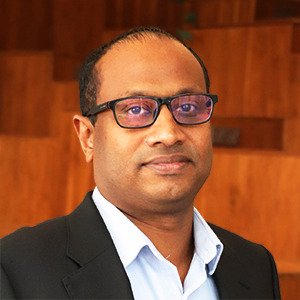
Malith is the head of research and AI at WSO2, orchestrating the company's AI initiatives and research efforts. He is instrumental in developing AI strategy and creating AI-powered product features, fostering a culture of innovation among the AI team for seamless project progression from inception to delivery. Malith also engages in collaborative research with academic institutions, aiding the advancement of computer science. He is a regular speaker at prominent developer events such as DeveloperWeek, the Global Big Data Conference, and DEV DAY, sharing insights and promoting knowledge exchange within the tech community. Malith has made significant academic contributions, publishing his work in journals like IEEE Transactions on Parallel and Distributed Systems (TPDS) and the Journal of Parallel and Distributed Computing (JPDC), and presenting at conferences such as IEEE Cluster, IEEE NCA, and DEBS. Malith holds a PhD in computer science from RMIT University in Australia.
Evolution of AI Agents
The field of intelligent agents has seen significant advancements, evolving from early rule-based systems to increasingly autonomous and collaborative entities capable of complex decision-making. This talk examines the progression of agent-based systems in terms of complexity, autonomy, and coordination. It places particular emphasis on the emergence of multi-agent systems (MAS), covering topics such as agent-to-agent communication, protocols like the Model Context Protocol (MCP), the importance of rigorous evaluation, and the role of guardrails in ensuring safe and aligned behavior.
Speakers
Malith is the head of research and AI at WSO2, orchestrating the company's AI initiatives and research efforts. He is instrumental in developing AI strategy and creating AI-powered product features, fostering a culture of innovation among the AI team for seamless project progression from inception to delivery. Malith also engages in collaborative research with academic institutions, aiding the advancement of computer science. He is a regular speaker at prominent developer events such as DeveloperWeek, the Global Big Data Conference, and DEV DAY, sharing insights and promoting knowledge exchange within the tech community. Malith has made significant academic contributions, publishing his work in journals like IEEE Transactions on Parallel and Distributed Systems (TPDS) and the Journal of Parallel and Distributed Computing (JPDC), and presenting at conferences such as IEEE Cluster, IEEE NCA, and DEBS. Malith holds a PhD in computer science from RMIT University in Australia.
Vertical AI – Industry Innovation in an AI Age
The AI revolution is rapidly becoming more specialized. Going beyond generic solutions, Vertical AI develops tailored intelligent systems, including advanced AI agents, to tackle specific industry challenges and unlock new opportunities within specific industries. This talk explores the immense potential for businesses to achieve unprecedented innovation by adopting AI solutions tailored to their particular needs.
Speakers
Augmenting Integration with Autonomous AI Agents
Integration problems were once narrow and well-defined, but the rise of AI gives us the opportunity to expand their scope to the next level. Large Language Models (LLMs) unlock a new world where we can work with broad, vague, and unstructured contexts. In this talk, we'll explore how autonomous AI agents play a key role in this shift. These agents can integrate disparate systems, reason over complex inputs, and take meaningful actions—fundamentally augmenting how we approach integration in the AI era.
Speakers
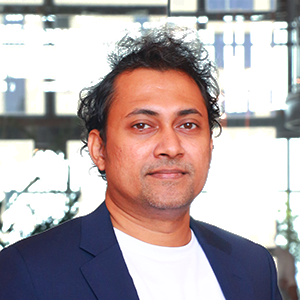
Shafreen, with over a decade of experience in core Java, software architecture, and agile project management, has excelled in leading the standard library team for Ballerina, a language for cloud native applications. As the lead developer of Ballerina's HTTP transport, he created a robust, scalable library supporting key internet protocols. At WSO2, he contributed to the renowned ESB product, the fastest open source ESB in the world. Shafreen also led a team of 70 engineers as an engineering manager, fostering a culture of excellence. His commitment extends to the open source community as an Apache committer and PMC member, demonstrating his leadership and expertise in technology.