



File-Driven Integration for Modern Enterprises
Process, transform, and route files in real time across cloud, hybrid, and on-prem environments. Stream large files efficiently and integrate B2B, EDI, SaaS, and data lake systems with the WSO2 Integration Platform.
Critical business data
still lives in files
Despite the rise of APIs, critical enterprise data remains trapped in CSV, EDI, XML, JSON, and flat files across FTP servers, cloud storage, and legacy systems. Traditional file transfer tools can't handle scale, real-time processing, or modern security needs, leading to delays, operational risk, and limited visibility into data-driven workflows.
Files are not just data—they’re business events
Real-time processing
Treat file arrivals as business triggers, not batch jobs.
AI and data lake enablement
Feed large datasets into analytics platforms and AI knowledge bases.
B2B and EDI modernization
Automate ingestion and transformation of X12, EDIFACT, and custom EDI formats.
Streaming-first scalability
Process multi-gigabyte files without memory bottlenecks.
Cloud-native compliance
Securely integrate across hybrid and multi-cloud storage systems.
Modern enterprises require file processing that is scalable, secure, and event-driven.
Real-world file-driven integration scenarios
B2B / EDI automation
Automatically ingest and parse ANSI X12, UN/EDIFACT, and custom EDI files into internal business systems.
AI knowledge ingestion
Monitor S3 or Azure Blob storage to extract and process documents for GenAI, RAG pipelines, or analytics platforms.
Multi-cloud data synchronization
Synchronize data bidirectionally between on-prem FTP/SMB servers and AWS S3 or Azure Blob storage.
Legacy-to-cloud modernization
Transform mainframe-generated flat files into JSON or XML for microservices and API-based systems.
Large file transformation
Stream and transform multi-gigabyte CSV or JSON files with minimal infrastructure strain.
Extract, Transform, Load (ETL)
Extract data from enterprise systems, transform it into a consistent, sanitized, and readable format, and load it into a target system.
Reference Architecture
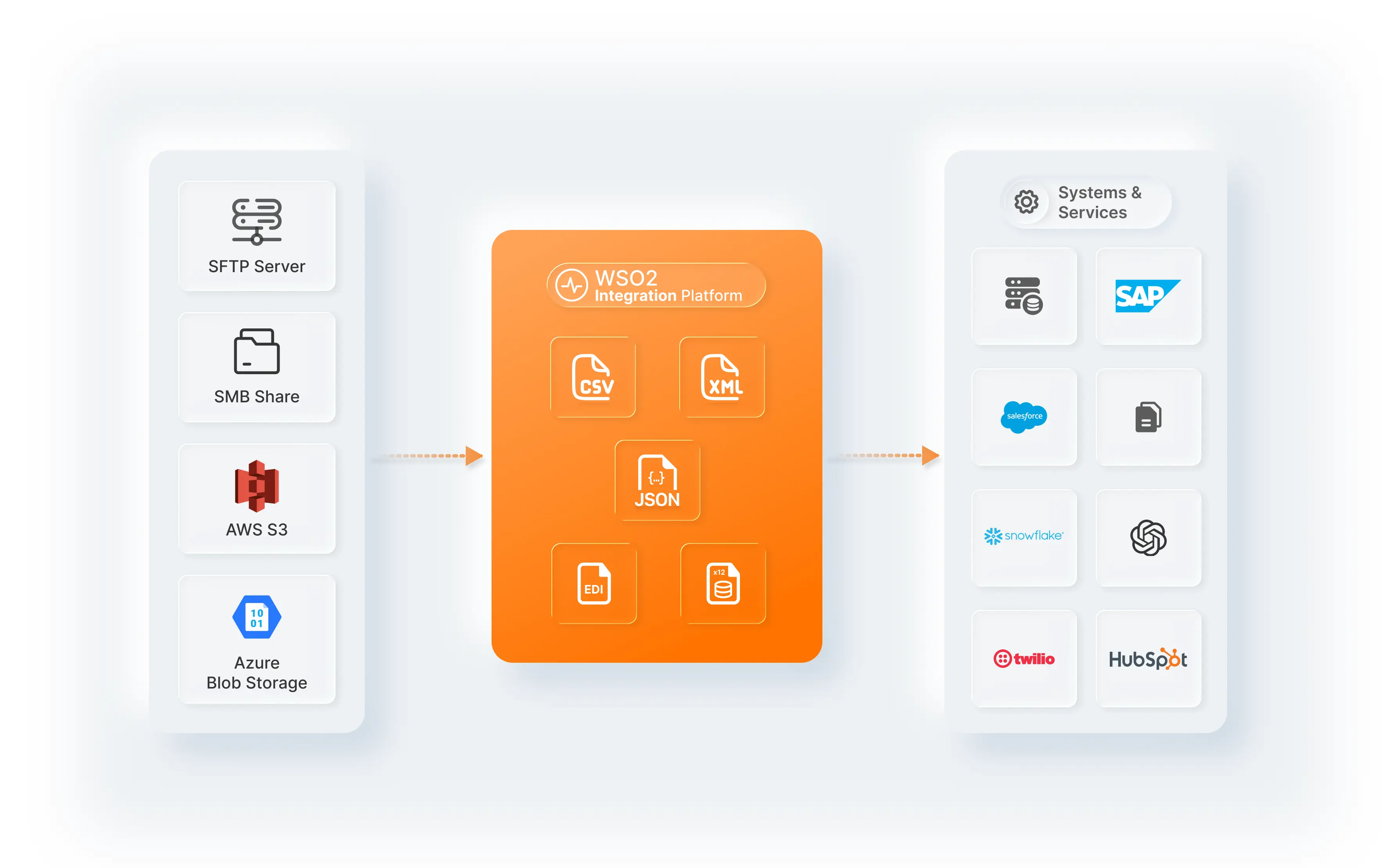
Why use WSO2 for file integration
- Multiple protocol support
Native support for FTP/SFTP, SMB, AWS S3, Azure Blob Storage, and other enterprise protocols. - Streaming-first architecture
Process files as streams instead of loading entire files into memory—ensuring scale, stability, and performance. - Unified B2B and EDI support
Built-in support for complex EDI formats (X12, EDIFACT) without requiring third-party plugins. - Cloud-native and hybrid ready
Maintain the same developer experience across local disks, enterprise servers, and global cloud storage. - AI-assisted data mapping
Accelerate transformation logic with AI-powered suggestions for field mapping and schema alignment.
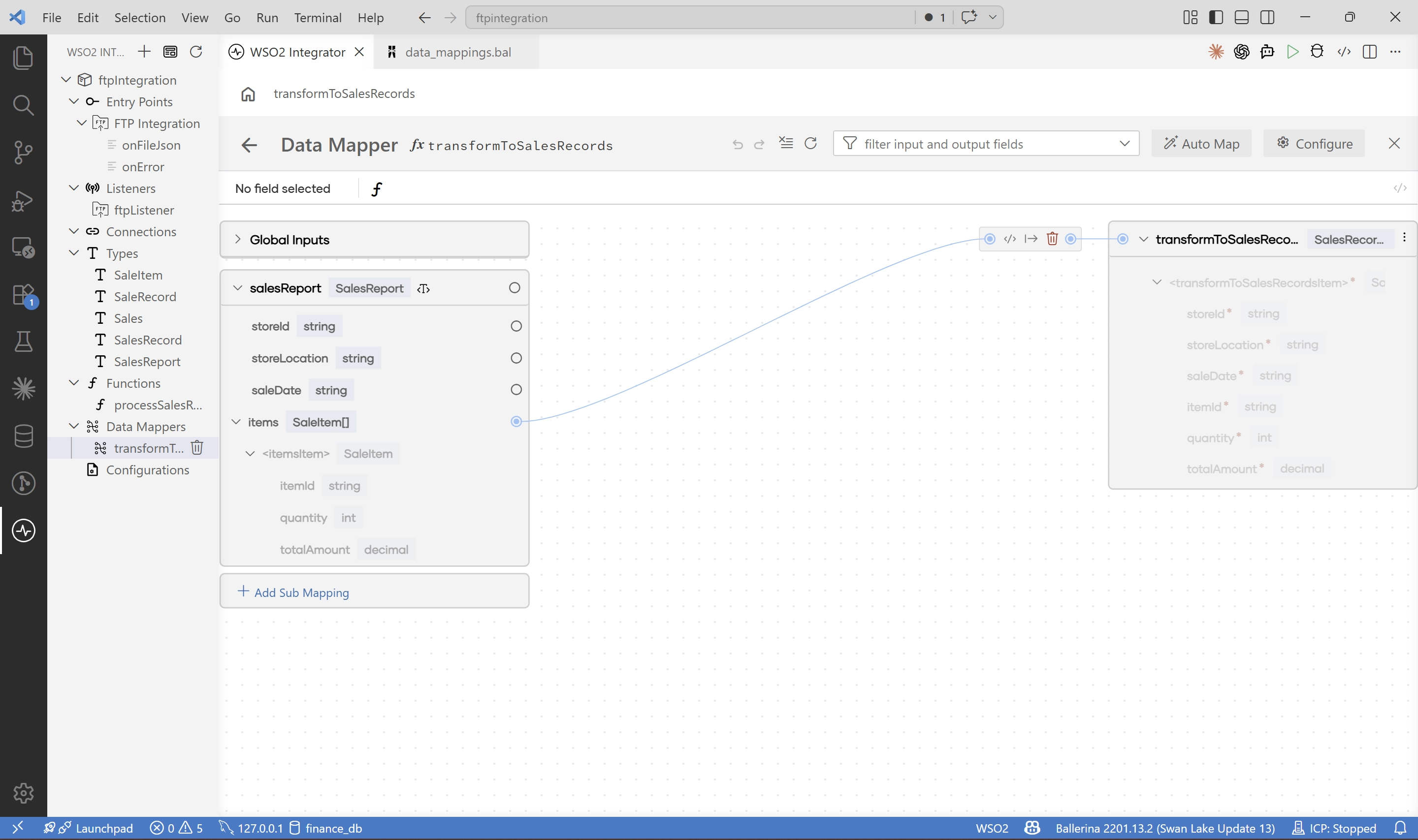
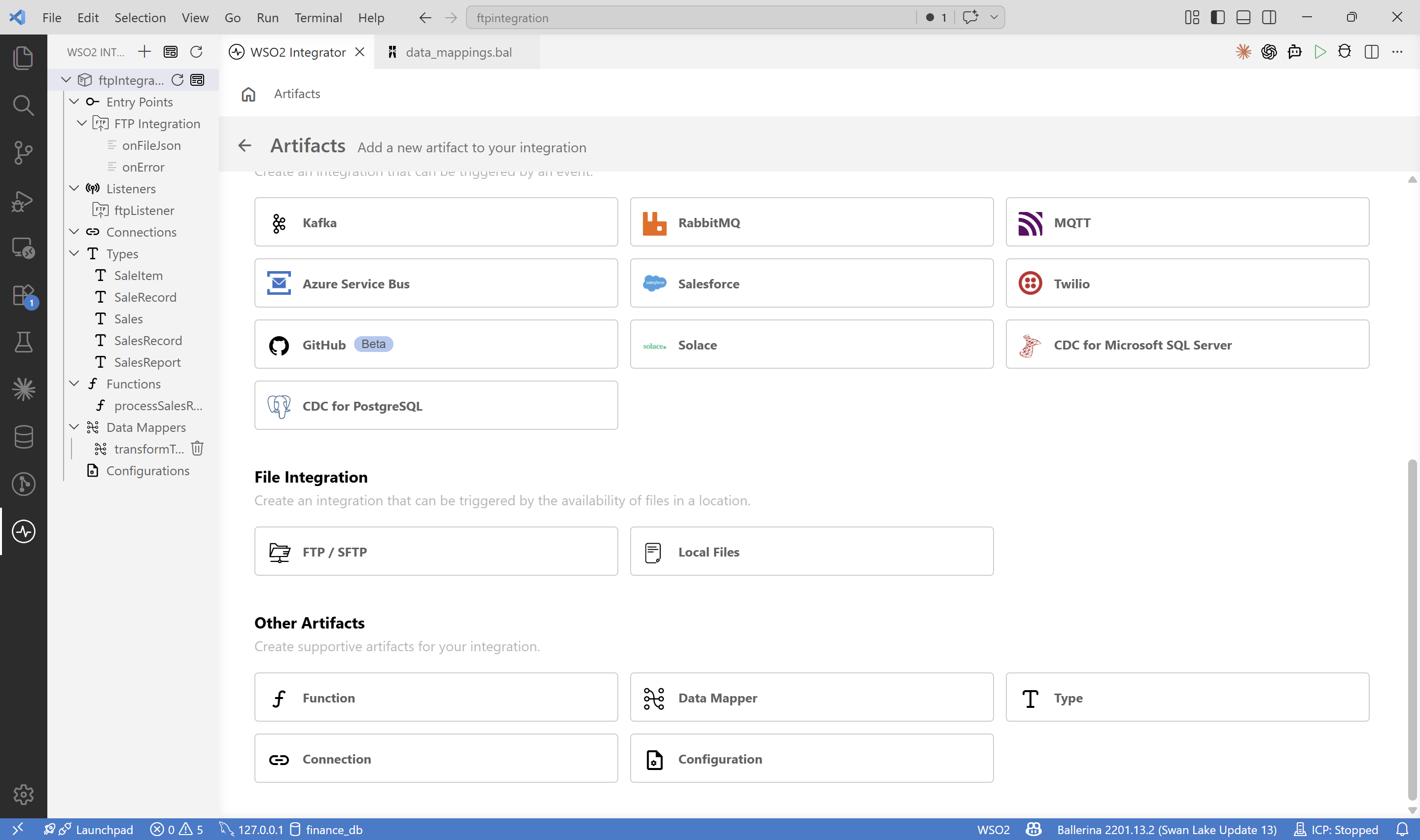
Modern file integration without operational complexity
Empower developers to build scalable, secure file-driven workflows while enabling platform teams to maintain governance and visibility.
Native file and storage connectors.
Memory-efficient streaming parsers.
Centralized monitoring and observability.
Reusable integration components.
CI/CD-ready deployments.
Deliver enterprise-grade file processing without fragile scripts or legacy middleware.
Run it your way.
The only integration technology that is available as 100% open source self-hostable software, or as a SaaS.
Self-hosted
Full control over your stack. Deploy directly to your own servers, bare metal, or a private cloud environment. Your data never leaves your perimeter.
- ✓ Complete data sovereignty
- ✓ Air-gapped environment support
- ✓ Kubernetes, Docker, VM, or bare metal
- ✓ Bring your own CI/CD pipeline
SaaS
Zero infrastructure to manage. WSO2 handles provisioning, upgrades, scaling, and availability. Get started in minutes.
- ✓ Data plane anywhere you want
- ✓ Centralized control and observability
- ✓ Continuous updates, zero downtime
- ✓ Multi-region availability
Your vendor choice shouldn't determine your deployment requirements. Evaluate WSO2 in the environment that makes sense for you. No constraints, no artificial limitations.