Concurrency
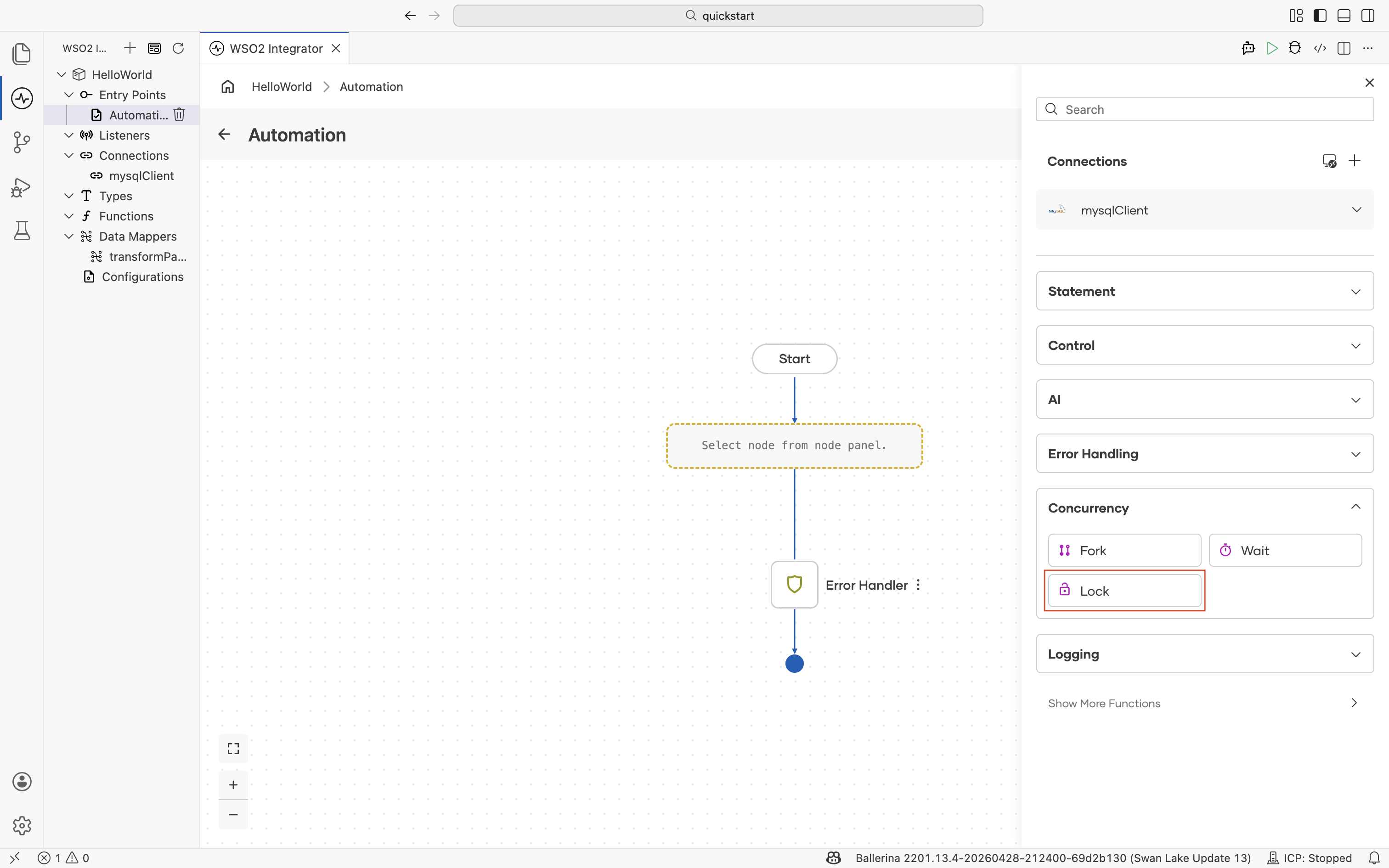
The Concurrency section of the node palette starts parallel work, waits for results, and protects mutable state. Use it when an integration needs to call multiple downstream services at the same time, gather their results, or guard shared state from concurrent updates.
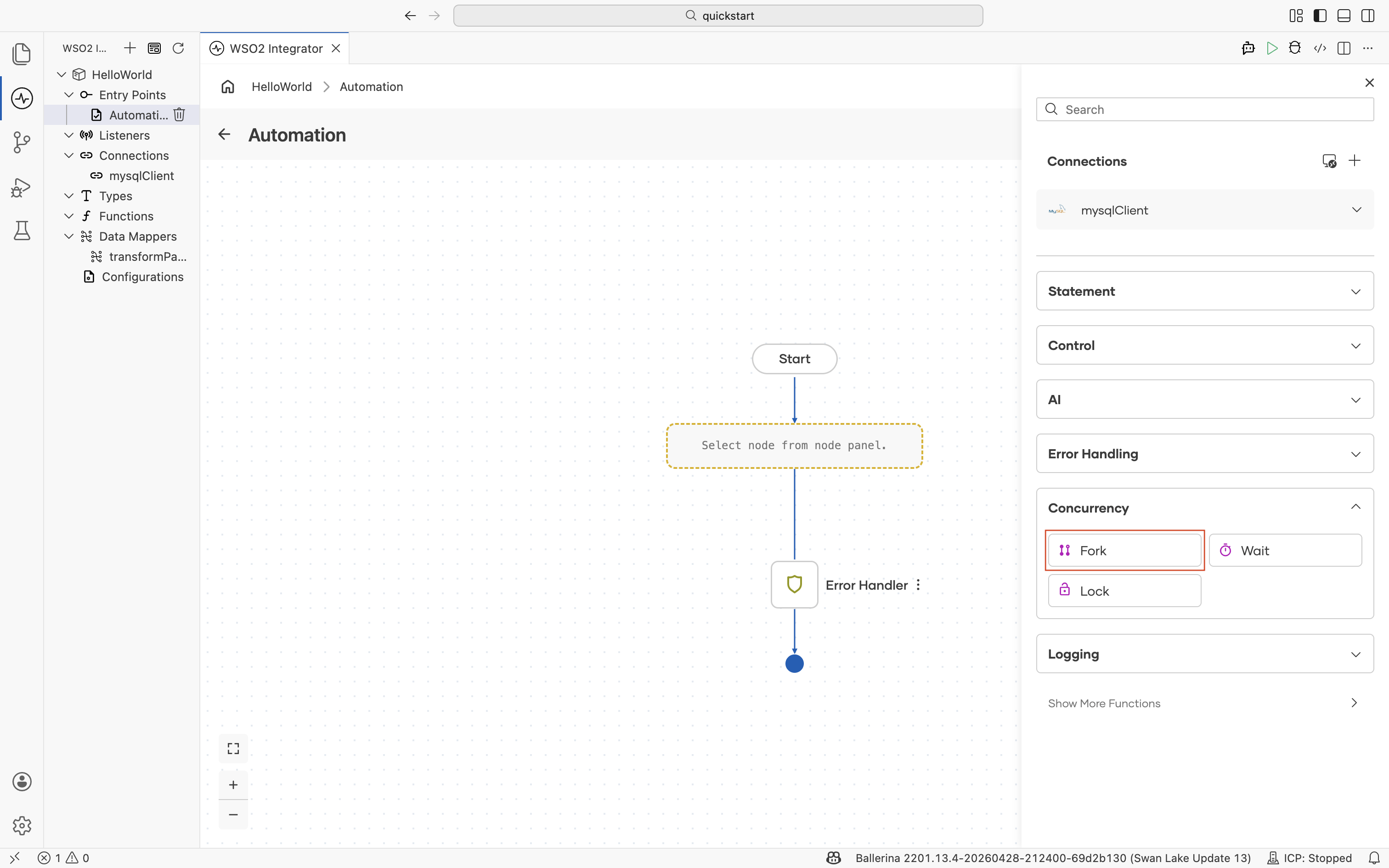
Fork
Spawns one or more named worker strands that execute in parallel with the main flow. Each worker has its own block of steps and runs independently until joined with Wait.
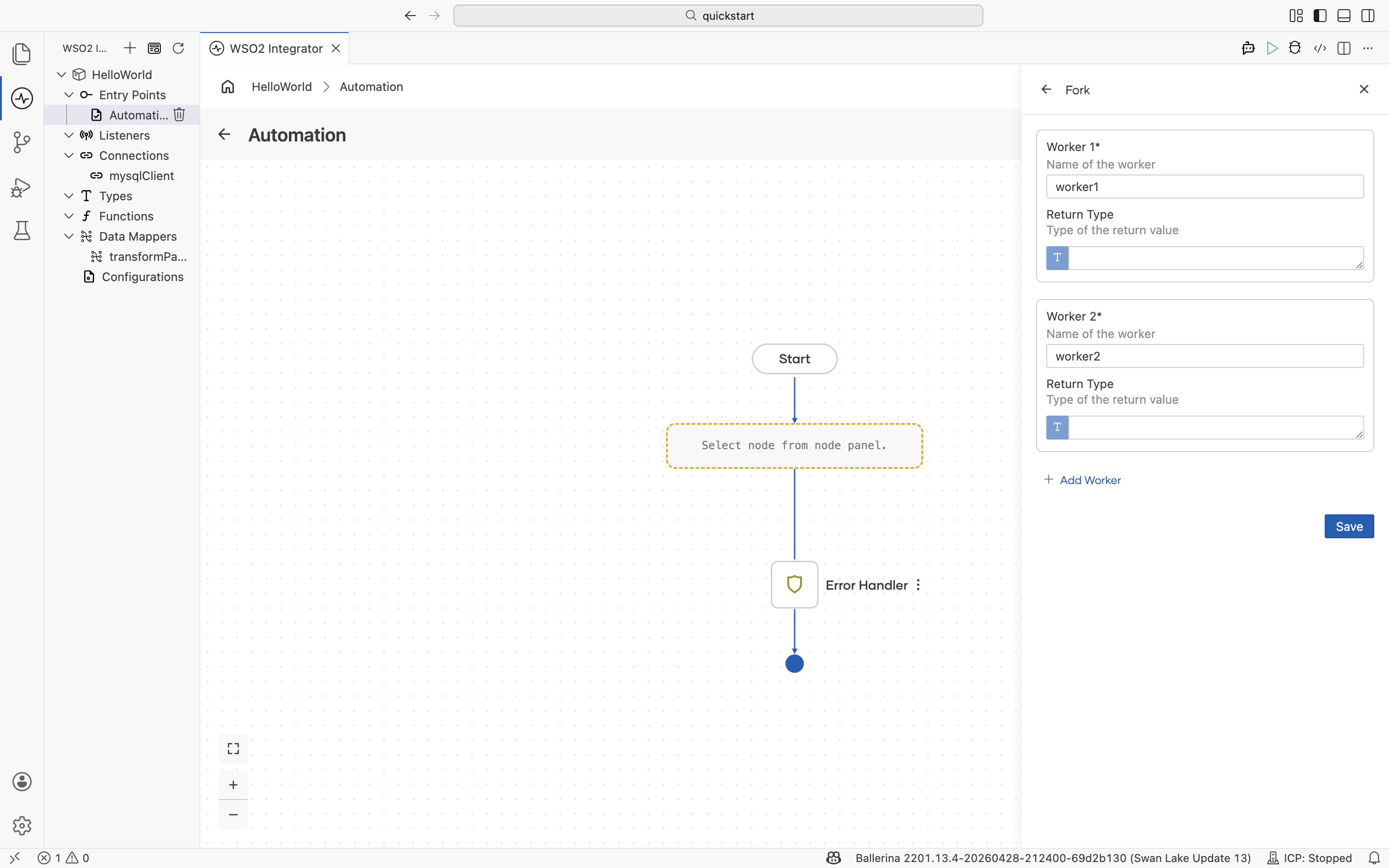
Each worker is configured with a name and a return type. Select Add Worker to add more workers.
| Field | Description |
|---|---|
| Worker | Name of the worker. |
| Return Type | Type of the value the worker returns. Define new types inline with the Type editor. |
When the Fork is added to the flow, the canvas also receives a default Wait node that joins every worker in the fork. The generated code is equivalent to:
map<any|error> waitResult = wait {worker1, worker2};
Reconfigure the Wait node to join only a subset of workers or to name the joined values, as described below.
Use Fork to fan out independent calls. For example, hit two different APIs in parallel and combine their results downstream.
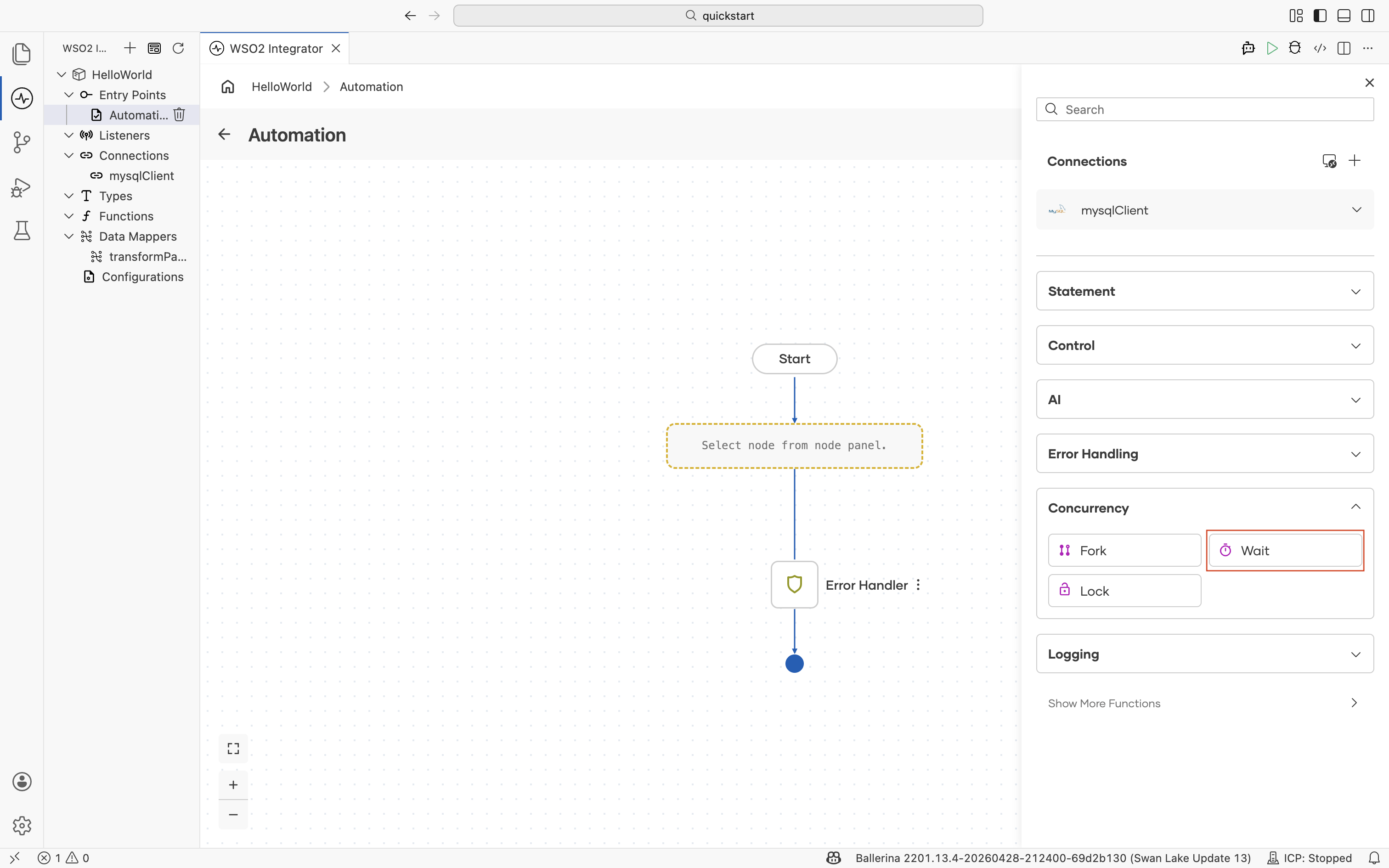
Wait
Joins one or more worker strands started by Fork and collects their return values into a single result. The matching Wait node is the join point for the workers spawned by an earlier Fork.
Each row in the form pairs a Key with the worker whose result should be bound to that key. Select + Add to add more key/worker pairs.
| Field | Description |
|---|---|
| Key | Name of the field in the joined result record. |
| Variable | Worker whose result is bound to the key. |
| Variable Name | Name of the variable that holds the joined result on the canvas. |
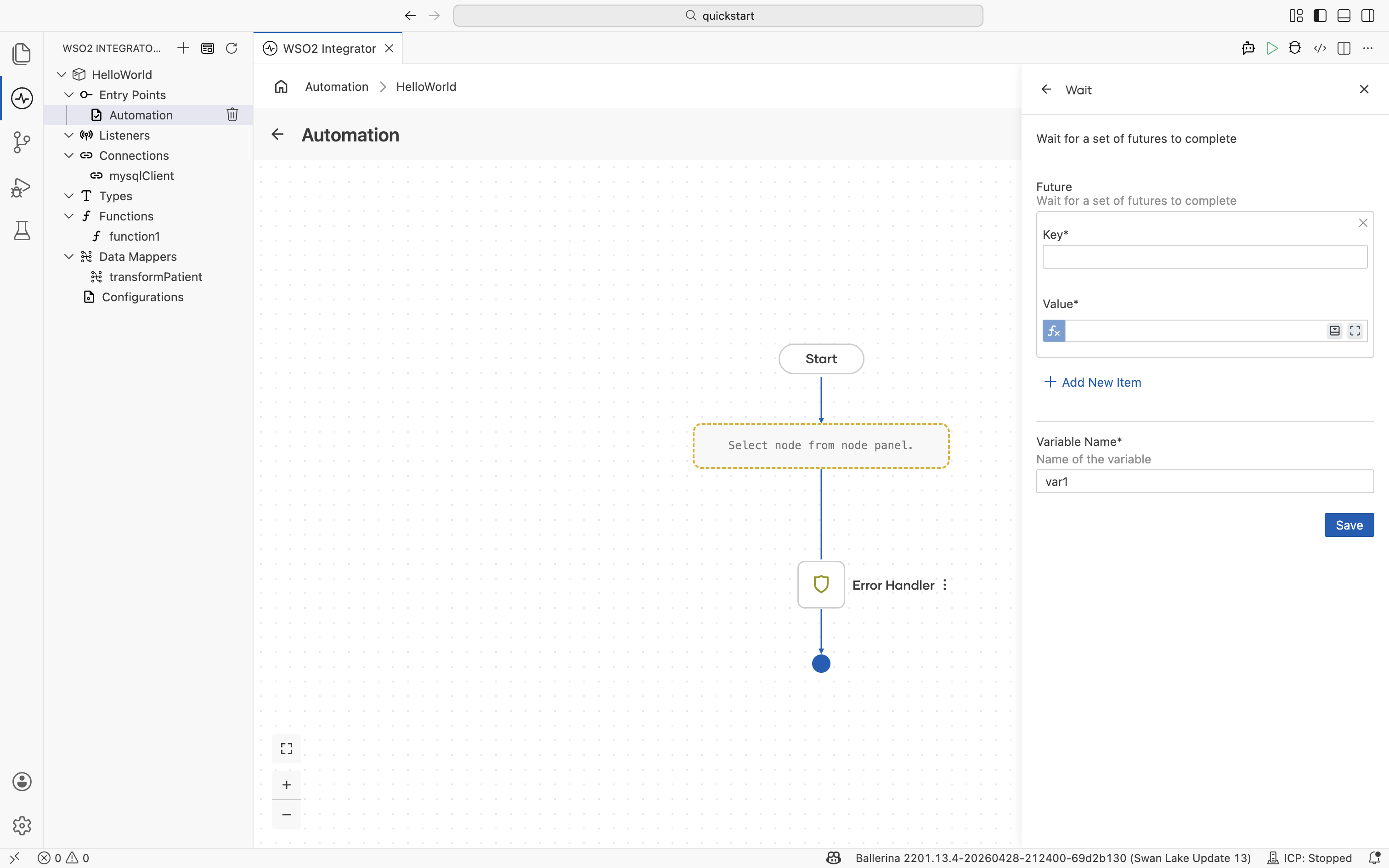
The configured pairs generate a wait expression of the form:
var var1 = wait {work1: worker1, work2: worker2};
Each key in the resulting record holds the return value of its paired worker.
Lock
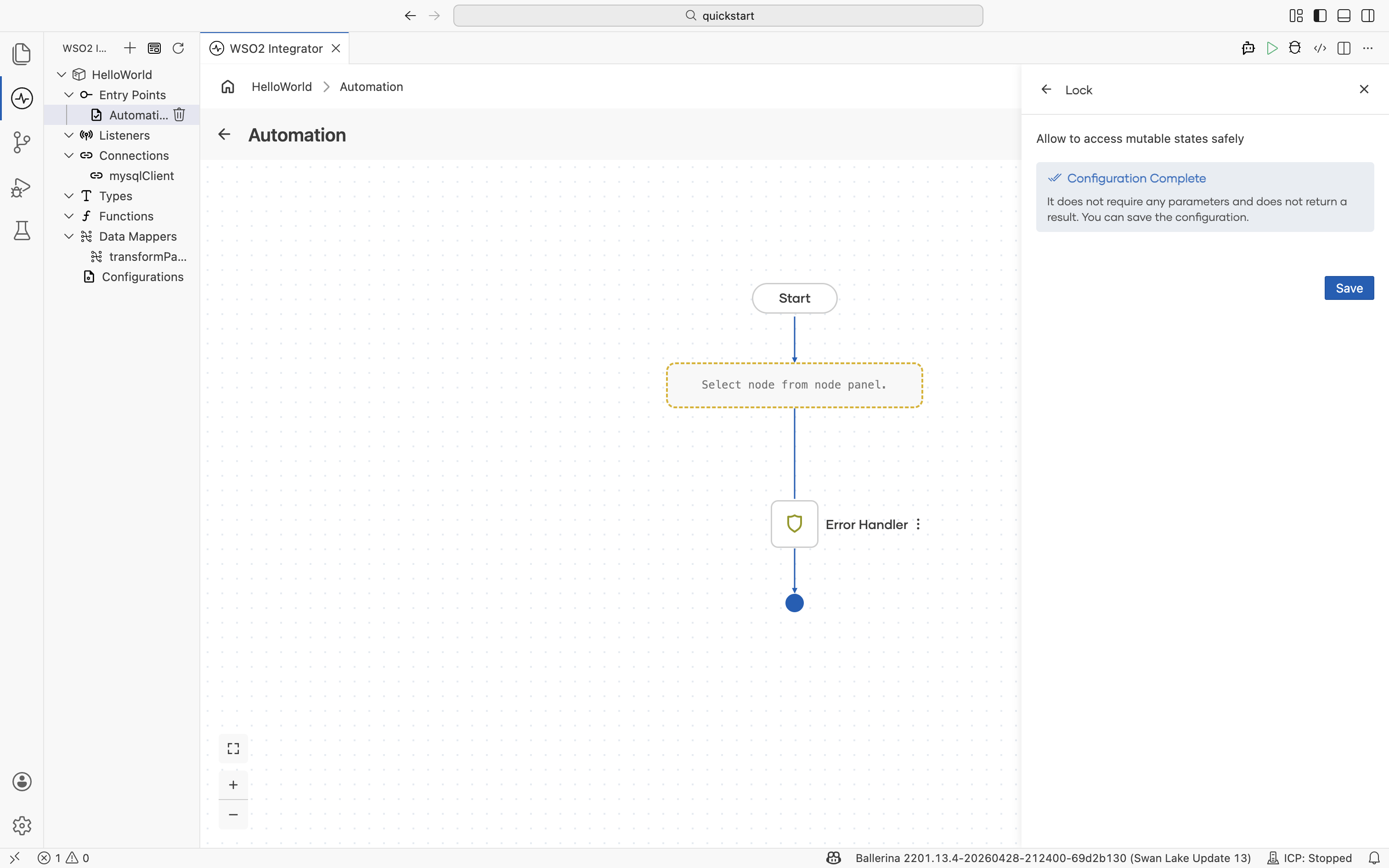
Acquires a lock to serialize access to a block of steps that touches shared mutable state. The lock is released when the block exits. Wrap any code path that mutates a shared variable from multiple strands in a Lock to prevent race conditions.
The configuration form requires no parameters and does not return a result. Add the steps that need protection inside the Lock block on the canvas.
For most integration flows, prefer immutable values to avoid the need for locks entirely.
What's next
- Control — Branch and loop inside parallel workers.
- Error handling — Handle errors raised inside workers.
- Logging — Trace concurrent execution.
- Statement — Declare and update variables shared across workers.