



Open Source Integration for the Agentic Enterprise
Bring AI agents, APIs, data, and events together across cloud, on-prem, and hybrid environments. From a single integration to a full AI agent, you can build it all on the 100% open source WSO2 Integrator.
Trusted by enterprises
worldwide
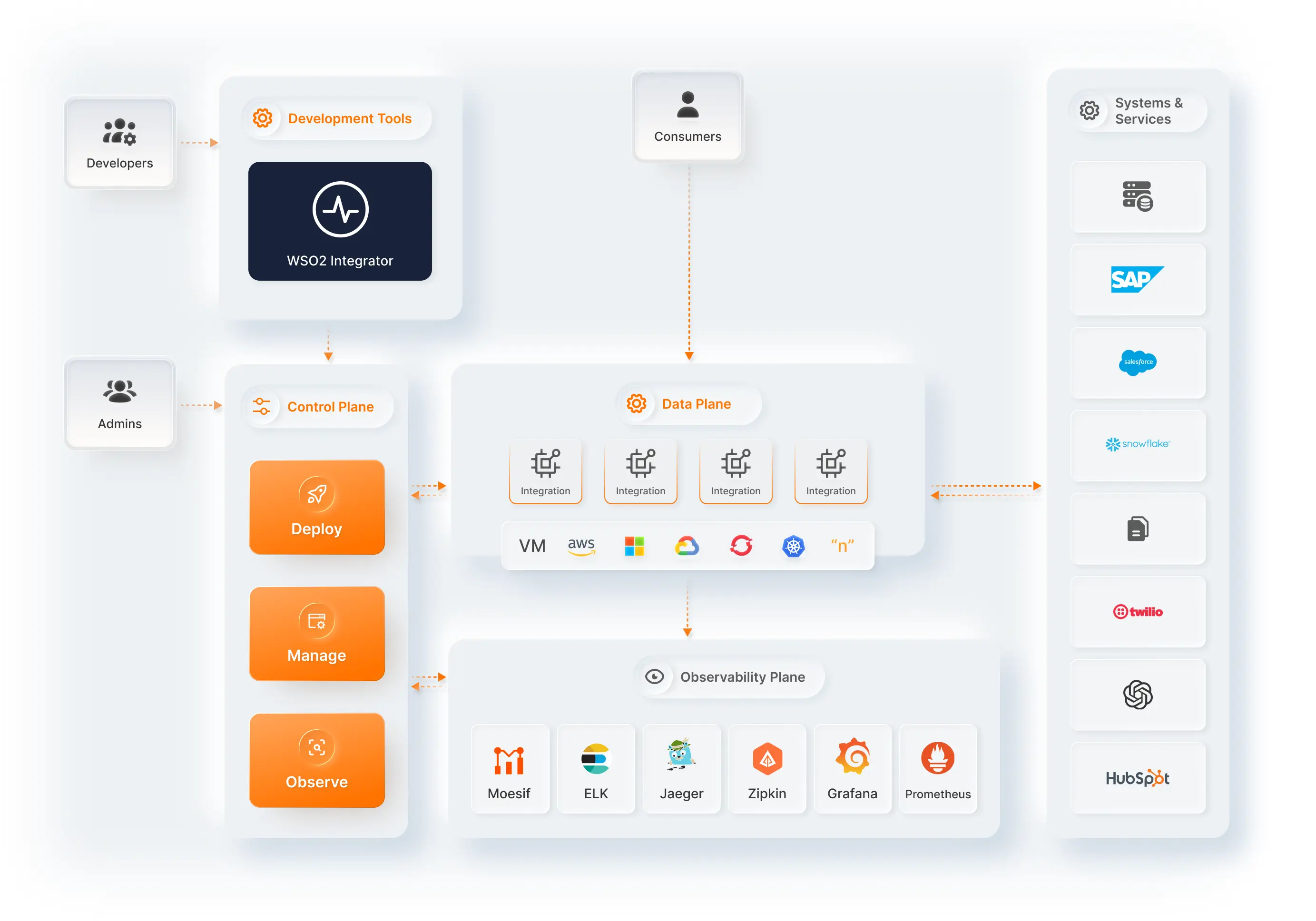
WSO2 Integrator architecture
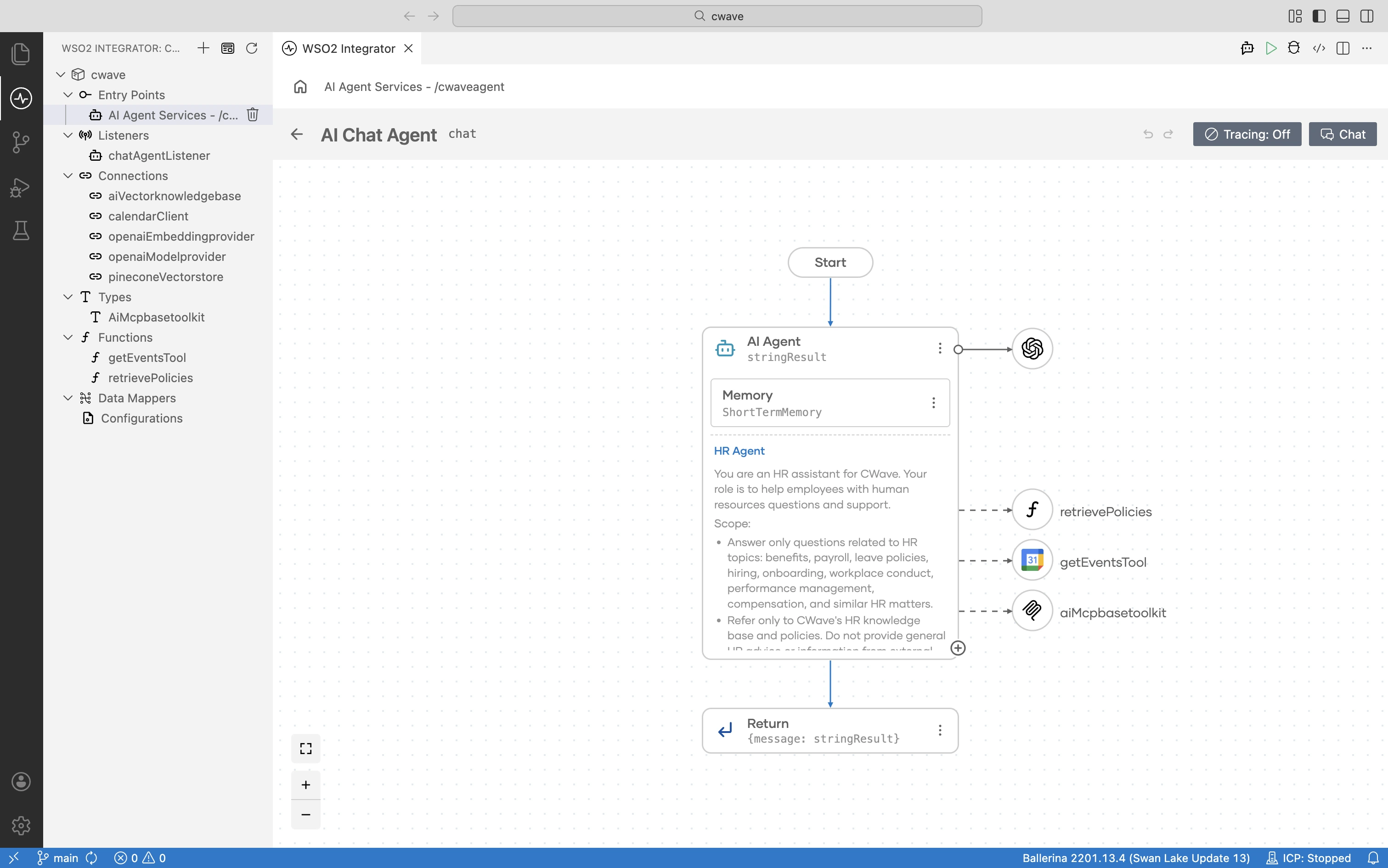
Build AI agents
This is where you build the agents themselves. Start with built-in capabilities and a library of connectors that reach your data, APIs, and Model Context Protocol (MCP) servers, then give each agent the models, knowledge bases, and tools it needs to do its job. An agent reaches your systems through the same connectors and MCP servers as everything else, so what it can touch stays inside the controls you already run.
Build an AI Agent- Built-in agent framework and 600+ connectors
- Connect agents to models, knowledge bases, and tools of your choice
- Reach data, APIs, and MCP servers through connectors
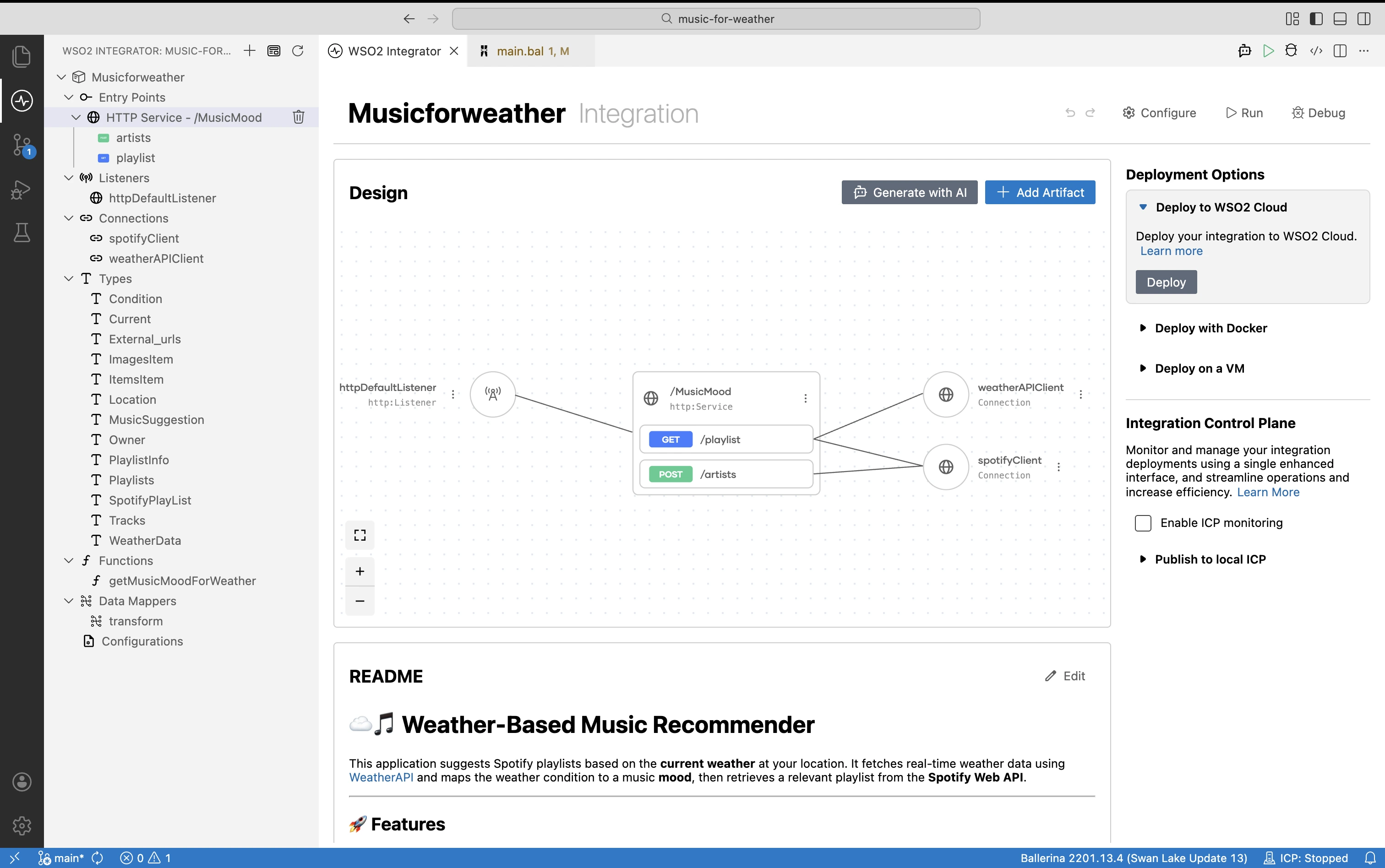
Build any type of integration
Real systems rarely fit a single integration style. WSO2 Integrator handles the common ones in one runtime, so a scheduled job, an event stream, a file drop, an API, and an AI-driven flow are all built with the same tooling and run under the same operational view. Five types, one place to build and operate them.
Task automation
Some integration work is just routine: move data on a schedule, run a batch job overnight, tidy things up every week. Set these to run on a schedule you define and they run on their own, with no one watching the clock.
Build an Automation- Scheduled data syncs between systems
- Batch processing on a defined cadence
- Recurring maintenance jobs
- Runs on schedule without manual triggers
Agents and GenAI integrations
Put AI agents to work inside your integrations. A flow can hand a step to an agent to interpret a request, decide what comes next, or generate a response, then carry that result through the rest of the integration. The agent works with the models, knowledge bases, and tools you connect, and it reaches your systems through the same connectors and MCP servers as everything else, so the intelligent part of a flow runs under the same controls as the rest of it.
Build an Agent Integration- Call an AI agent as a step in any integration flow
- Connect agents to models, knowledge bases, and tools of your choice
- Reach systems through 600+ connectors and MCP servers
- Coordinate multiple agents and services in a single orchestrated flow
Integration as APIs
Put a modern API in front of a legacy system, or compose and publish new services from scratch. Each integration is triggered by an API request, with the orchestration behind it handled by the runtime — so consumers get a clean contract while you keep control of what happens underneath.
Build an Integration as an API- REST, GraphQL, gRPC, WebSocket, and Async APIs
- Expose existing or legacy systems as APIs
- Compose and publish new services
- Orchestrate the flow behind each endpoint
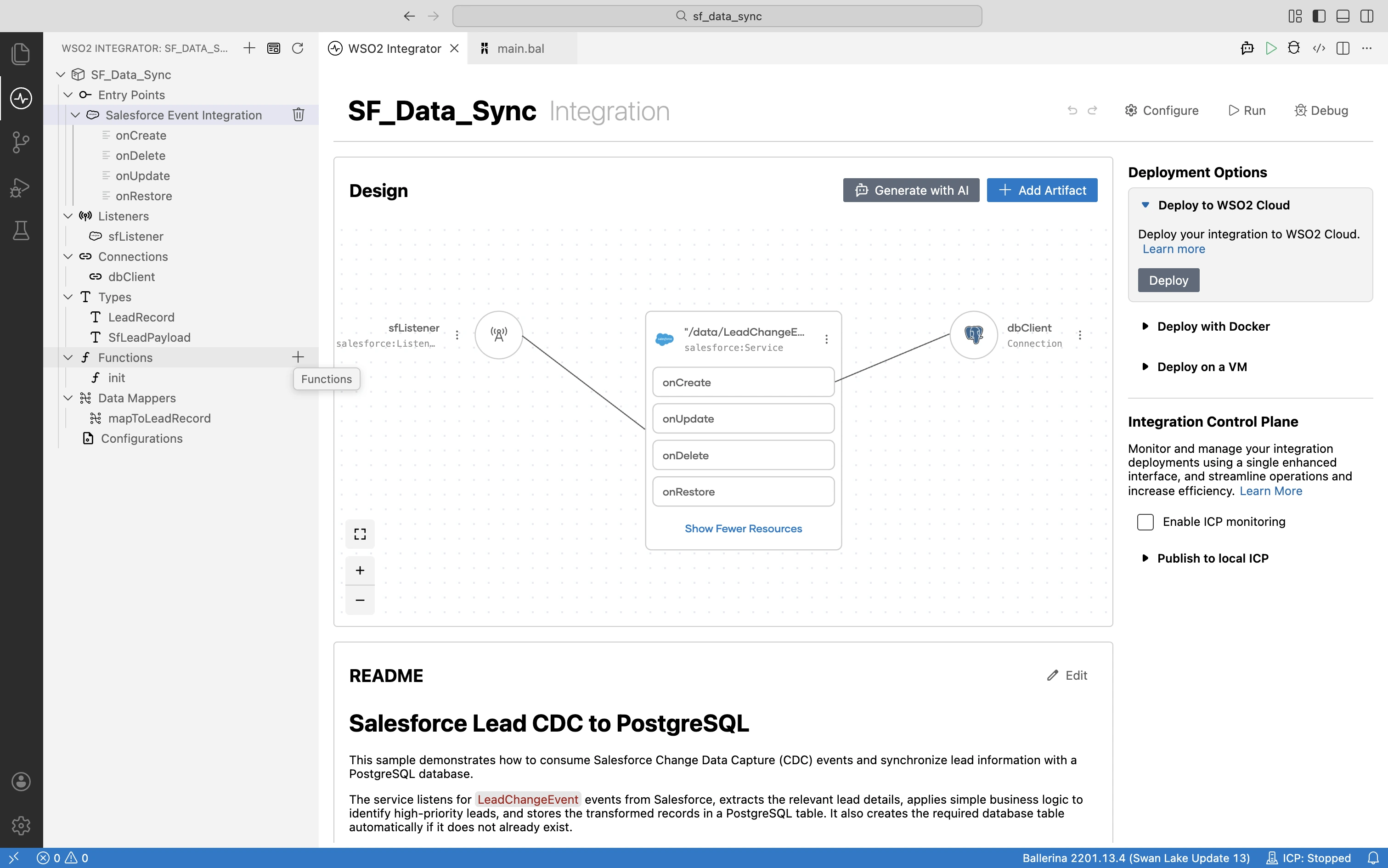
Event-driven integration
When you can't wait for the next poll or the nightly batch, react to events as they happen. Watch for system or business events, and trigger an integration the moment one arrives, so downstream systems stay current in real time.
Build an Event-Driven Integration- Kafka, AMQP, MQTT, and JMS
- System and business event triggers
- Real-time, event-by-event processing
File-driven integration
Many systems still exchange data as files. Pick up data from files as they land in the locations you're watching, reshape it into a format the target system can use, and deliver it, without anyone moving files by hand.
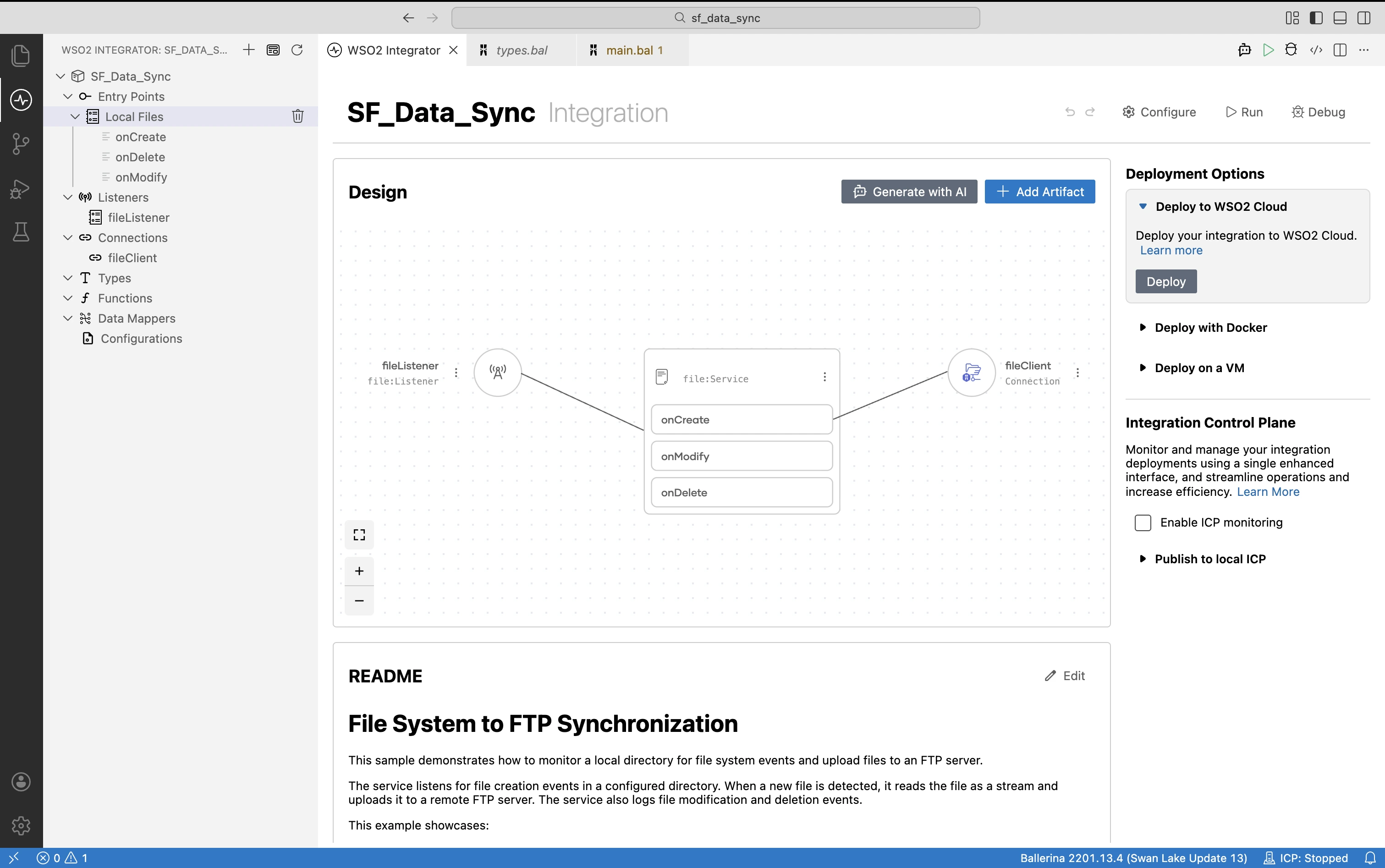
Build a File-Driven Integration- FTP/SFTP, SMB, AWS S3, and Azure Blob Storage
- Triggers on file arrival in watched locations
- Transforms between formats in flight
- Delivers to one or more target systems
Create MCP servers
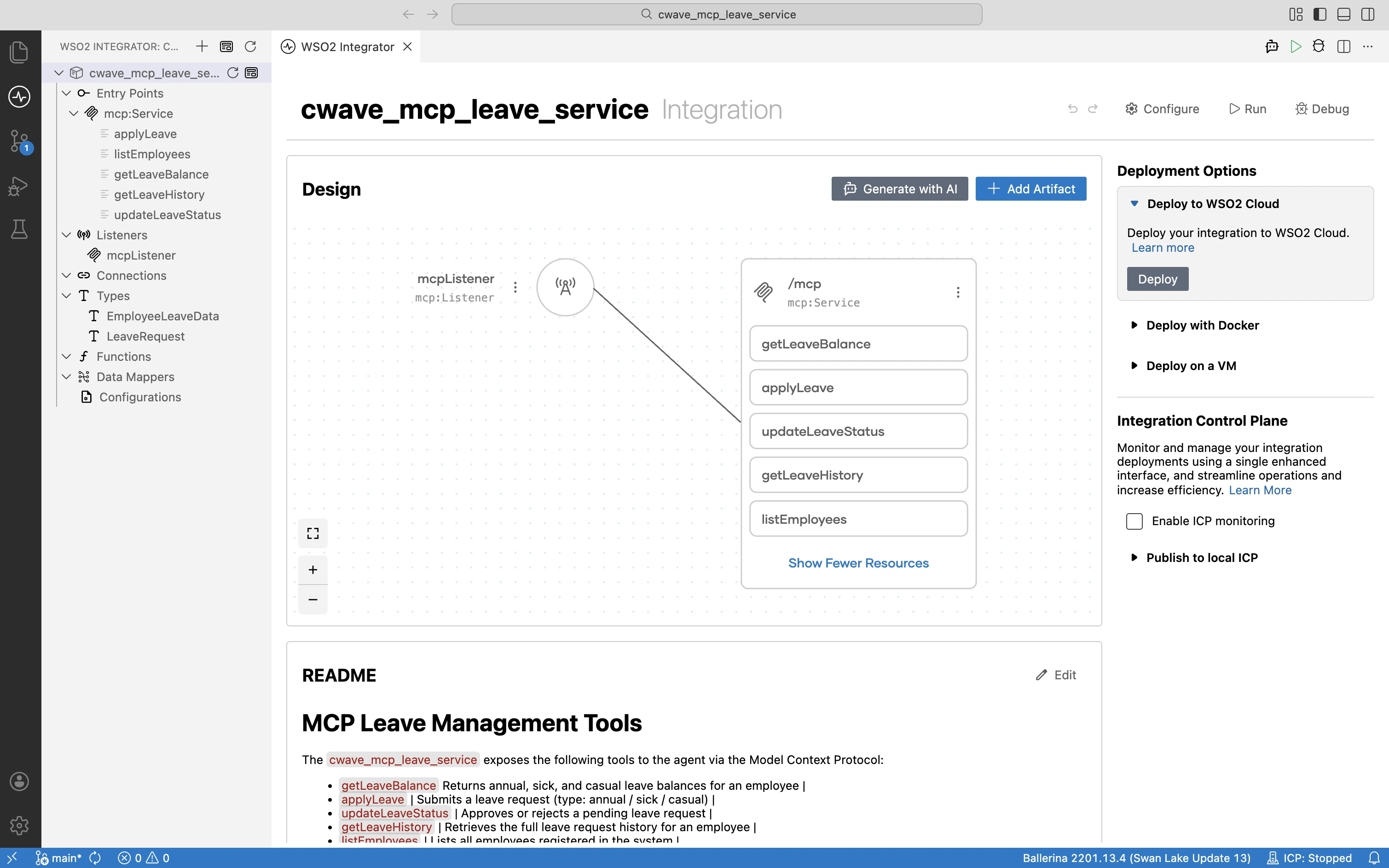
AI agents reach tools and data through MCP. WSO2 Integrator produces MCP servers two ways: turn an existing API or integration into one, or build a new MCP server from scratch. Either way the server is governed like any other interface, so agents discover and call its tools over MCP while every request passes through your policy and access controls. You expose exactly what an agent needs, without exposing the systems behind it.
Create an MCP Server- Convert an existing API or integration into an MCP server
- Build a new MCP server from scratch
- Policy and access controls enforced on every call
- Tool discovery for agents over the MCP standard
Build GenAI apps
Once your agents, models, and knowledge bases are in place, bring them together into the applications you are building. Compose them into full GenAI apps rather than isolated prototypes. The platform that builds the pieces also assembles them, so moving from a working agent to a working application does not mean starting over.
Build a GenAI App- Compose models, knowledge bases, and agents into a single GenAI application
- Reuse the agents, connectors, and MCP servers you have already built
- Move from isolated prototype to a full application you can ship
Key features
AI-assisted development
Describe what you want in natural language and the assistant generates, refines, and modifies your code. Run AI-assisted tests, and more, without the usual drag on delivery.
Build in Natural LanguageLow-code and pro-code
A low-code experience with 100% pro-code parity, so business and IT finally build in the same place. Business users, integration specialists, and developers share one platform across every integration project.
Read the BlogData mapping and transformations
See how data types line up across systems at a glance, with AI assistance, then map them without interrupting anything that's running. Merge several input structures into a single unified output, import JSON and XML values directly, run array-to-array transformations, write your own expressions, and more.
Explore Data MappingConnectors
Reach AI agents, APIs, data, and events across any environment with more than 600 connectors, all 100% EIP compliant. Need one that doesn't exist yet? Generate a production-ready connector automatically, including custom connectors built straight from an OpenAPI specification.
Explore ConnectorsMonitoring and management
Monitor and manage every integration, across every environment, from a single control plane. Centralized access control and governance keep things running securely and reliably in production, with less operational overhead to carry.
Explore Monitoringand Management
Observability and analytics
Plug into any OpenTelemetry tool for transactions, logs, and metrics to understand how everything behaves and performs, and the control to act on it. Works with the tools teams already run, including Moesif, Prometheus, Grafana, Jaeger, and Elastic Stack.
Explore ObservabilityRun it your way.
The only integration technology that is available as 100% open source self-hostable software, or as a iPaaS.
Self-hosted
Full control over your stack. Deploy directly to your own servers, bare metal, or a private cloud environment. Your data never leaves your perimeter.
- ✓ Complete data sovereignty
- ✓ Air-gapped environment support
- ✓ Kubernetes, Docker, VM, or bare metal
- ✓ Bring your own CI/CD pipeline
iPaaS
Zero infrastructure to manage. WSO2 handles provisioning, upgrades, scaling, and availability. Get started in minutes.
- ✓ Data plane anywhere you want
- ✓ Centralized control and observability
- ✓ Continuous updates, zero downtime
- ✓ Multi-region availability